The home of architecture and design in the Asia-Pacific
Get the latest design news direct to your inbox!

Get the latest design news direct to your inbox!
Feminism is not just about gender; it’s about the workplace, career progression, practice and approach. Parlour is an online platform that invites the architecture community to start talking about their experience of gender and the workplace. Alice Blackwood reports.

June 4th, 2012
An initial visit to Parlour, which was launched in early May, reveals a wealth of information that might take more than just a lunch break to absorb.
But its content is intriguing and the subject matter rich with the voices of both female and male architects and academics reflecting on their experiences of gender and the workplace, along with the trends identified by statistics.
Parlour isn’t just your everyday blog looking to share in a collective whinge; it’s part of an extensive 3-year research project on equity, diversity and architecture.
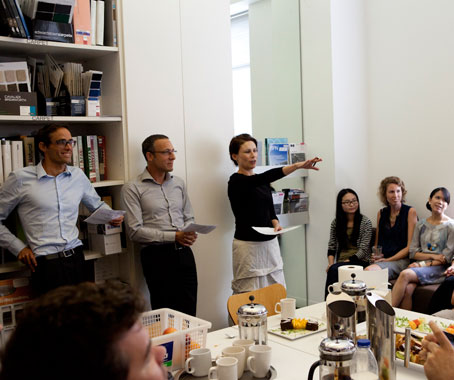
This has been spearheaded by 8 researchers, lead by Naomi Stead, who are investigating women’s participation in the architectural profession in Australia, coming to understand why women are under-represented at a senior management level.
Others on the research team are Karen Burns and Julie Willis, Gill Matthewson, Amanda Roan and Gillian Whitehouse, Sandra Kaji-O’Grady, Susan Savage and Justine Clark, former editor of Architecture Australia, who edits and curates Parlour with input from the team.
Clark comments: “Women do very well in architecture school, they’ve been around half the students for at least 30 years, but the drop-off between this and those who become registered architects is still enormous”.
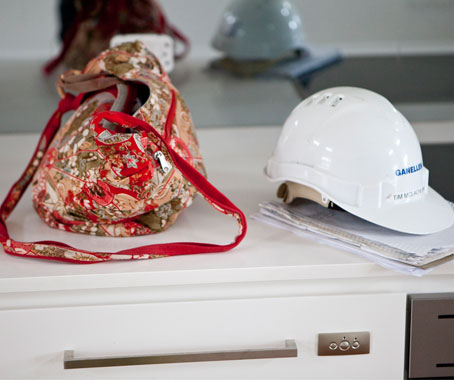
“Around 20 per cent of Institute of Architects members are women, and 20 per cent of registered architects are women. It’s a very entrenched and long-term issue… we thought it was time to have another look at it.”
The research project has 3 kinds of outcomes, including producing draft equity and diversity policy for the Australian Institute of Architects, and traditional scholarly outcomes, such as Matthewson’s PhD work and essays for academic journals.
“And then the other side of it is the engagement,” says Clark. “We’re conscious that to make a difference we need community action and engagement as well as policy and scholarly papers.” Which is where Parlour comes in.
“We’re trying to get a conversation going within the community – it’s about mobilising the community and getting them talking about change.”
Parlour, with its references to feminised meeting spaces and to the French parler ’to speak’, provides a platform for open discussion, and seeks to make a space for that discussion between academia and practice.
“To get the conversation going we’ve given 2 of the published papers to a variety of people to read and respond to based on their personal and professional experience.”

The responses are presented in the Reflections section of the website.
One particular piece by architect Andrew Maynard, entitled Work/life/work balance, has attracted a variety of responses – both on the site and in social media.
Clark also highlights a few other essays from both architects and academics:
I Count by Neph Wake – a short piece about why we need feminism
The Seven Ages by Elizabeth Watson-Brown
The Questions to Ask by Ann Lau who outlines the things graduates need to consider and the questions they should ask
Learning from Eva by Laura Harding who argues the importance of communicating architecture with the wider public
Architecture is too important to be left to men alone by Jeremy Till.
“Till is a British academic who last year made a “30 per cent Pledge” that he will not participate in any public event that has less than 30 per cent women,” comments Clark. “Again, it’s a reminder that it’s not just a women’s issue, this is an issue for everybody.”
Through Parlour, Clark and fellow researchers are hoping to crack the code on ’who’ the women are participating in architecture – as well as how and why.
And importantly: “One of the things we’re arguing is that issues around gender are not girls’ issues. Issues around gender, practice and workplace are cultural and societal issues. They are issues for men as well.”
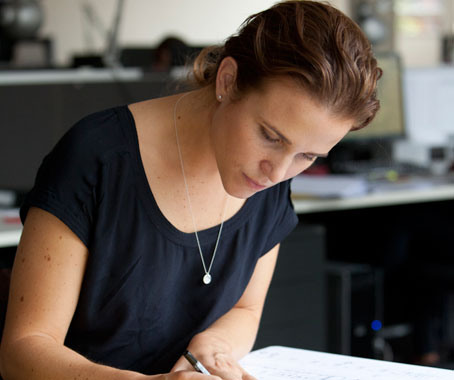
Visit Parlour and join the discussion; share your thoughts and reflections with the Parlour team through the Comments section as well as Twitter.
Parlour was built by Peter Johns of Butterpaper, visual identity is designed by Catherine Griffiths of Studio Catherine Griffiths.
Industry partners in the research project are the Australian Institute of Architects, Architecture Media, Bates Smart, BVN Architecture and PTW Architects.
Photography: Nick Bennetts
Parlour
archiparlour.org
INDESIGN is on instagram
Follow @indesignlive
A searchable and comprehensive guide for specifying leading products and their suppliers
Keep up to date with the latest and greatest from our industry BFF's!
The Qantas Spirit of Youth Awards (SOYA) are now a year-round initiative with the introduction of a brand-new format, which sees submission dates across separate categories spread out across the year. Australians aged 30 and under are invited to submit their work across 11 creative fields for the chance to win $5000 cash, a 12-month […]
The internet never sleeps! Here's the stuff you might have missed