The home of architecture and design in the Asia-Pacific
Get the latest design news direct to your inbox!

Get the latest design news direct to your inbox!
Stephen Lacey reports from the Sydney Opera House, where plans are underway for a landmark exhibition that will celebrate 40 years of Danish design on our harbour’s edge.

October 8th, 2013
It was 40 years ago this October 20 that Queen Elizabeth II officially opened Australia’s most iconic and controversial building. Controversial because its Danish architect, Jørn Utzon was so shabbily treated by the NSW Liberal government of the time he went home to Denmark, never to return.

Gerard Reinmuth (Terroir) and Anthony Burke (UTS)
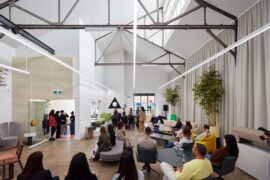
In honour of the building’s inherent links with its Danish past, there will be a conceptual exhibition of Danish Design held in the Sydney Opera House (SOH) western foyer and set within six of Utzon’s concrete bay windows.
Open to the public from Friday 25 October to Monday 11 November, Danish Design at the House gives visitors an up-close and personal experience of a fusion between design, craft and architecture with some of the most exclusive art, culture, fashion, design and products hailing from Denmark. Importantly, this exhibition will shed light on the values and logic that underpin Danish design and coincide with the 40 anniversary celebrations of the Opera House.
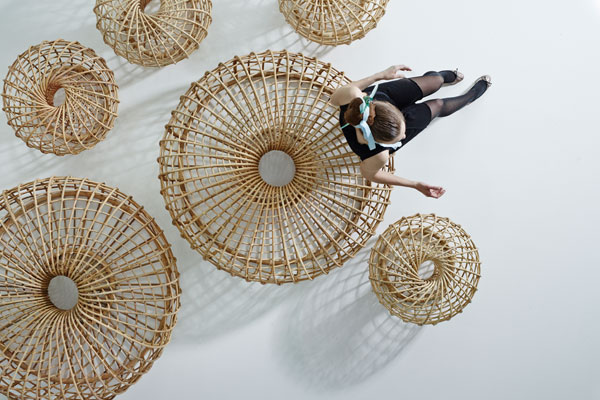
Cane-Line
It presents a dynamic collaboration between the Danish Agency for Culture, the Opera House and the Ministry of Foreign Affairs of Denmark. The Exhibition is supported by the Danish Arts Foundation and the Danish Trade Council.
Participating Australian retailers include Great Dane, Living Edge, and Corporate Culture (CEO Richard Munao was awarded the Danish Export Medal in 2011 for his commitment to Danish furniture). Brands represented will include Louis Poulson, The Republic of Fritz Hansen, and HAY.
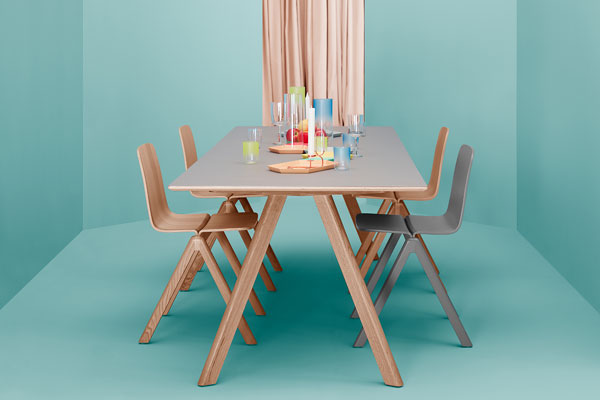
Hay
Architect Gerard Reinmuth (AU) and architect Karen Kjærgaard (DK) are co-curators of the exhibition.
Indesign caught up with Reinmuth this week to ask him his approach to putting the whole thing together. And just why do Danes have such a strong design culture compared to Australia?
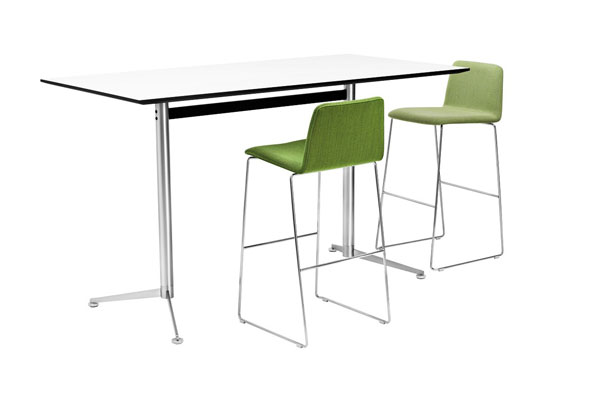
Paustian
“Time and complexity are the two elements that tell us something about why Danish design in so strong,” he says. “The Danes have been at it for a while, and have a very interesting context where the country was basically rural until the middle of the 20th century, and will still be characterized by good-humoured Danes in those terms.”

GeorgJensen
“One thing that makes Copenhagen so popular is that it’s both a cosmopolitan destination and a comfortable harbour town. This has resulted a strong connection between makers and designers – something that gets lost in a city like Sydney where you struggle to see anyone without a suit in the CBD. In Denmark, both are always close at hand and in working there I am constantly surprised by how engaged and involved the architects and designers are with those who make the products.”
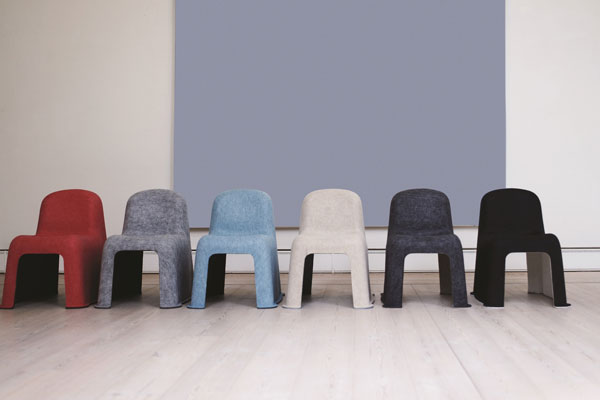
Hay’s Nobody Chair
Reinmuth also believes Denmark’s small population (roughly 6 million) and its ethnic ‘consistency’ makes it easier for the Danes to have a national ‘conversation’ about anything from how to make breakfast to how a chair should look.
“This is why I think Danish design is so consistent – there is a range of amazing products, all special in their own way, but they come back to some commonly agreed principles.”
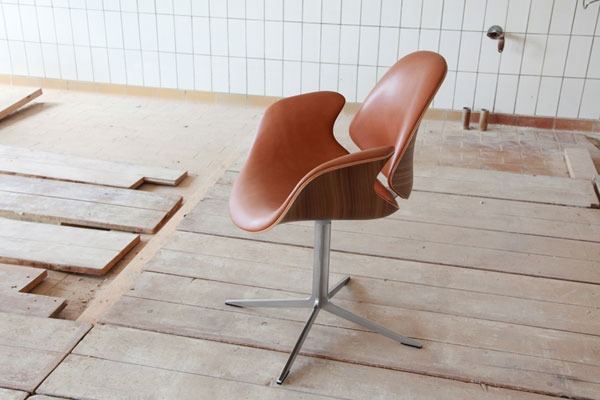
Onecollection’s Council Chair
As to the exhibition itself, Reinmuth says the window arrangements in the Western Foyer ties into a very Danish tradition of making ‘still life’ arrangements in living room windows, while also acknowledging the special feature that Utzon bought to the space.
“The result of this is that the products are all understood as “special” and worthy of contemplation,” he says. “There are six concepts, one for each window: pragmatism, materiality; human; craft; technology and desire.”
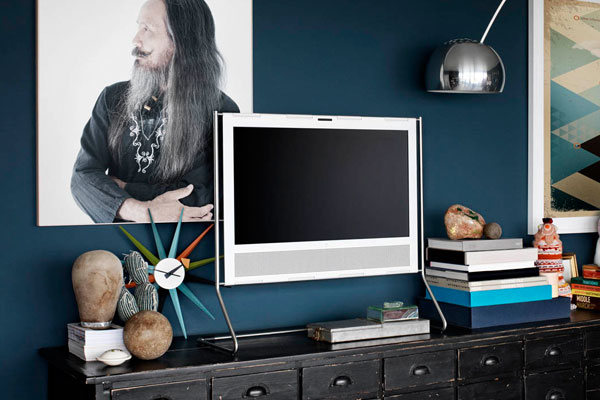
Bang & Olufsen
Each concept features an artwork or craft piece by a Danish artist, plus a chair, a light, and two other products. They are then arranged in their respective window by six young Danish architects – one for each theme.
As for the daunting task of curating an exhibition within one of the seminal buildings of the 20th century, Reinmuth says he is just thankful that he didn’t have to locate it with the main theatre and concert hall foyers: “That would have been a really tough task!”
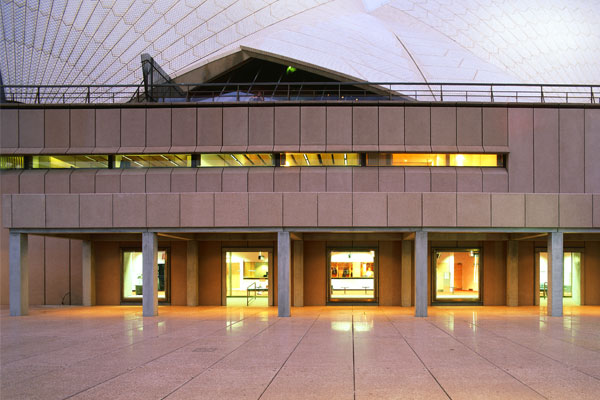
Sydney Opera House
“The key here has been to put our egos aside and work with great awareness of the existing building, rather than trying to compete with it.”
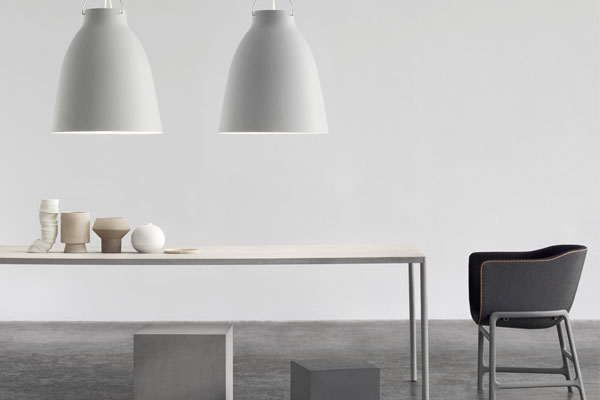
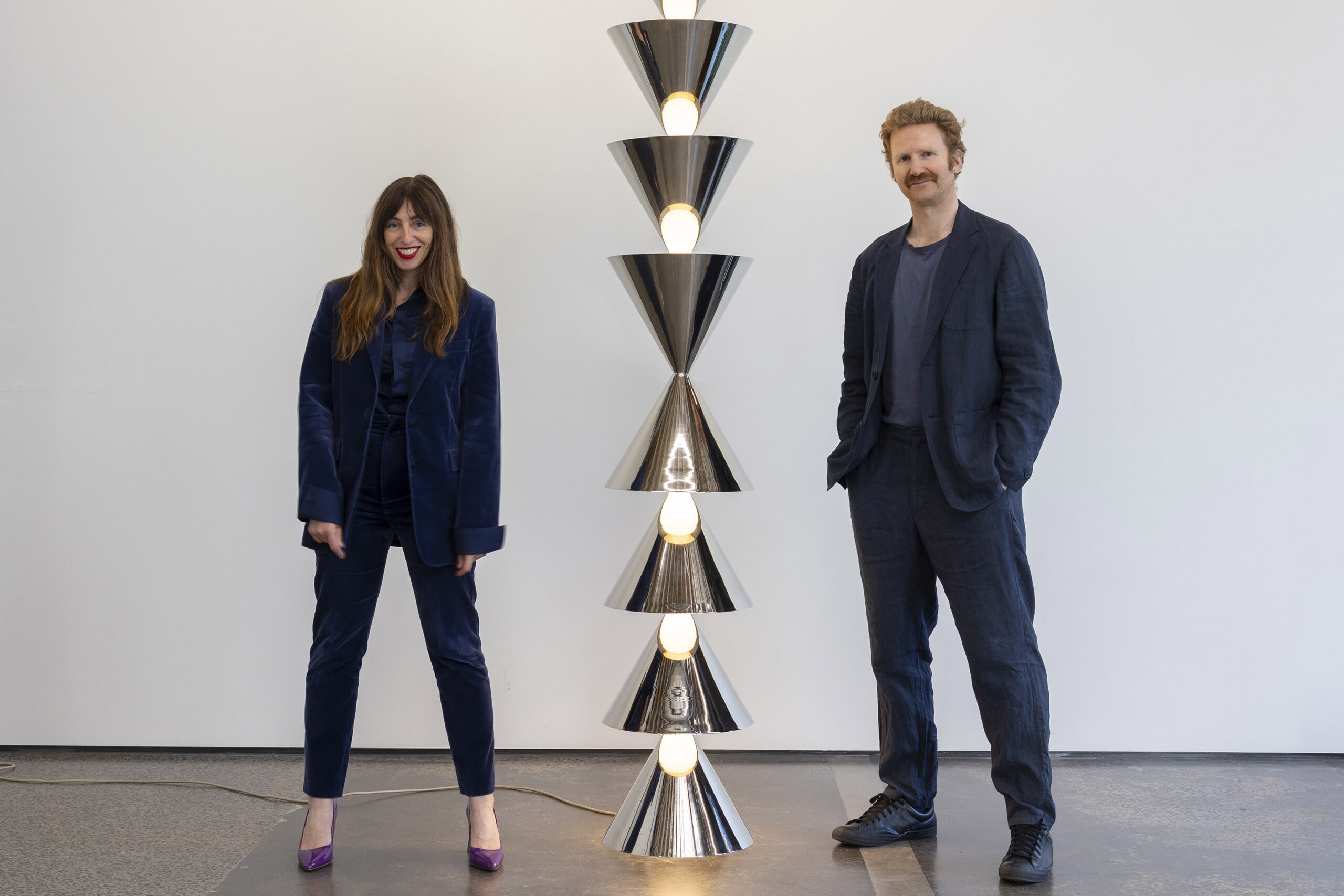
Light Years
# If you’re interested in finding out more about the Opera House and its history, the Powerhouse Museum has released a new edition of Building a Masterpiece, to coincide with the 40th anniversary. First published in 2006, Anne Watson’s tome is the definitive story on the creation of this remarkable building. The updated edition also includes a new chapter on the little known story of Peter Hall, the architect who took over from Utzon and completed the project, documenting the ‘lost’ years 1966–70 and the building’s design evolution after Utzon departed.
Available from: Powerhouse Museum Shop and online – Distributed by NewSouth Books.
Danish Design at the House
INDESIGN is on instagram
Follow @indesignlive
A searchable and comprehensive guide for specifying leading products and their suppliers
Keep up to date with the latest and greatest from our industry BFF's!
The internet never sleeps! Here's the stuff you might have missed