The home of architecture and design in the Asia-Pacific
Get the latest design news direct to your inbox!

Get the latest design news direct to your inbox!
World-renowned British designer Tom Dixon officially opens its first flagship store in Hong Kong. We visited this latest gem for design lovers in the city. Here’s what we discovered….



The duplex store sits at a corner site on Hollywood Road. With large windowpanes revealing the contemporary designer products inside, the store stands out in the neighbourhood otherwise known for its antique shops. The black brick façade also gives the Tom Dixon store a British flavour.
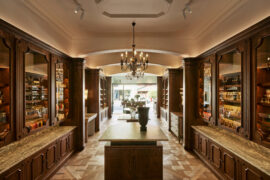
As one pulls open the glass door, one enters the wonder world of Tom Dixon. The store displays the latest products of the brand. On the ground floor, a set of copper pendant lights takes prominence. Below the lights are marble tables that showcase a variety of kitchen and dining products. The walls are installed with marble shelves displaying other home accessories.
Instead of highlighting each product as an individual object on a pedestal, the designer chooses to create an aura of an Aladdin’s cave within the store. A variety of design objects are placed with close proximity to each other, inviting visitors to spend time in the store and examine the objects.
To highlight the products, the store deploys a monochrome colour palette. The walls are painted in white, with parts cladded with charred timber. The concrete flooring is light grey in color, while the staircase is painted in black. Tom Dixon says, “The two-storey showroom showcases a curated collection of our core products. The fixtures serve as a fitting backdrop to our metallic tones of copper, brass and chrome.”
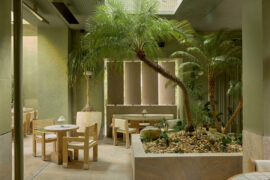
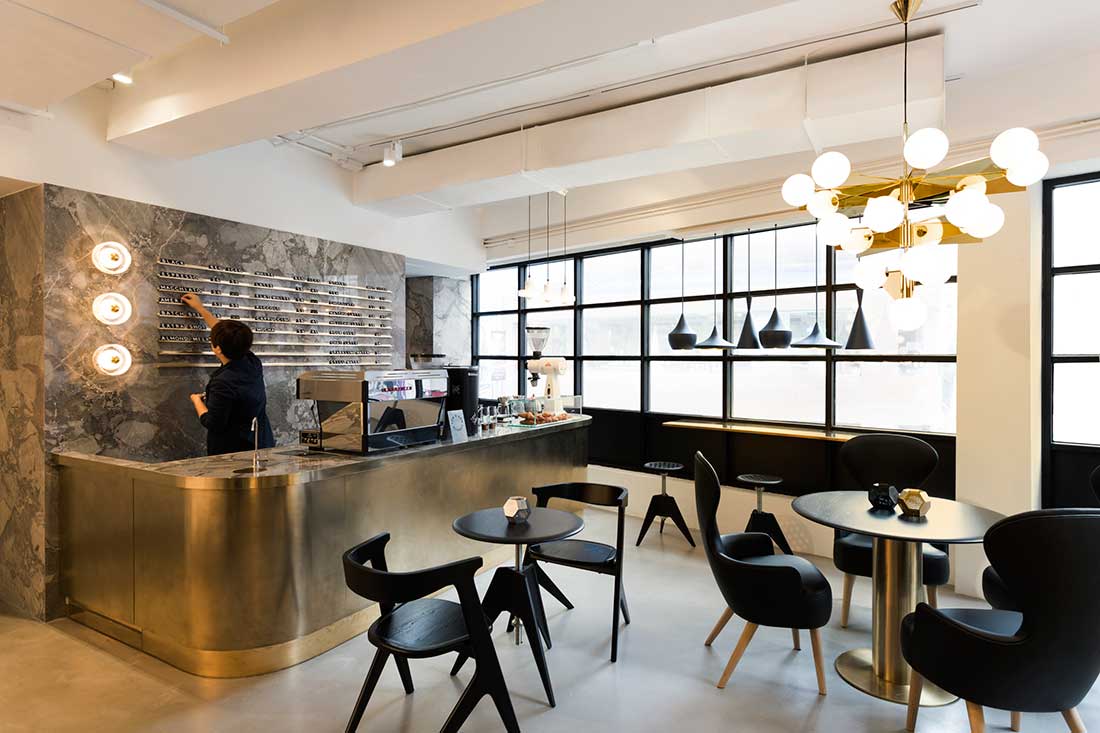
On the second floor of the store is a café operated by Nodi. The café, which offers a selection of artisanal coffee, uses Tom Dixon designed furniture and lighting. Coffee is also served with the brand’s kitchenware.
Both floors of the store feature large corner windows that allow natural light to flood the interior space. The windows visually connect the interior to the street activities in Central. Derek So, founder of Nodi, says, “The location of the store is interesting. People in the street can see the activities inside the store from afar. It is a space for us to see and be seen.”
Tom Dixon believes that in Asia, there is an acceleration of interest in the brand. He says, “The store in Hong Kong will be the launch pad for our adventures in Asia.”
Written by Sylvia Chan.
INDESIGN is on instagram
Follow @indesignlive
A searchable and comprehensive guide for specifying leading products and their suppliers
Keep up to date with the latest and greatest from our industry BFF's!
The internet never sleeps! Here's the stuff you might have missed