A Singapore river warehouse dating back to 1895 has been restored as The Warehouse Hotel.
Previously a hotbed of secret and undercover goings on, the building is now a striking 37-room destination with an emphasis on heritage and local culture.
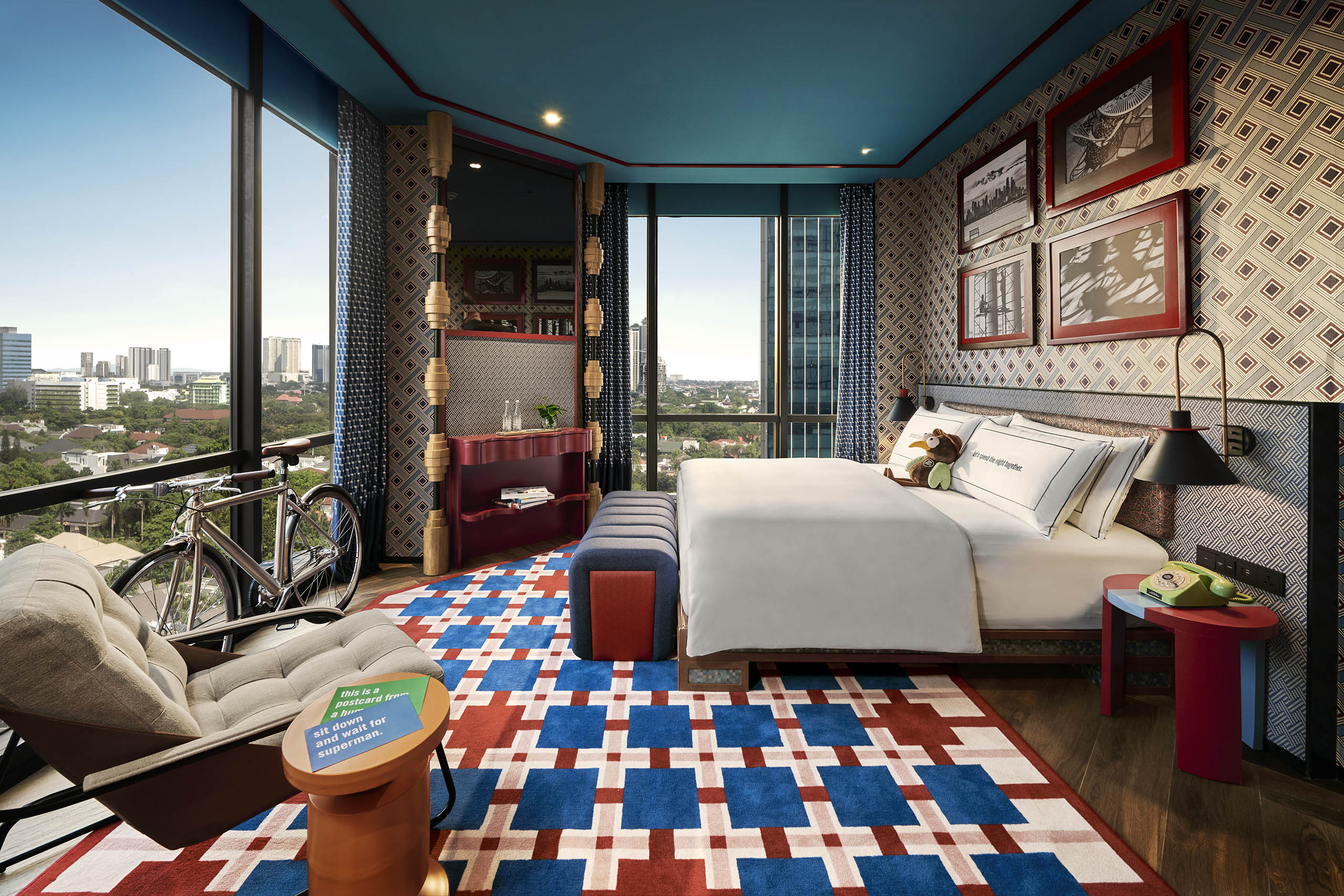
The Warehouse Hotel, located on the Straits of Malacca trade route, was designed by the award-winning local agency Asylum, and features new double-high ceilings and peaked roofs, juxtaposed against the original industrial details of the over-century-old space.
The space, originally known in Asia as a godown, was recognised as a hotbed of activity for secret societies, business deals and underground spirit distilling in the late 19th and early 20th centuries. This history was channeled into the design of the space, with local design and culture at the core of the design ethos for Asylum. In-room minibars, uniforms, bicycles, artwork, guidebooks and coffee & tea were all locally sourced in order to properly an authentic Singaporean experience. This aesthetic and sense of belonging is further reflected in the hotel’s rooftop infinity pool, which enables riverbank views and a sense of connection to the neighbourhood’s mysterious history.
“Hotels are a natural extension of our strength as a hospitality group – both in concept design and guest experience,” says Wee Teng Wen, Managing Partner, of the Lo & Behold Group, managers of The Warehouse Hotel “The fact that The Warehouse Hotel is located in a ‘godown’ is particularly unique and creates the opportunity to offer something with depth and soul. We’re proud that this heritage project is our group’s inaugural hotel – owned, designed and operated 100% locally.”
The hotel’s signature restaurant and bar, Po, was crafted by Chef-Partner Willin Low, who designed his dishes to homage to the tradition of the city of Singapore. Po’s cocktail programme charts the history of the building through its three phases of life – rustic, spice driven concoctions, representing the building’s life as a spice warehouse; house-crafted spirits paying tribute to the forbidden underworld distilleries; and finally fresh flirty cocktails inspired by the building’s era as an infamous disco.
From the room design to the public spaces, traditional design elements, such as traditional rattan and natural leather, bring a sense of history to the modern industrial feel of the space; recalling the secret history of the warehouse, yet with eyes firmly set on the future.
INDESIGN is on instagram
Follow @indesignlive
A searchable and comprehensive guide for specifying leading products and their suppliers
Keep up to date with the latest and greatest from our industry BFF's!
True luxury strikes a balance between glamorous aesthetics and tactile pleasure, creating spaces rich in sensory delights to enhance the experience of daily life.
In a tightly held heritage pocket of Woollahra, a reworked Neo-Georgian house reveals the power of restraint. Designed by Tobias Partners, this compact home demonstrates how a reduced material palette, thoughtful appliance selection and enduring craftsmanship can create a space designed for generations to come.
Natural stone shapes the interiors of Billyard Avenue, a luxury apartment development in Sydney’s Elizabeth Bay designed by architecture and design practice SJB. Here, a curated selection of stone from Anterior XL sets the backdrop for the project’s material language.
In an industry where design intent is often diluted by value management and procurement pressures, Klaro Industrial Design positions manufacturing as a creative ally – allowing commercial interior designers to deliver unique pieces aligned to the project’s original vision.
Happy Chair from Swedese, is a beautifully crafted Easy chair with a pleasantly sprung seat.
It was jam-packed with design events, talks and exhibitions, and for only the second year running Melbourne Design Week outdid itself. But if you couldn’t make it, these were our best moments…
The internet never sleeps! Here's the stuff you might have missed
In 2001, Antonio Citterio designed a sofa that threw out the rulebook. A quarter-century later, Groundpiece remains Flexform’s longest-running bestseller – and it still looks like the future.
A new Sydney sports pavilion designed by Sam Crawford Architects (SCA) finds inspiration in the deep archaeological history of Indigenous sites nearby.
At The Lands by Capella, Hassell and Purcell take a restrained approach to adaptive reuse — working with the existing building to reintroduce it as a public, mixed-use destination.
Clare Cousins discusses the design thinking behind the award-winning Fisher & Paykel Melbourne Experience Centre, exploring how thoughtful retail environments can create meaningful connections between brand, space and visitor.