The home of architecture and design in the Asia-Pacific
Get the latest design news direct to your inbox!

Get the latest design news direct to your inbox!
Situated in Vietnam’s remote northern region, the new Son La Restaurant cleverly utilises local resources in its build.
January 23rd, 2015
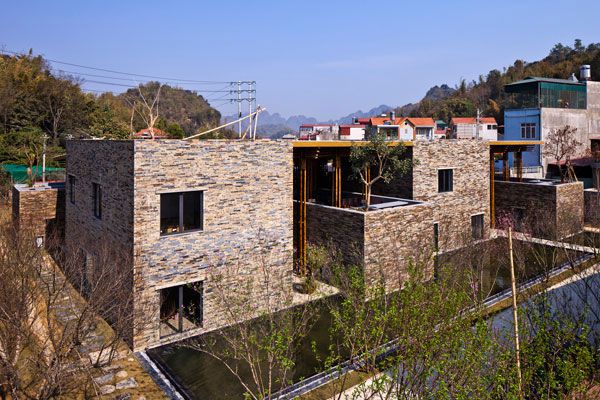
Son La province in northern Vietnam is an ethnic cultural area with an abundance of untouched forests and beautiful mountain landscapes, and has been left largely untouched by development and tourism.
But perhaps things are set to change. Son La restaurant, designed by Vo Trong Nghia Architects, can hold 750 guests and is the first facility in an upcoming sustainable hotel complex located near the city centre.
Due to difficult terrain, Son La is only accessible from Hanoi by a 7-hour car trip along precarious cliff roads. This makes transportation of building materials and manpower difficult.
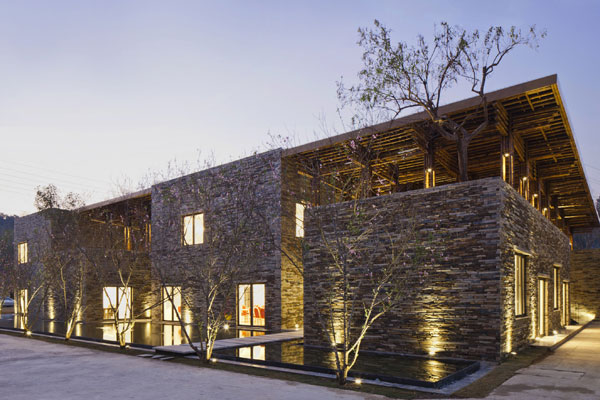
The project has therefore maximised the use of local resources including workers and affordable, indigenous materials – mainly local bamboo and stonework.
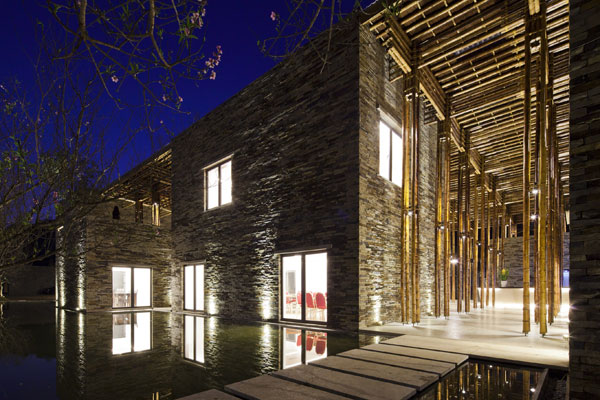
In response to the tropical monsoon climate, the design comprises eight separate stone buildings and an open-air bamboo dining hall to supply both contained air-conditioned rooms and comfortable exterior dining. The stone buildings provide multiple entrances to the dining hall and multiple framed views out from the external dining area. The play of different building heights and trees on the roof offer a vertical landscaped view from the outside. The locally sourced stone walls produced 10km from the site also provide texture and connect with the surrounding mountains.
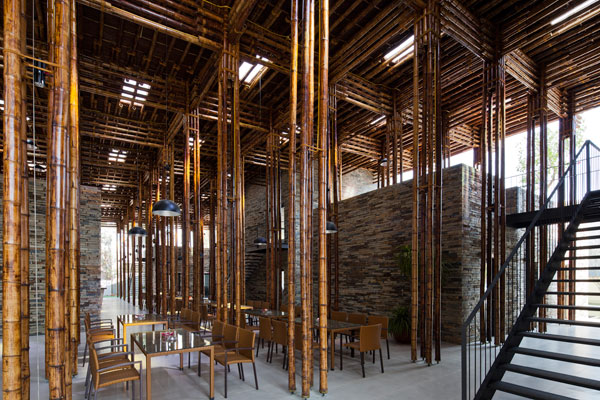
The dining hall’s roof structure is made from local bamboo called “Luong” that grows to 8 metres in height. A total of 96 bamboo column units composed of 4 bamboos combined create the impression of a bamboo forest.
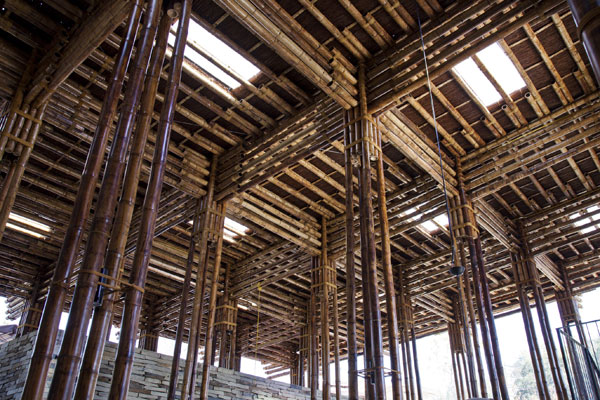
The ceiling is made by local thatch called “vot” and transparent composite roof sheeting covers the roof above it. Skylights open between columns to fill the space with soft light. Outside, hundreds of local peach trees are planted in the surrounding landscape to celebrate the flower seasons.
Vo Trong Nghia Architects
votrongnghia.com
INDESIGN is on instagram
Follow @indesignlive
A searchable and comprehensive guide for specifying leading products and their suppliers
Keep up to date with the latest and greatest from our industry BFF's!
The internet never sleeps! Here's the stuff you might have missed