India’s heritage of ancient cultures and vibrant architecture is something to be celebrated. Design Forum International seeks to preserve its history with a unique, visceral architectural language that speaks of ancient civilisations.
February 19th, 2020
India is a country rich in history. Archaeological sites dot the country, sites that showcase ancient cultures not only native to India but from around the world, from the Khmer Empire to the empire built by Alexander the Great.
The Pt. Deen Dayal Upadhyaya Institute of Archaeology, Greater Noida is an upcoming academic wing of the Archaeological Survey of India (ASI), under the Ministry of Culture. Leading the architecture for this new wing is Design Forum International (DFI) established by three young architects from the Indian Institute of Technology.

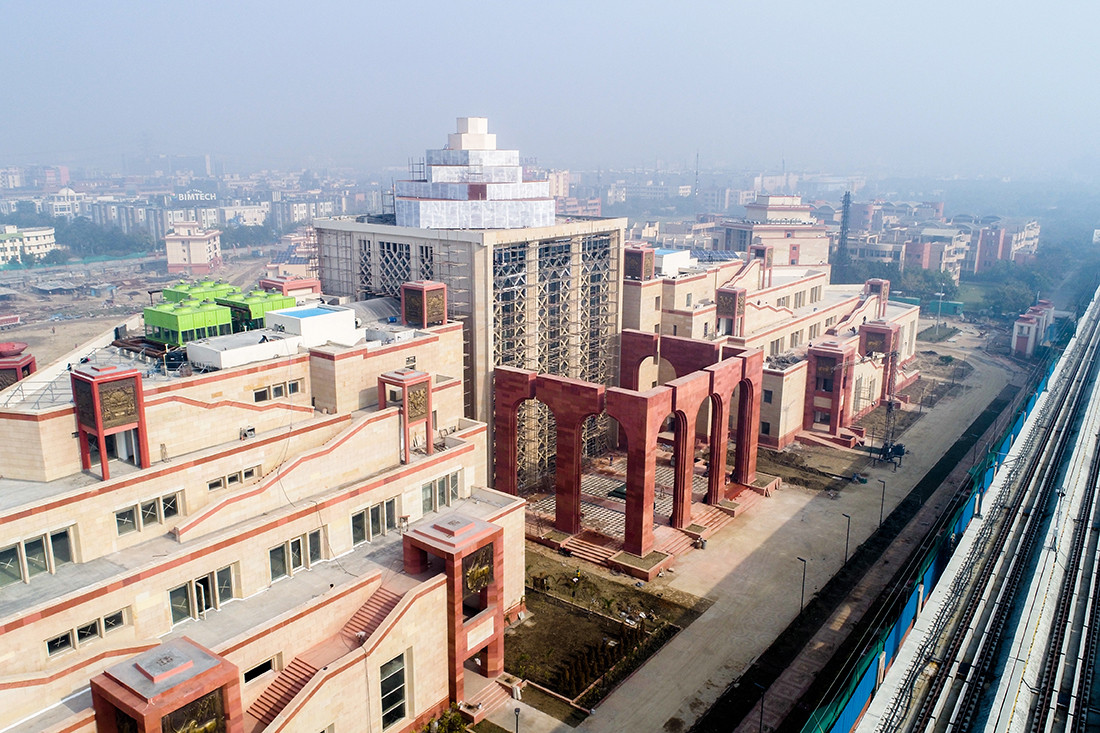
Constructed on a 25-acre square plot, the building’s form pays homage to India’s vibrant past— local materials, structural elements and spatial configurations define the architectural language, combining to create a visual experience which aims to establish a visceral connect with archaeology.
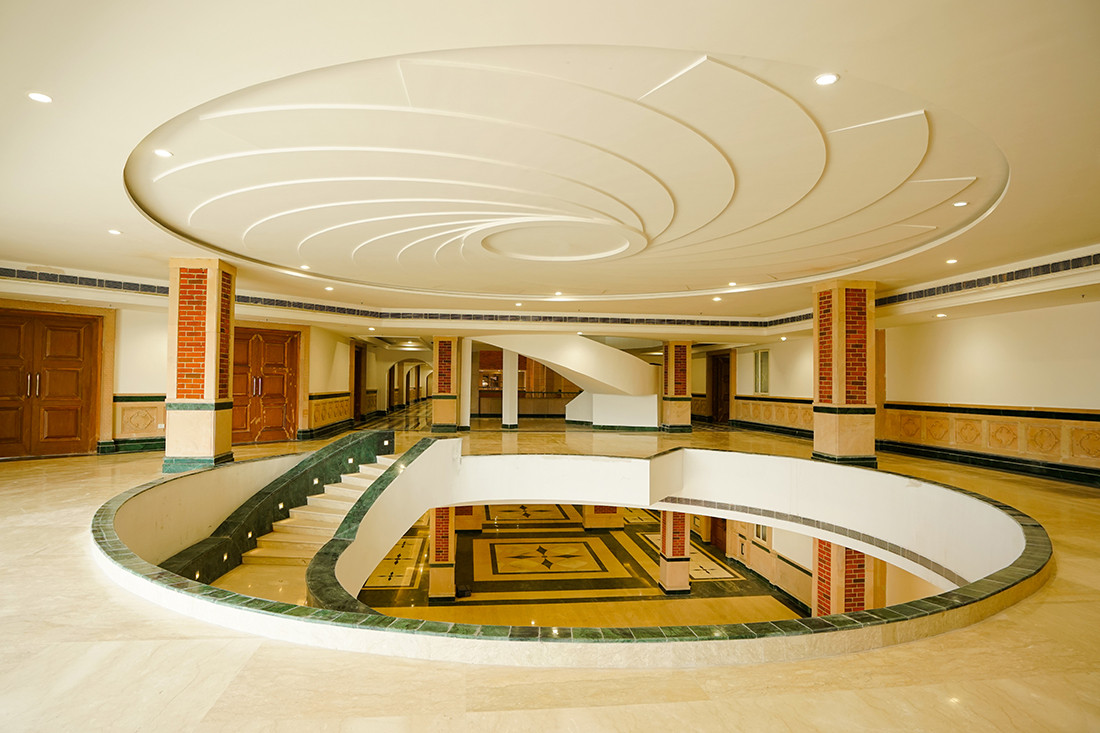
At the entrance plaza—nine broken arches stand together, signifying our constant search to rediscover our history drawing from remnants and broken pieces of information. Inside the brick walls, stone arches and the flooring’s geometric patterns, illuminated by the central skylight atrium transform the space into an immersive setting resounding with the glory of India’s ancient civilisations.
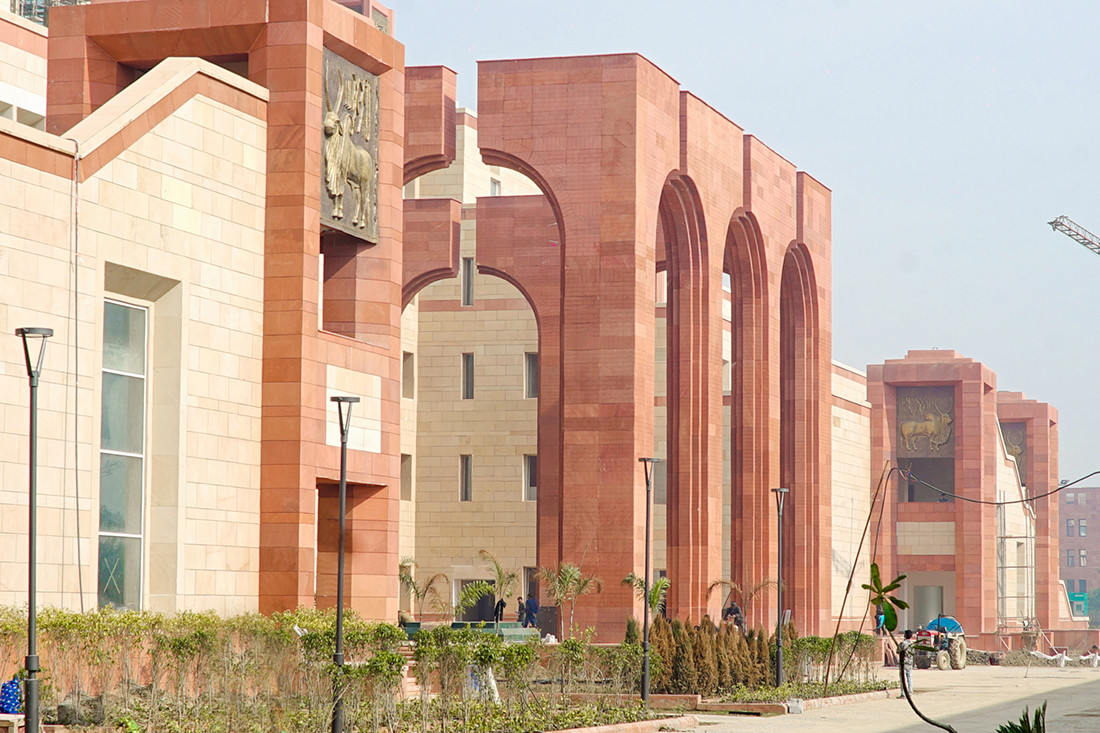
The archaeological museum is complete with restoration labs, an archival section and cafeteria. A huge 900-seat auditorium with an independent entrance comprises the right wing of the edifice. A research library, mini convention centre, office of the Directorate General of the ASI, as well as academic and training facilities are also contained within this beautiful space.

India is a diverse ark of the ancient world and preserving its archaeology is an ongoing and important effort. The housing of the past in beautiful spaces such as this one designed by the DFI is a fantastic step forward in this effort.
If you liked this article, we think you’d enjoy a story on father and son duo, Winston and Alex Shu in the Hong Kong design community. Stay in the loop, join our weekly newsletter.
INDESIGN is on instagram
Follow @indesignlive
A searchable and comprehensive guide for specifying leading products and their suppliers
Keep up to date with the latest and greatest from our industry BFF's!
Natural stone shapes the interiors of Billyard Avenue, a luxury apartment development in Sydney’s Elizabeth Bay designed by architecture and design practice SJB. Here, a curated selection of stone from Anterior XL sets the backdrop for the project’s material language.
True luxury strikes a balance between glamorous aesthetics and tactile pleasure, creating spaces rich in sensory delights to enhance the experience of daily life.
The difference between music and noise is partly how we feel when we hear it. Similarly, the way people respond to an indoor space is based on sensory qualities such as colour, texture, shapes, scents and sound.
In a tightly held heritage pocket of Woollahra, a reworked Neo-Georgian house reveals the power of restraint. Designed by Tobias Partners, this compact home demonstrates how a reduced material palette, thoughtful appliance selection and enduring craftsmanship can create a space designed for generations to come.
Completed in November 2025, Hafeez Contractor’s 91 storey Minerva Tower sits within a 6.5 acre redevelopment that prioritised rehabilitation first.
Shortlisted in The Retail Space category at the 2025 INDE.Awards, this new design for brand retailing is so much more than a retail store and is now the jewel in the crown of Sunita Shekhawat.
The internet never sleeps! Here's the stuff you might have missed
FK’s Nicky Drobis takes us through a recent poll of 1,000 office workers across Sydney, Melbourne and Brisbane that suggests a preference for reuse – despite an ‘awareness gap’.
In design for contemporary commercial buildings, the nexus of design energy revolves around human wellbeing and planetary stewardship, two concepts that are woven into the approach of Tappeti, creators of fine hand-crafted rugs and carpets.