In November last year, OMA officially opened its Australian office, and in so doing signalled its intentions to expand its presence in this country. Having already established branches in New York, Hong Kong and Doha, this latest move consolidates the Rotterdam-based practice as a truly international presence.
As OMA Australia director Paul Jones said at the time of the opening, the expansion will allow the local team “to contribute OAM’s recognised capabilities and diverse portfolio of SMLXL projects to the region’s architectural and urban environment”.

“Our Australian office will be a base where researchers, architects and planners from our international practice would gather to engage in projects with unique conditions and complexity,” Jones went on to say in the statement.
While the proliferation of such internationalism/globalism in the architectural fraternity has clear benefits in terms of sharing of ideas, technological advances, and so forth, the trend is not without its critics, most of whom fear global uniformity and see a lack of genuine local cultural relevance in some work undertaken by international practices.
Regardless, those looking for clues as to what we can expect from OMA’s Australian offshoot need look no further than WA Museum Boola Bardip, a project that the practice actually completed before opening its office in late 2021.
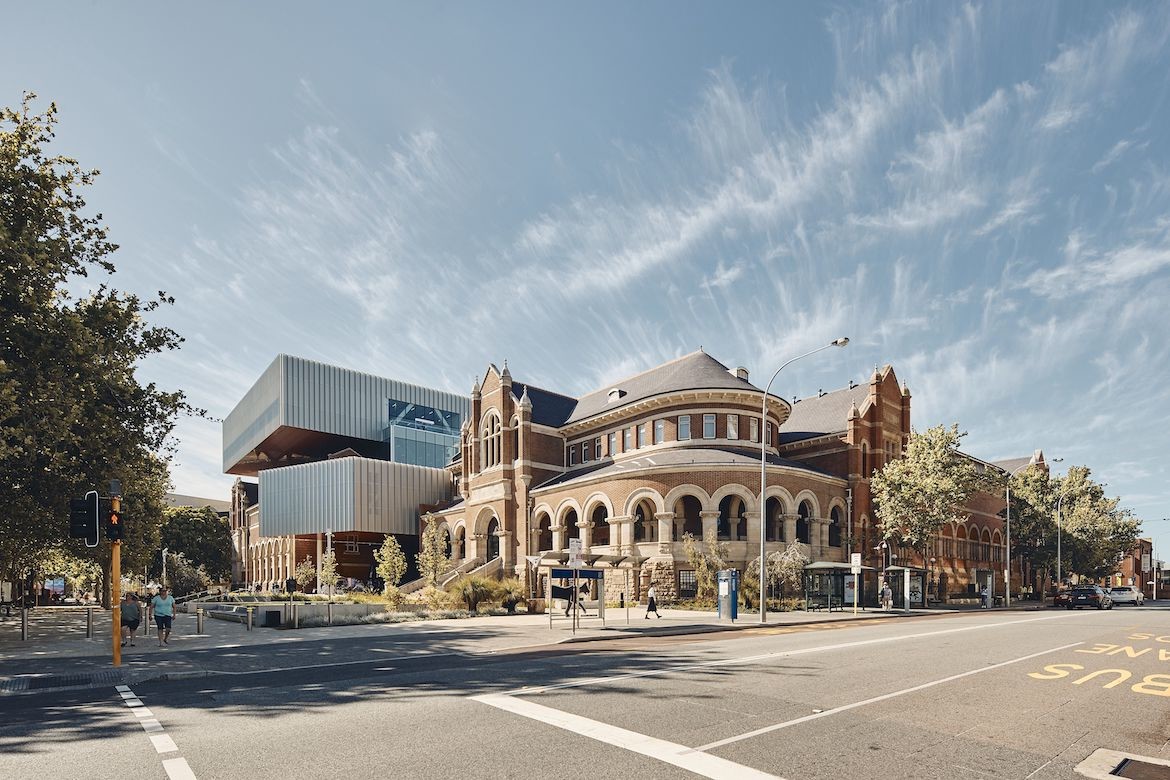
Opened to much fanfare in November 2020, and designed by OMA in a joint-venture collaboration with Hassell, WA Museum Boola Bardip (a term meaning “Many Stories” in the Noonga Aboriginal language) is one of seven facilities that make up the WA Museum. It is located in Perth’s Cultural Centre, a precinct that is dedicated to the arts and culture.
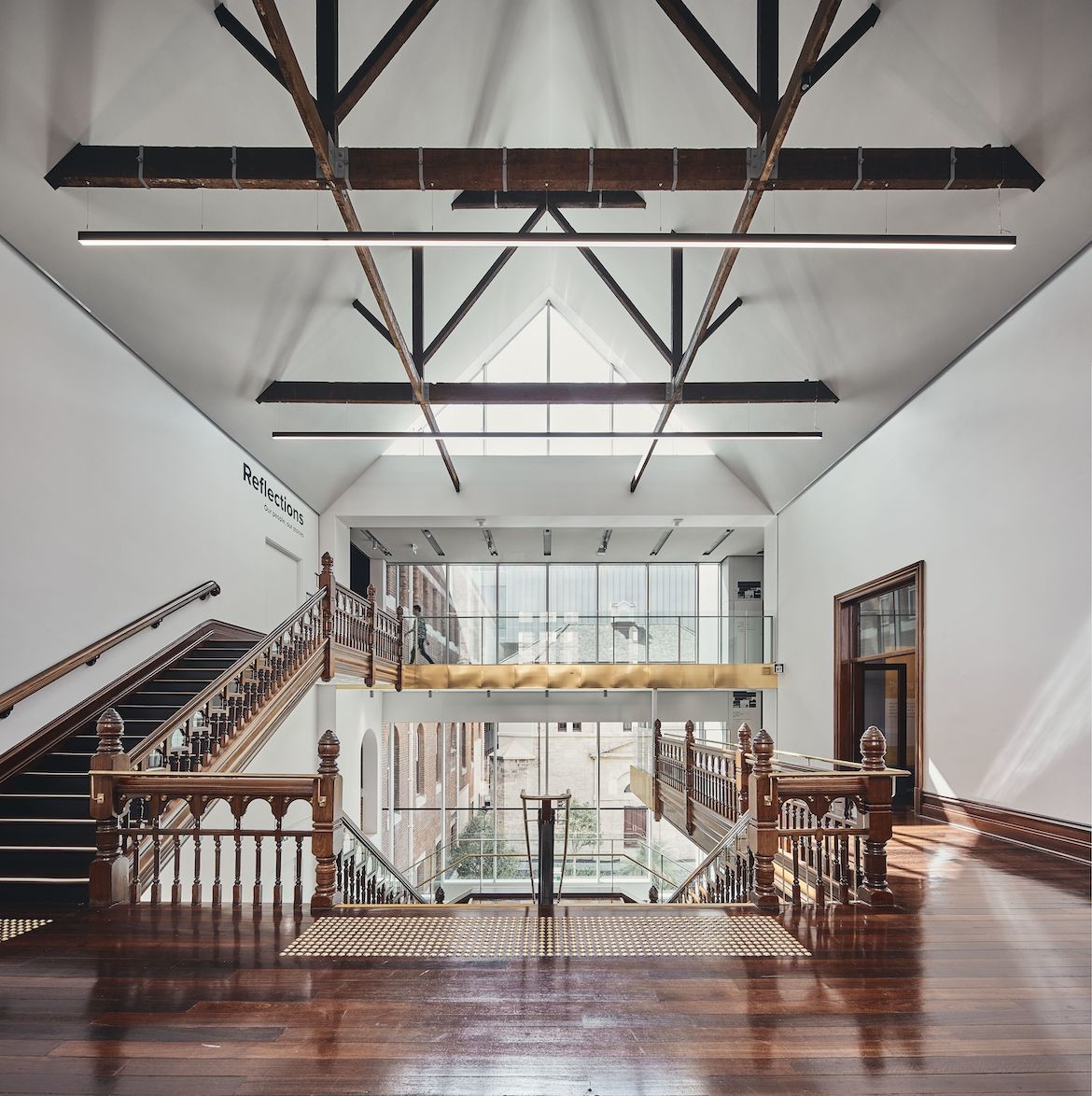
In all, WA Museum Boola Bardip incorporates four existing heritage buildings – the Old Gaol (dating from the mid-19th Century), the Jubilee Building (1899), the original Art Gallery (1908) and Hackett Hall (which is the State Library’s reading room and was built in 1913) – as well as some new structures.
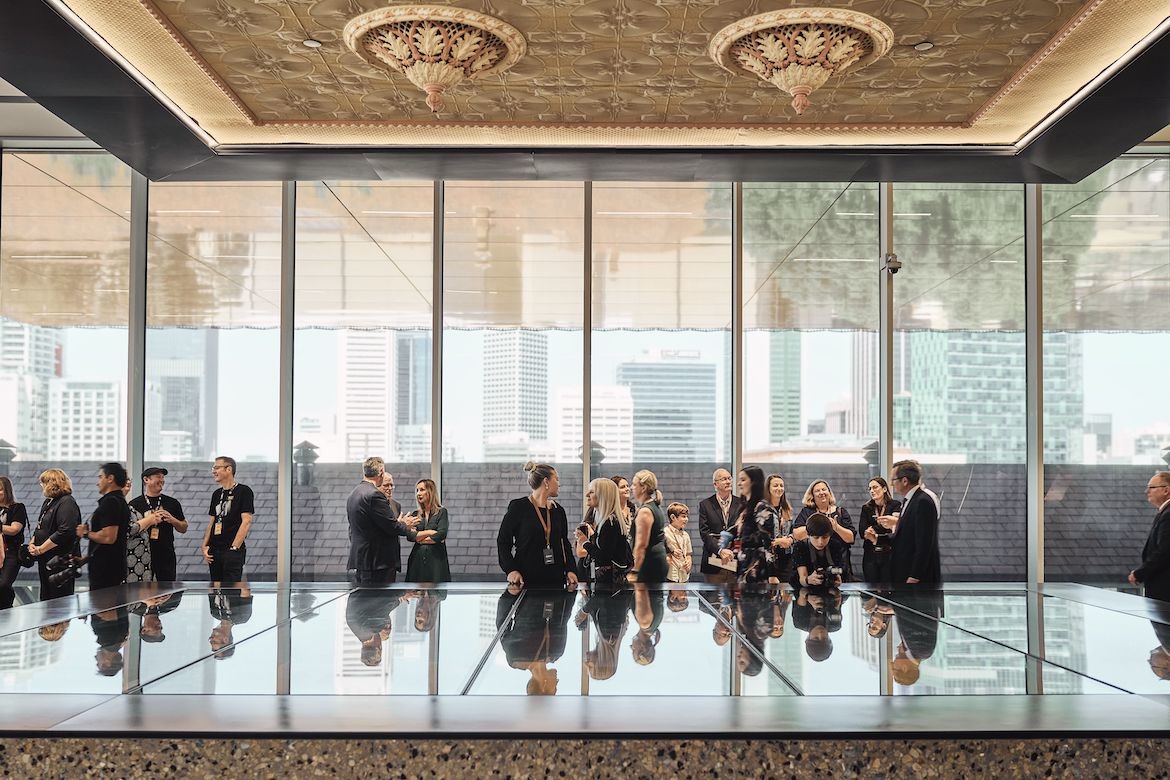
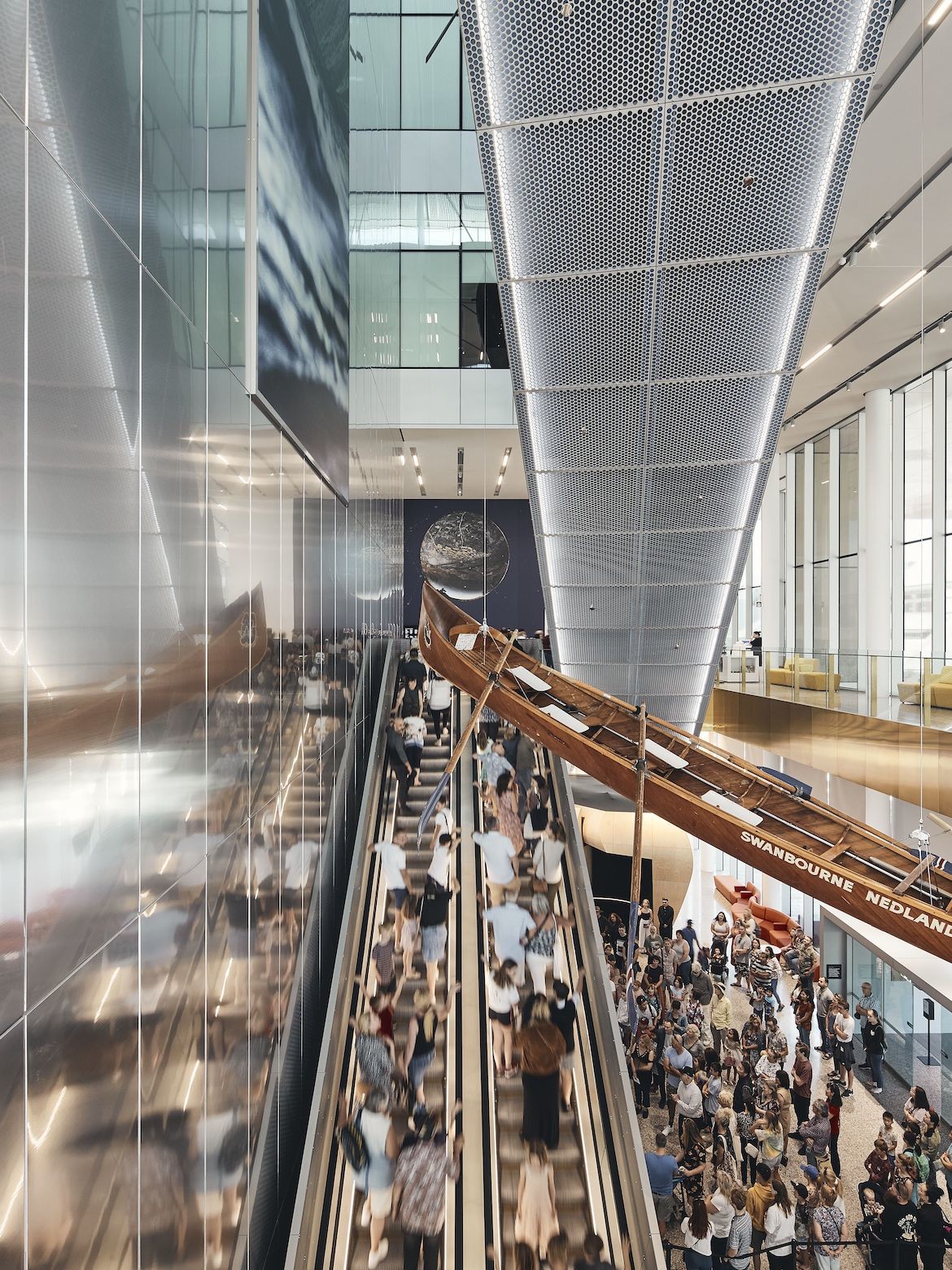
The contemporary additions effectively wrap around these heritage buildings to create two intersecting circulation loops that offer a variety of curatorial possibilities, as well as the ‘City Room’ – a central public space intended for cultural programs and daily activities.
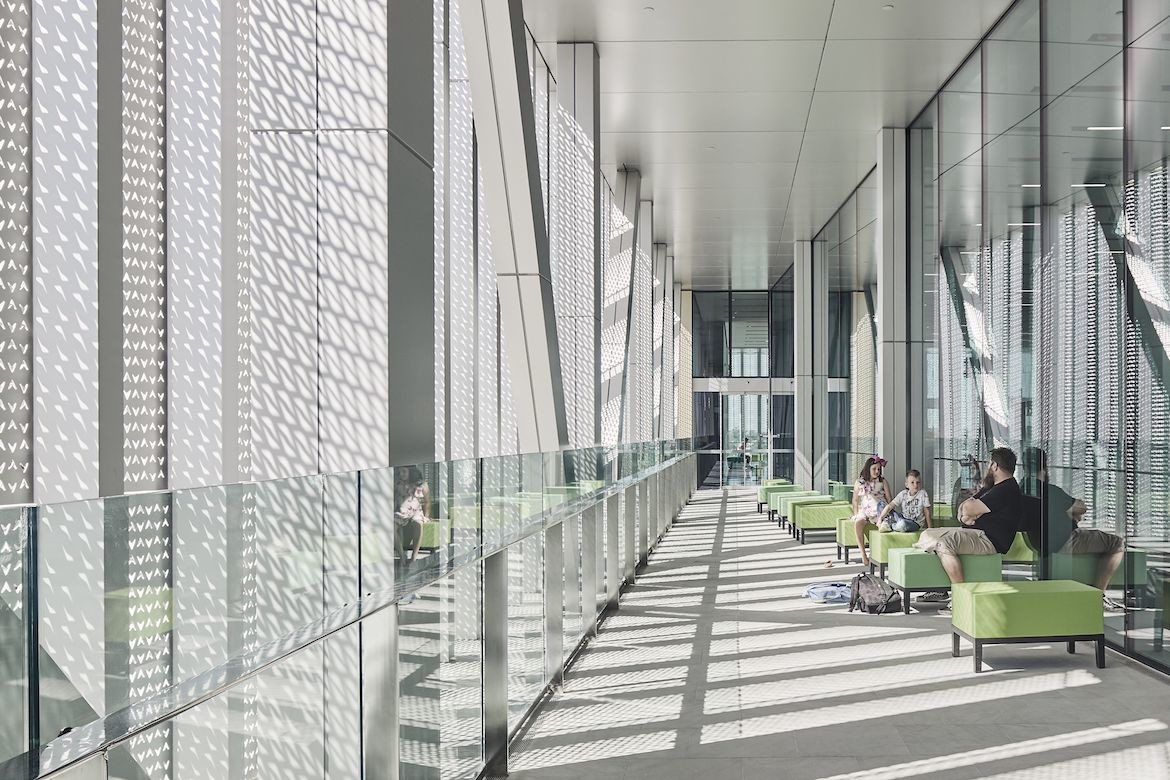
Apart from these dedicated spaces, the development also includes areas set aside for dining, retail, and educational activities. In all, as a result of the development, the museum is now three times its original size. Featuring perforated metal cladding, the museum’s new additions catch the attention by not only shining during the day but also glowing at night.
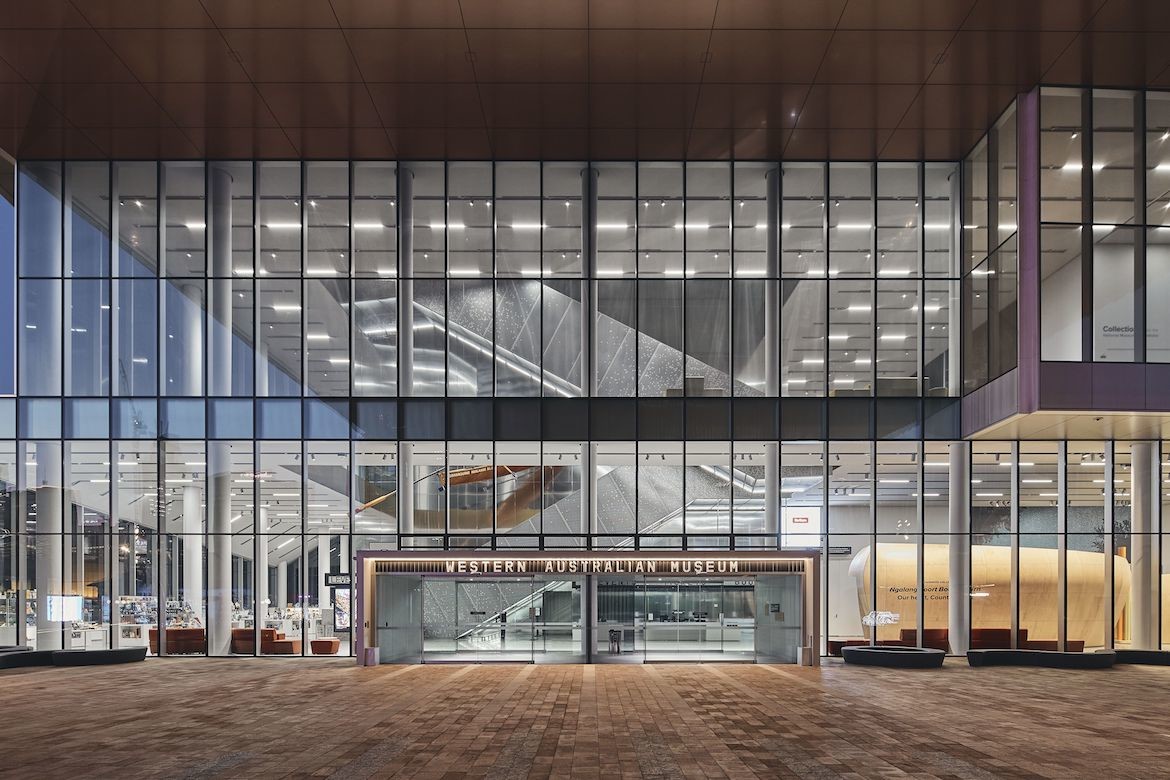
The establishment of OMA’s Australian office places it in an even better position to continue such work. If the example of WA Museum Boola Bardip is anything to go by, the organisation is set to contribute in a significant way to Australia’s built environment.
As David Gianotten, OMA managing partner – architect, told IndesignLive, “Our growing presence in the region has enabled us to engage with projects of different scales and typologies, and this has allowed us to bring in more of our extensive experience from other parts of the world, to supplement the knowledge that we have gained in Australia through working in the country over the past years in collaboration with Australian architects.”
OMA
oma.com
Hassell
hassellstudio.com
Photography
Peter Bennetts, courtesy of Hassell + OMA
We think you might like this article about the Denton Corker Marshall’s Shepparton Art Museum in Victoria.