Red tape and development silos across large sites are notorious for stifling the cultivation of vibrant, viable and sustainable urbanity. But does it have to be this way? If Newcastle East End is anything to go by, no.
The large scale urban development is all part of SJB’s masterplan for the rapidly growing Newcastle CBD, awarded to the preeminent architecture practice back in 2013. Eight years on and Stage 1 of Newcastle East End—the first of four city blocks approved for development as part of the masterplan—has realised completion and, in the process, brought new life to the neglected centre of Newcastle.


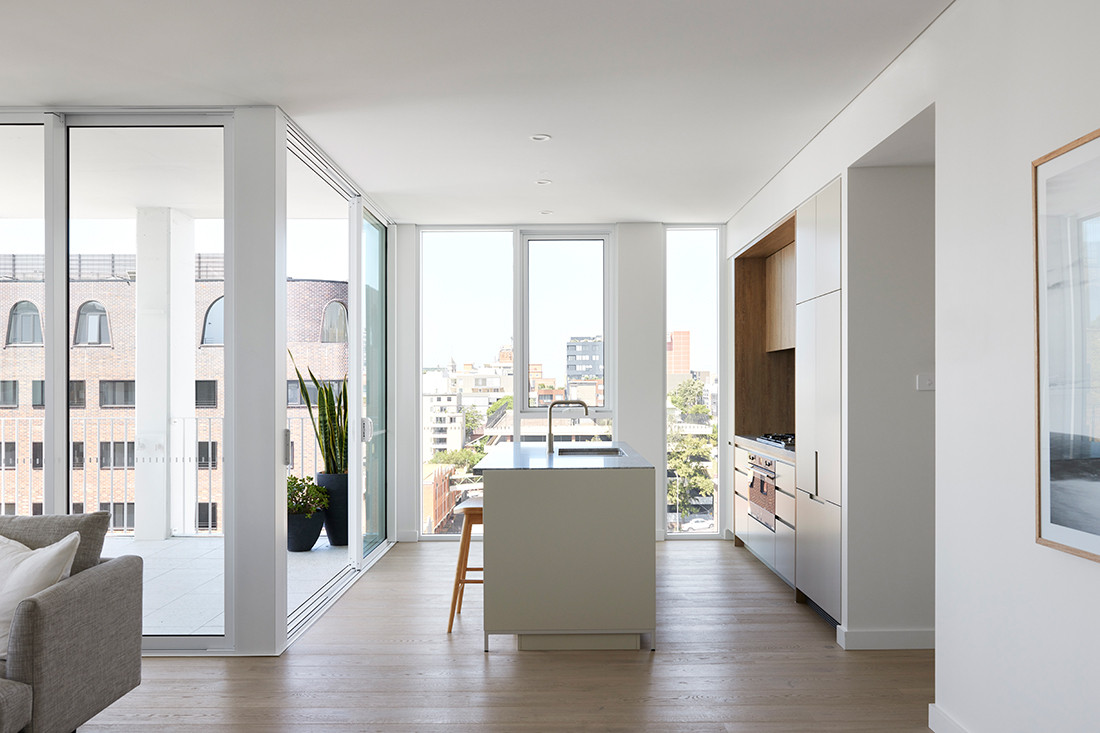
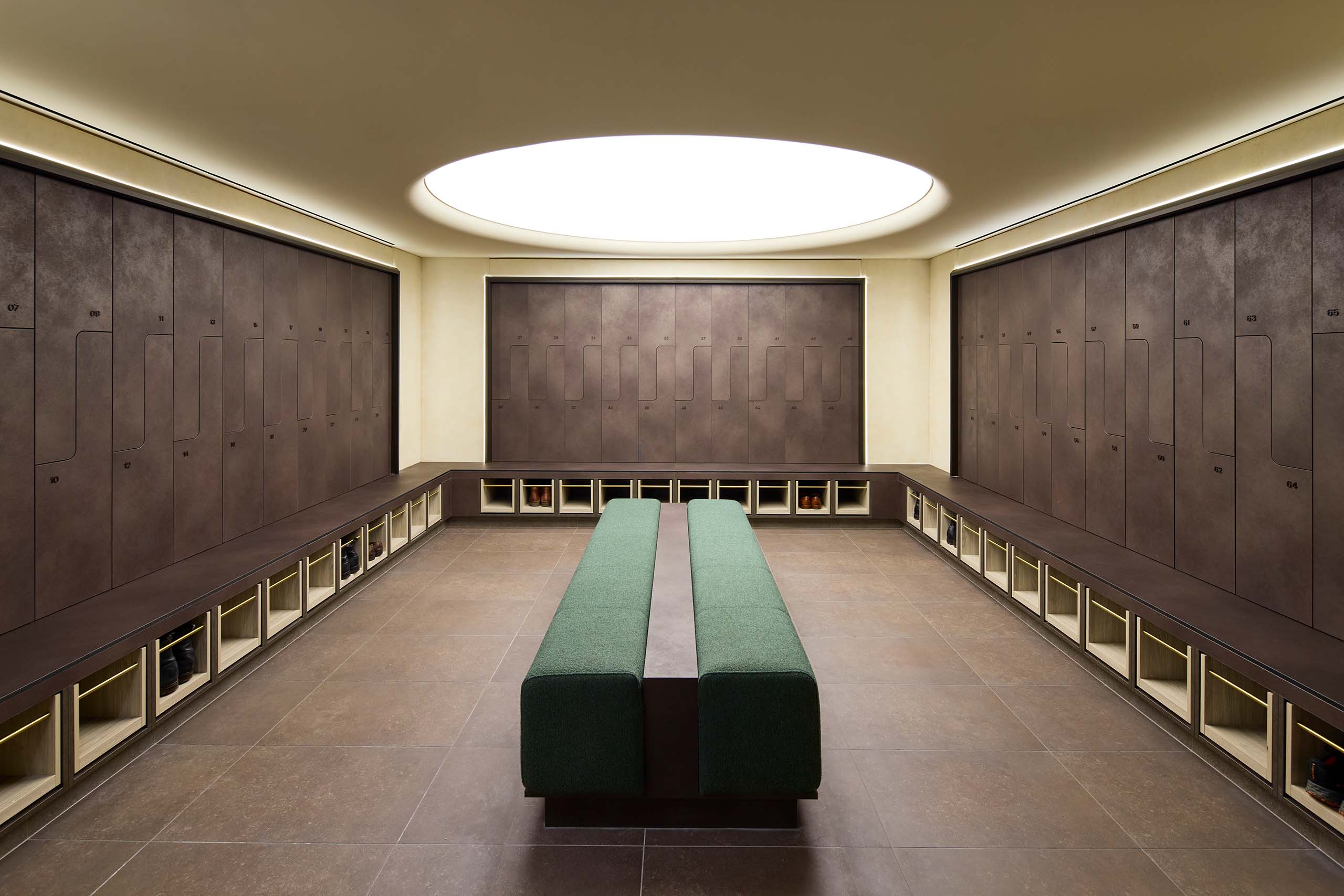
Featuring three new mixed use buildings — each designed by one of Australia’s leading architecture studios — the first stage of Newcastle East End reflects innovation and radical collaboration in the scheme of urban design and development processes. In alignment with the objectives outlined by the NSW Government Architects Office, the project is an exemplar of Design Excellence at work.
With SJB at the helm, fulfilling the role of executive architect, Durbach Block Jaggers and Tonkin Zulaikha Greer consummated the inimitable inter-studio architectural team. Each being appointed to the project for their demonstrated capacity to deliver mixed use buildings of an exceptional standard and their astute approach to working in complex heritage contexts — an aspect vital to the project’s success.
The architects’ collective ambition to create a protected civic space—offering urban diversity, retaining historic fabric and working in dialogue with the city surrounds—in the centre of the site became the linchpin of the collaborative design response, and consultation with local council integral to realising the dream. Prior to submitting the DA for approval, SJB, DBJ and TZG held periodic meetings, throughout 2017, with Newcastle City Council’s Urban Design Consultative Group of councillors, architects and planners to shape the design and facilitate greater potential for a built outcome sensitive to the site, city and community.
The radically collaborative design process resulted in the dissolution of numerous arbitrary planning constraints outlined in the approved masterplan. Responsive to the site and surrounding context, co-design between the architects, Government Architects and Newcastle City Council saw iterative revisions made to the plans. With their envelopes sympathetically shaped to suit the existing built environment, the three new buildings each express their own stories of the city.
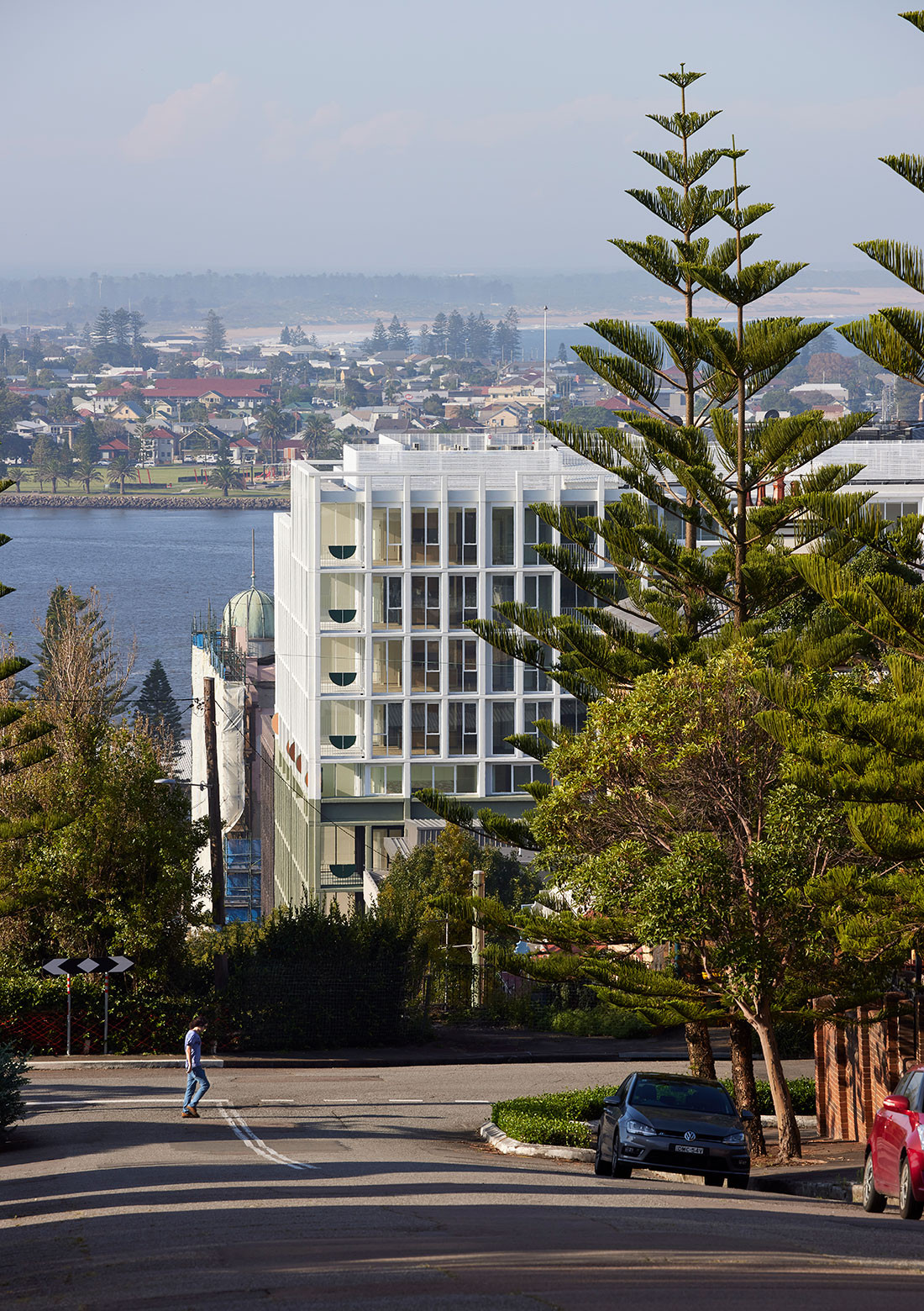
Cast in concrete and stained lightly with a greenish hue, the structural rhythm, decorative geometries and articulated skyline of Perkins and King by SJB knit the new building into its surroundings. The design is a result of the architects’ dedicated effort to study and map the built qualities unique to Newcastle, culminating in a building that sits comfortable in its context while enhancing the architectural identity of the city.
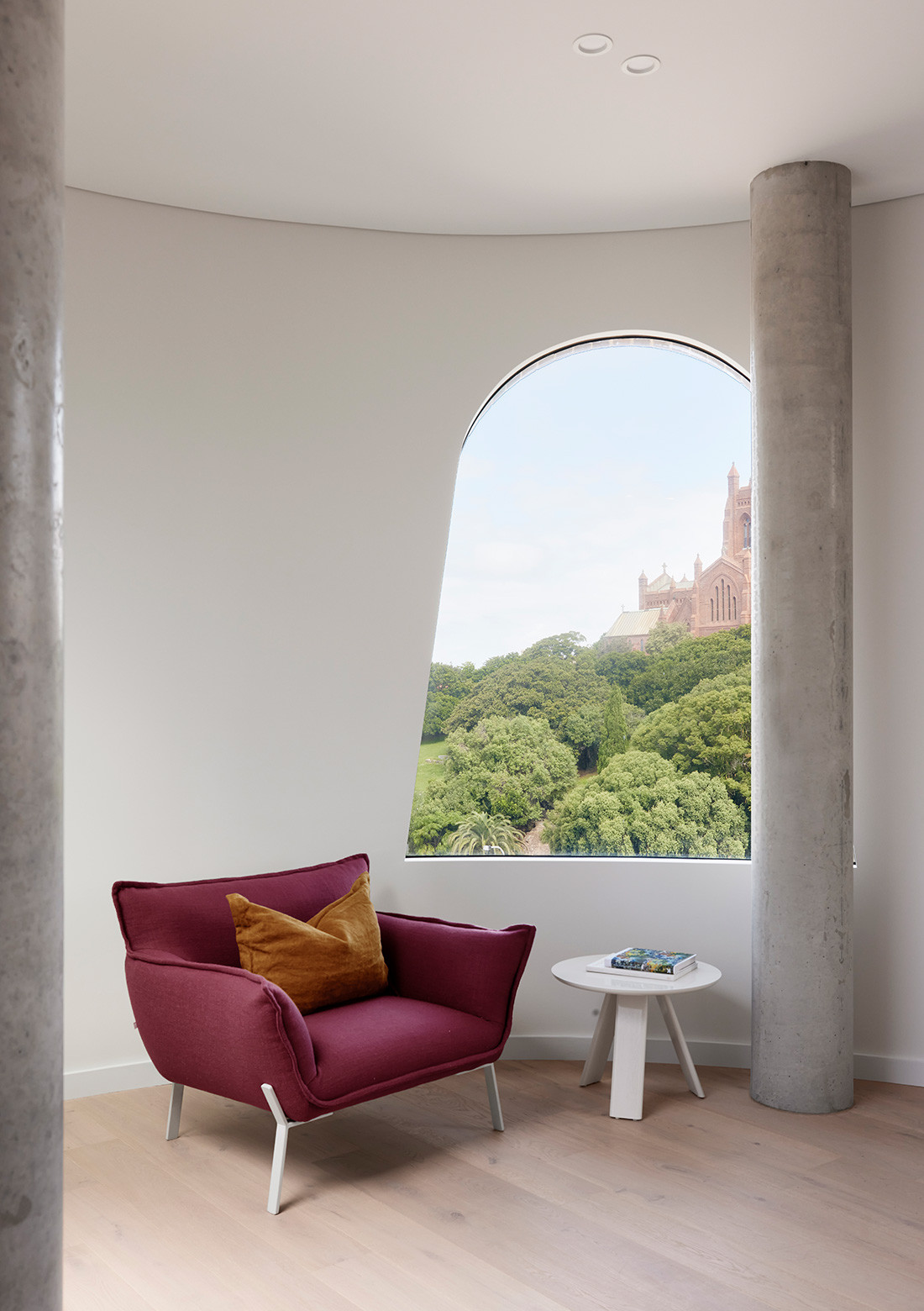
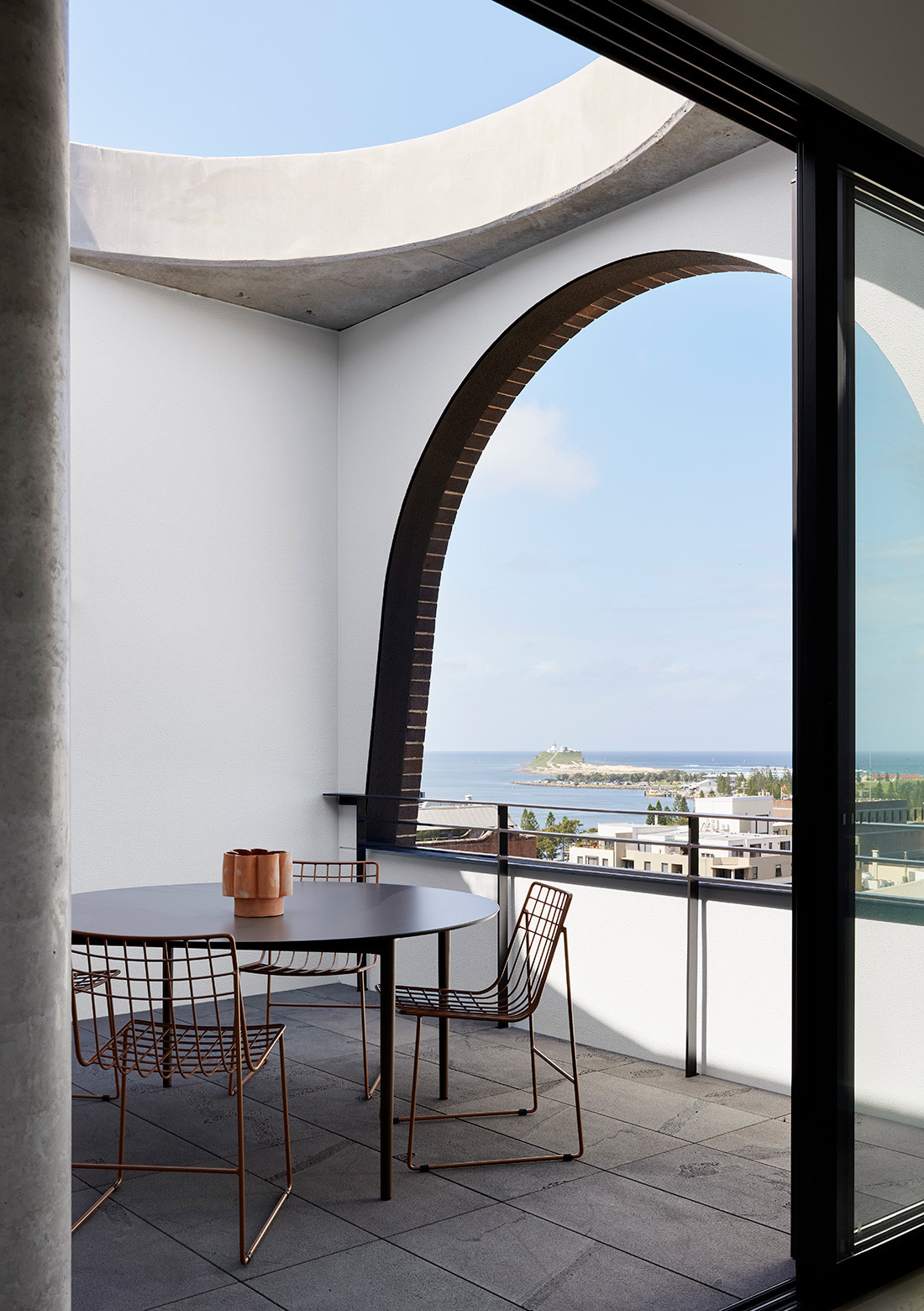
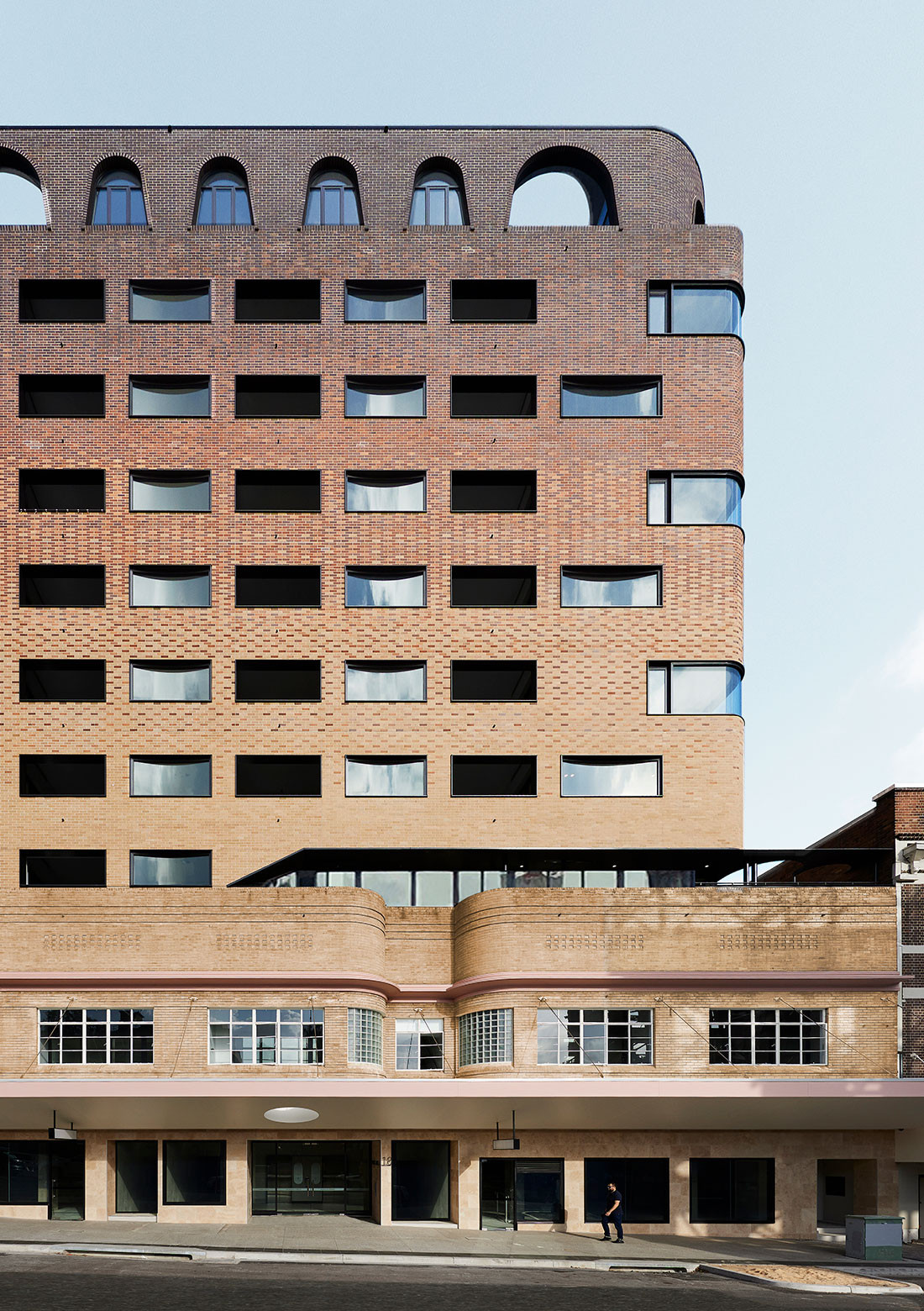
Honouring the brick architecture of the existing building and the iconic heritage buildings of Newcastle’s East End, Fabric House by Durbach Block Jaggers is expressed through a tonal gradient of bricks and curvaceous edges. The resultant building presents a unique case study for a considered and contemporary architectural response to a heritage context.
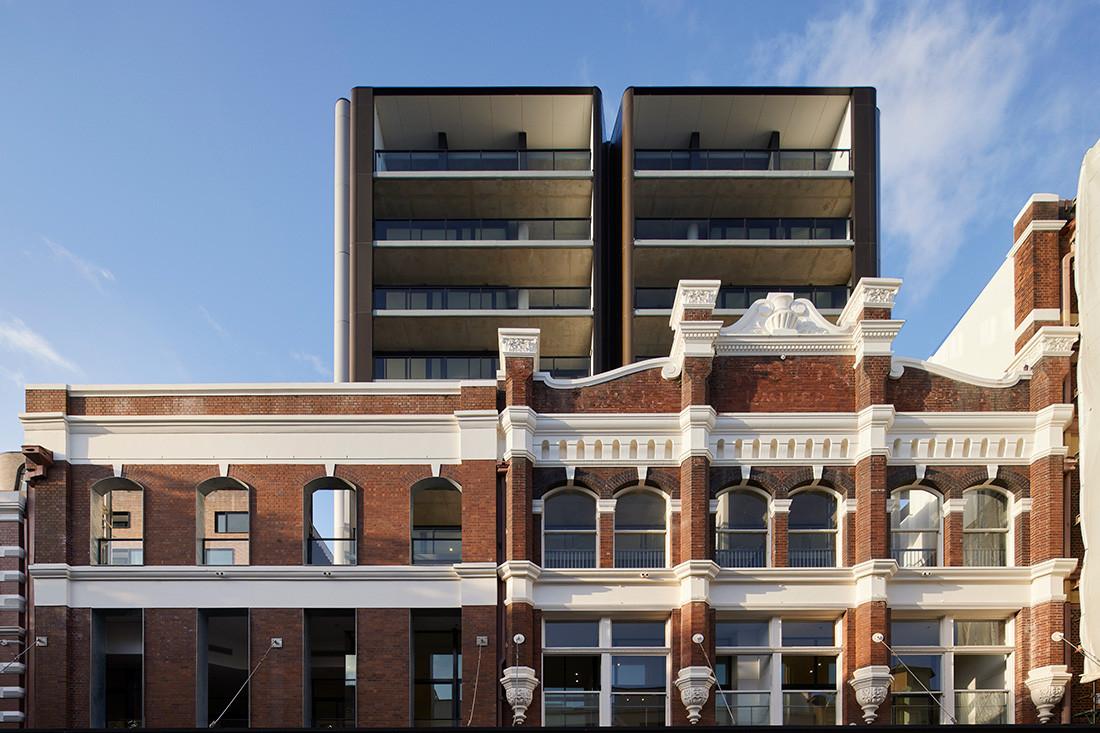
Finally, Washington House by Tonkin Zulaikha Greer astutely reorients all apartments to capture northern sun and harbour views, while the ground floor lobby and retail spaces celebrate the old-world glamour of Newcastle’s beloved David Jones department store.
With SJB’s masterplan, founded on extensive research into the built fabric of Newcastle, as its guiding star, the first stage of Newcastle East End has realised its completion with utter cohesion, all thanks to a wholly integrated approach to urban design and planning.
Photography by Tom Roe