Inspired by nature, the new Keon Park Station provides essential transport infrastructure while contributing to the wellbeing of its community.
Keon Park Station is situated approximately 14 kilometres north-east of the Melbourne CBD and operates as a civic gateway for Melbourne’s Mernda Line. The station serves the suburb of Thomastown at the boundary of the Cities of Whittlesea and Darebin and, with the upgrade to the station by Wood Marsh, there is now a safe, contemporary and user-friendly addition to the area.
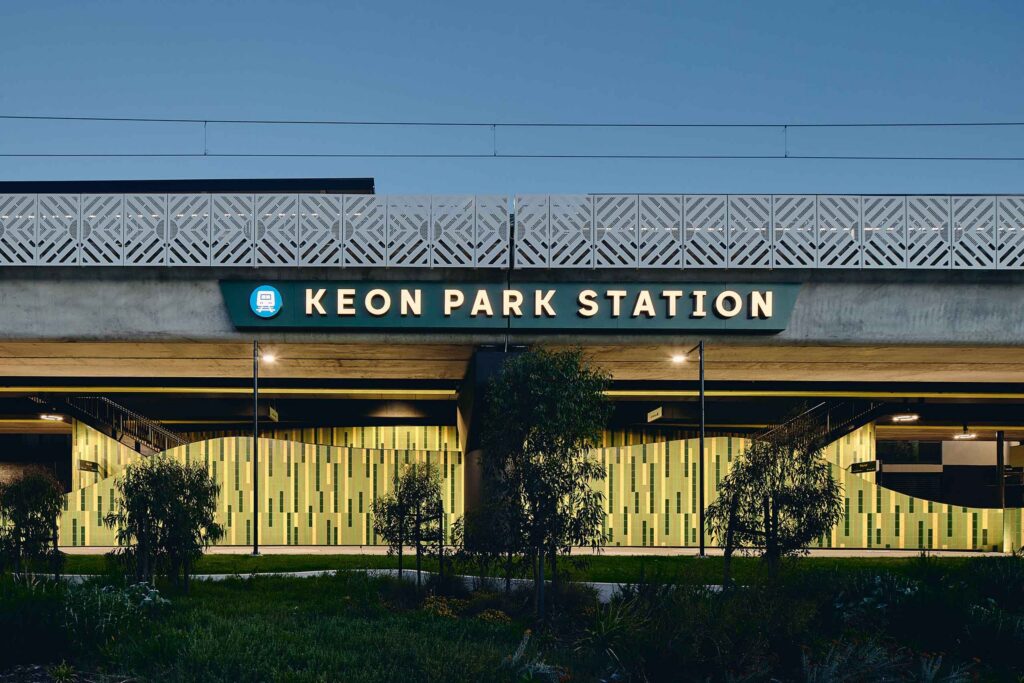
The Keon Parade Level Crossing Removal project has been delivered by the North-Western Program Alliance (NWPA) with VIDA Rail (Victorian Infrastructure Delivery Authority) and Wood Marsh. Roger Wood, co-founder and director of Wood Marsh, was lead on the project, and he and his team have conceived a unique design that brings the station’s form and function into the 21st century.
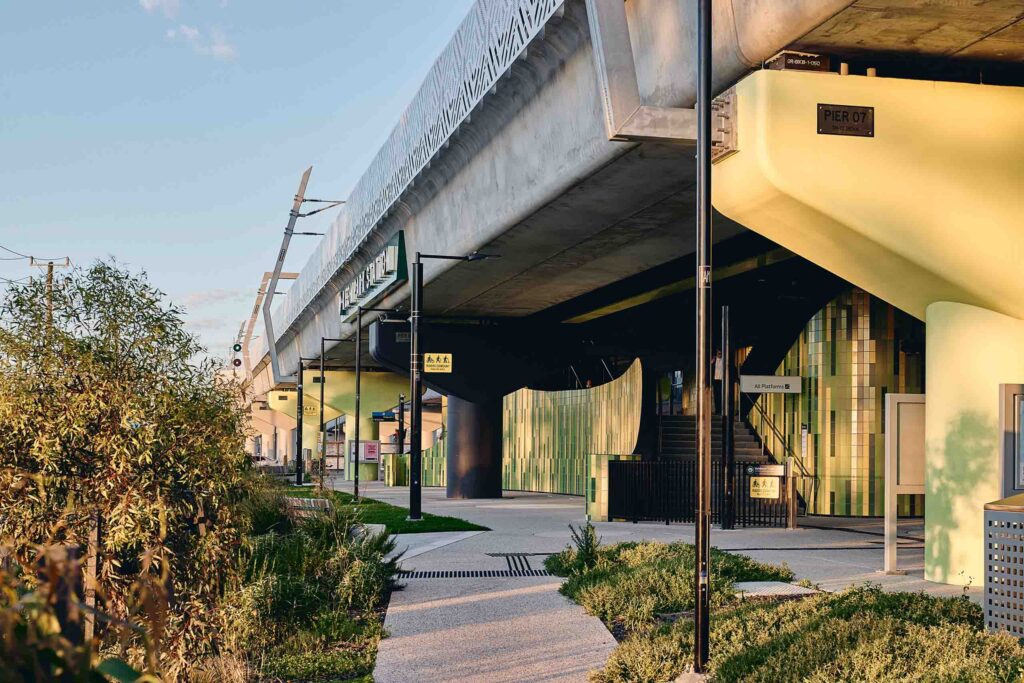
The new station replaces a constrained at-grade facility with an elevated rail and concourse that eliminates a dangerous level crossing at Keon Parade, and the design transforms a previously fragmented corridor into a safer, more connected piece of public infrastructure.
Related: Living outside the box
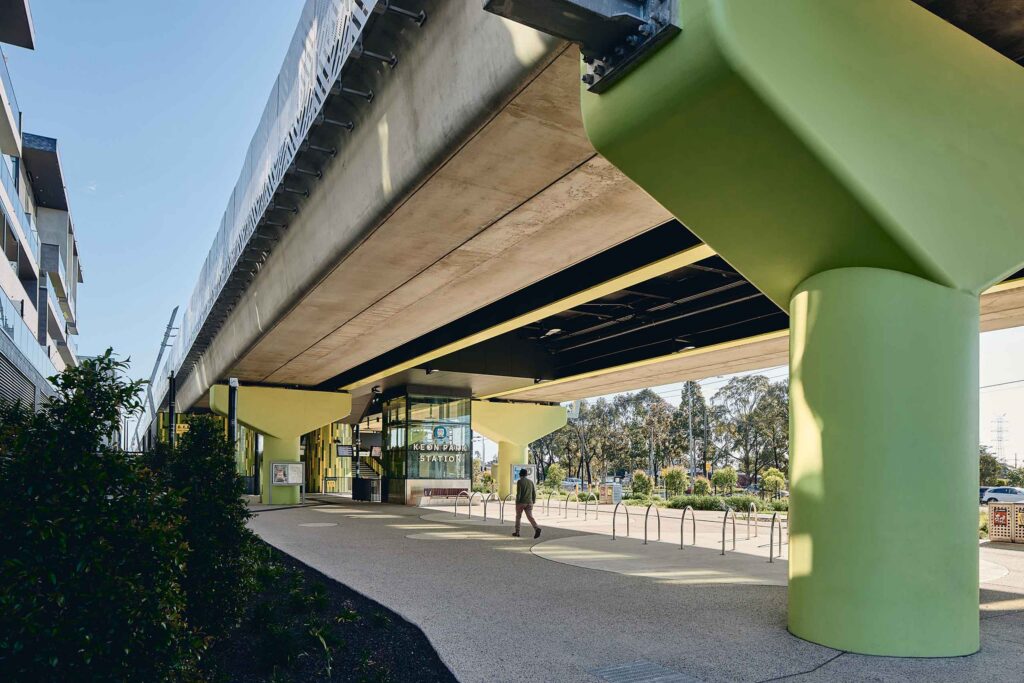
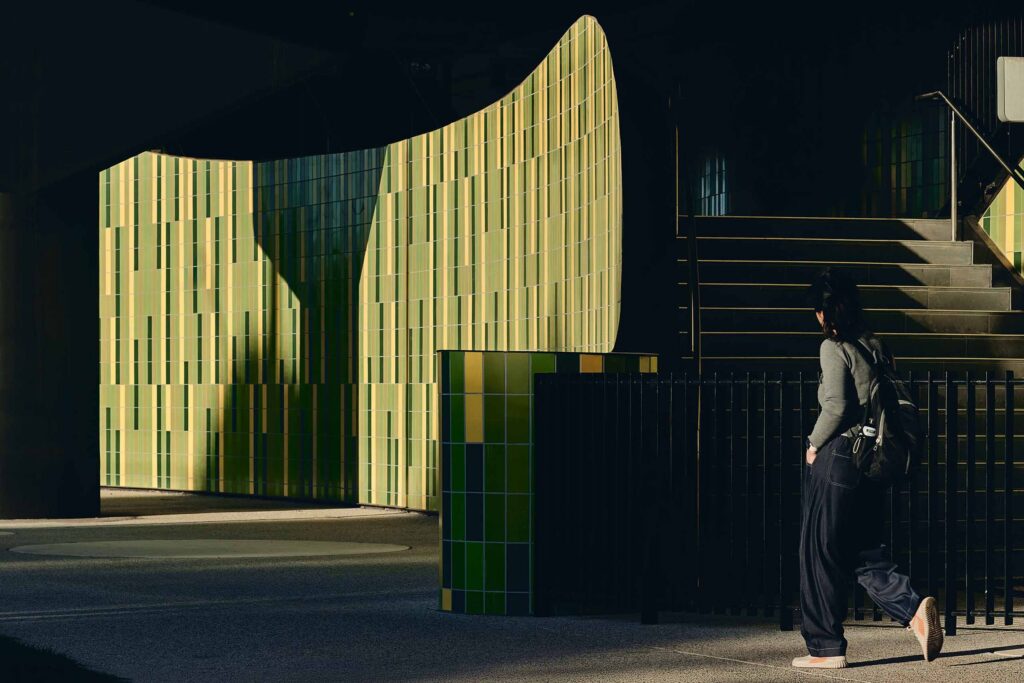
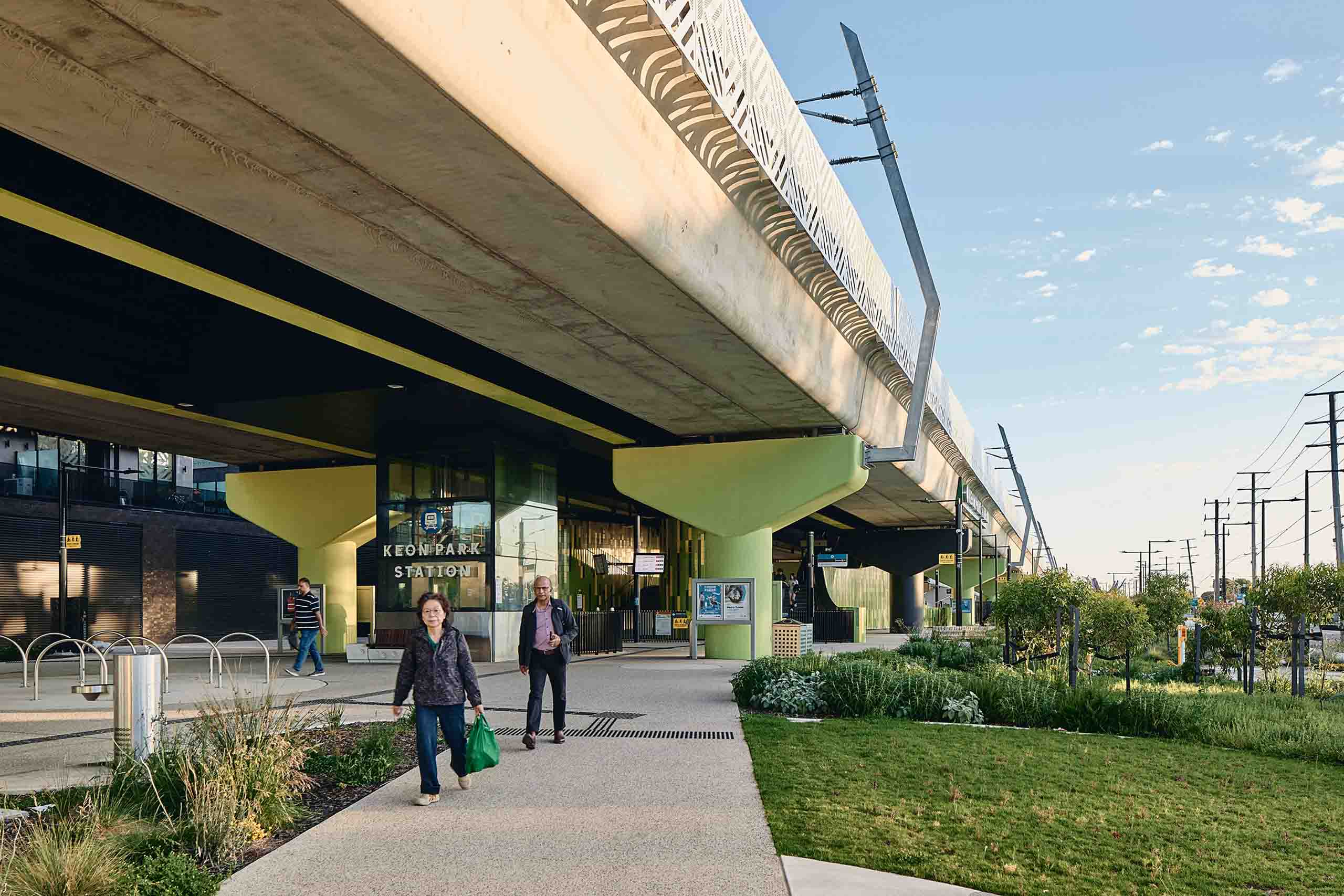
The design has been inspired by the surrounding parklands, with a planted landscape that will mature and enhance the structure over time. However, the architects have cleverly introduced a sense of nature to complement the flora through the ceramic tiling pattern that wraps key structural elements. Not only does this soften the bulk of the built form, namely the concrete viaduct, but the use of colour acts as a wayfinding tool and delivers an individual identity to the new station.
“From the outset, we wanted the station to be more than transport infrastructure. The design establishes a strong civic identity by translating the character of the surrounding parklands into architecture, creating what we describe as a ‘virtual landscape’ while the newly planted vegetation matures over time. The ceramic tiling palette in light green, dark green and yellow introduces warmth, colour and legibility to the station, softening the scale of the elevated structure and creating a memorable public place that is both highly functional and distinctly local,” says Wood.
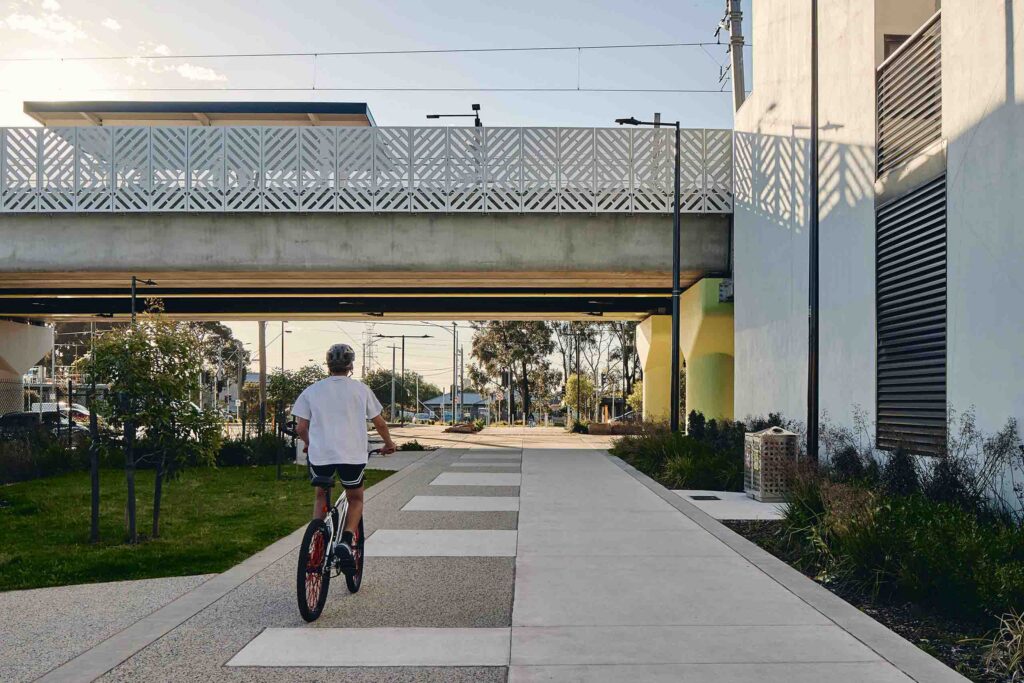
Perforated aluminium balustrading and privacy screens extend along the viaduct and continue an Indigenous co-design language that has been established elsewhere on the Mernda Line. These elements provide necessary visual screening to neighbouring residences while reinforcing a broader corridor-wide identity and cultural continuity.
With the relocation of the station to the southern side of Keon Parade, there is a re-establishment of direct connections with surrounding residential areas that helps users better navigate multiple traffic crossings. The inclusion of dual, symmetrical entrances responds to increased public demand but also helps future-proof the station for growth, concurrently facilitating direct links to bus services, shared-use paths and cycling infrastructure.
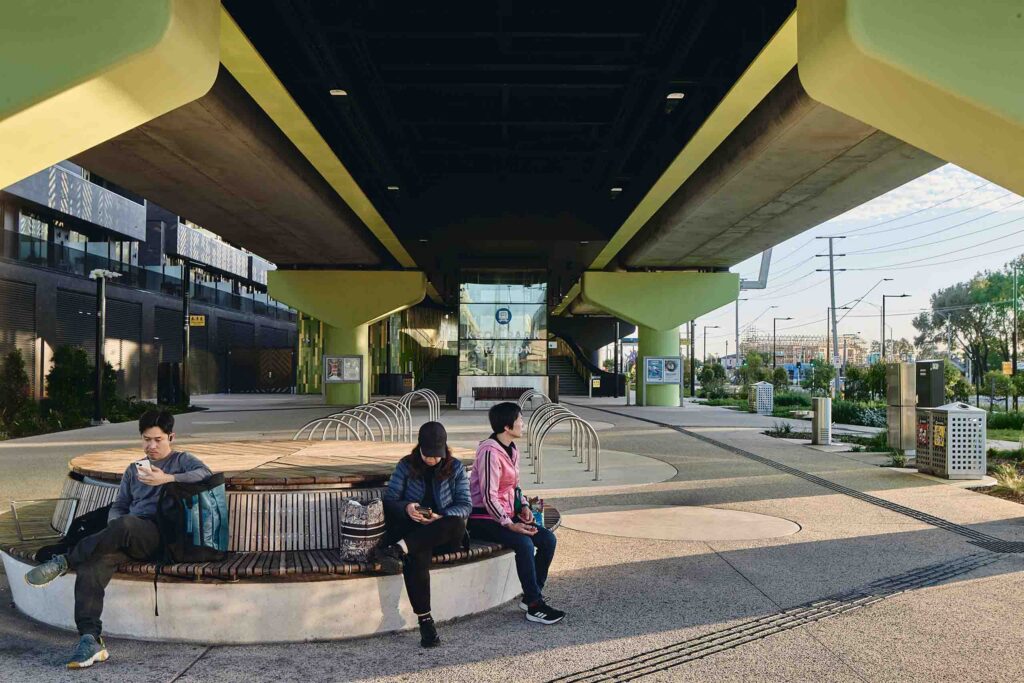
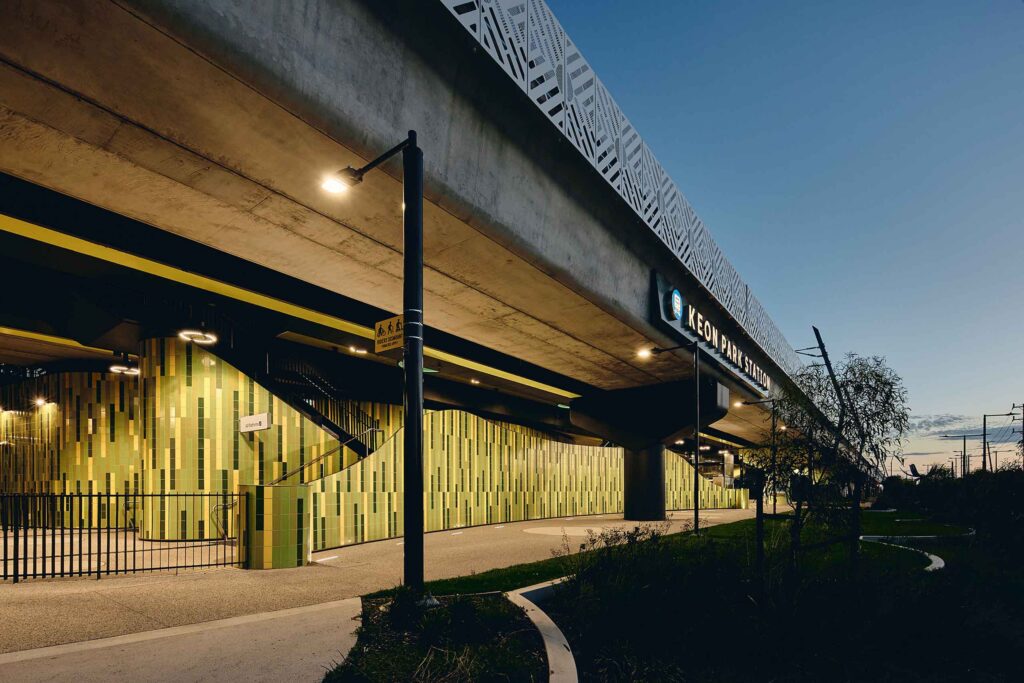
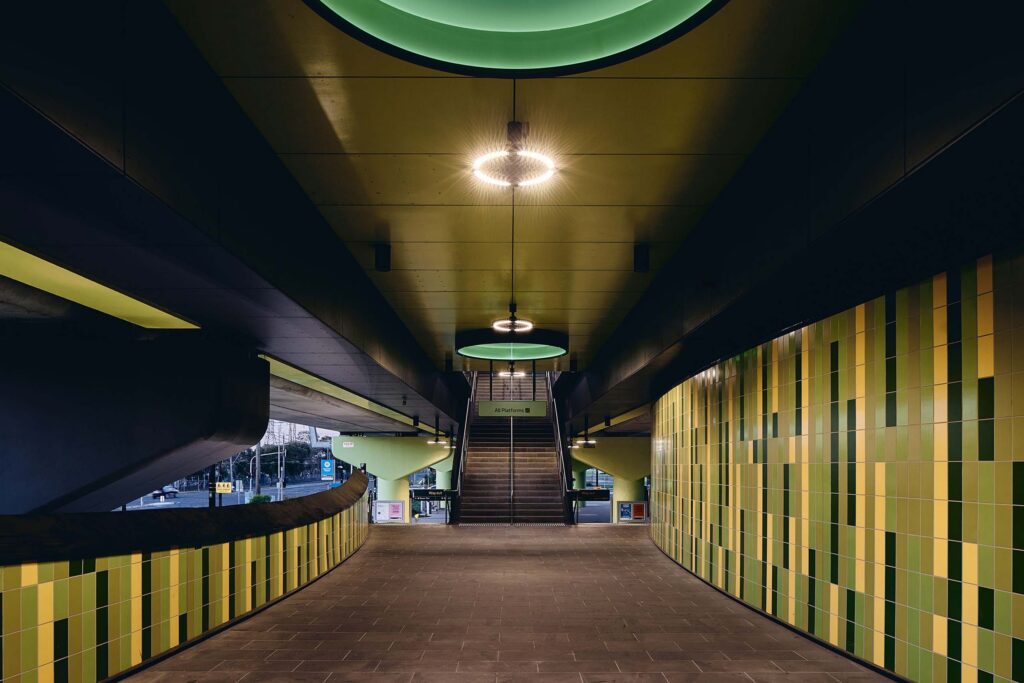
There is a centralised arrangement of lifts, switchback stairs and emergency egress routes, and the elevated concourse podiums connect stair mid-landings and eliminate residual spaces. The inclusion of circular lights illuminates the concourse beneath the platform, which in turn improves the passenger experience and adheres to CPTED (Crime Prevention Through Environmental Design) principles in Victoria.
Wood comments, “Safety is embedded in every aspect of the station’s design. Clear sightlines, intuitive circulation and a centralised arrangement of lifts and stairs make the station easy to navigate, while the generous open concourse and lighting beneath the platforms support passive surveillance. Relocating the station and removing the level crossing has also fundamentally improved pedestrian connectivity, creating safer and more direct links between surrounding neighbourhoods and public transport.”
The new Keon Park Station contributes to the public cultural domain and brings considered design and updated technology to the precinct. With forecourts, better visual transparency and reinvigorated circulation flow, the community is well served and can now enjoy a greatly improved travel experience.
Wood Marsh
woodmarsh.com.au
Photography
Peter Bennetts