Christchurch gallery The National finds a new way of showcasing its jewellery following the loss of its space.
August 18th, 2011
After losing its gallery space in the February earthquakes, Christchurch’s The National is bringing its work to the public in a different way.
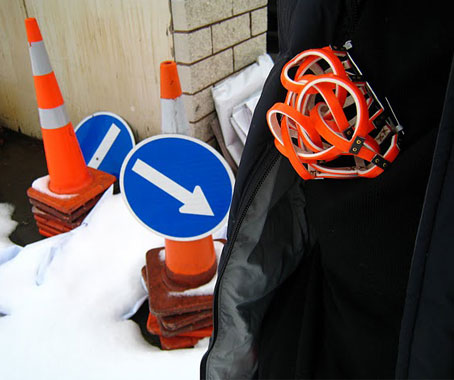
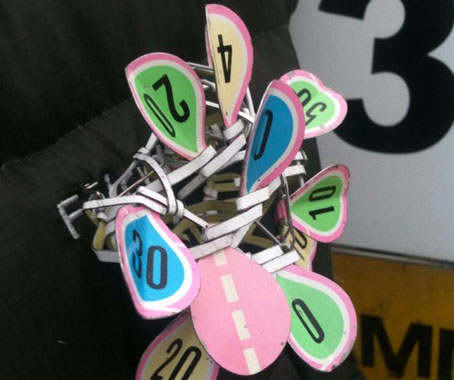
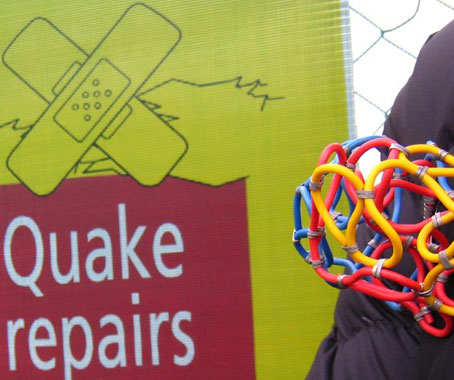
Its latest initiative, Host A Brooch, repurposes objects from around the city and takes them to the streets.
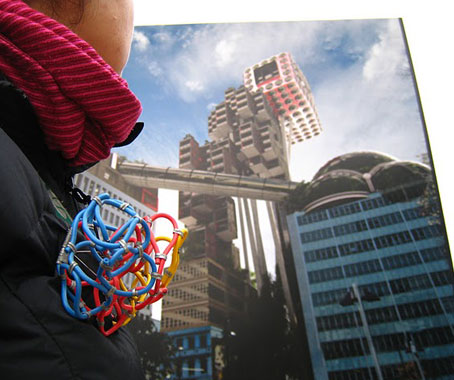
Contemporary jeweller Jacqui Chan has created 16 brooches out of materials gathered around Christchurch. Between 26 August and 1 October, the public is invited to ’host a brooch’ on an urban expedition.
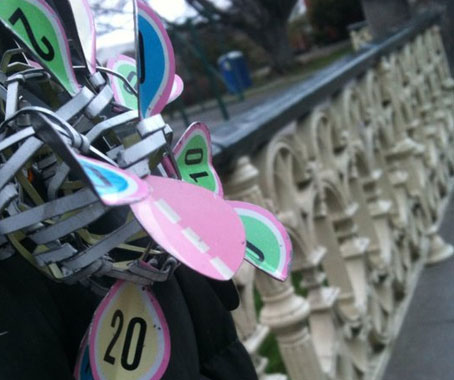
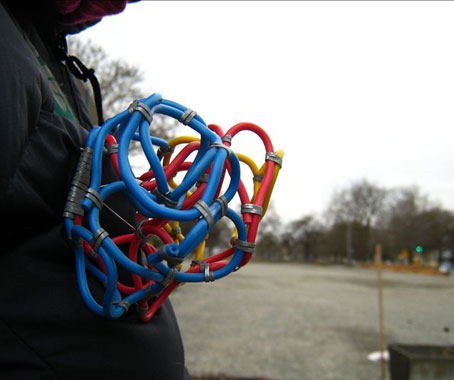
“Just as a bicycle alters our experience of a city, the brooches produce new sensory experiences, routes and encounters, (re)connecting us with our suroundings,” The National states.
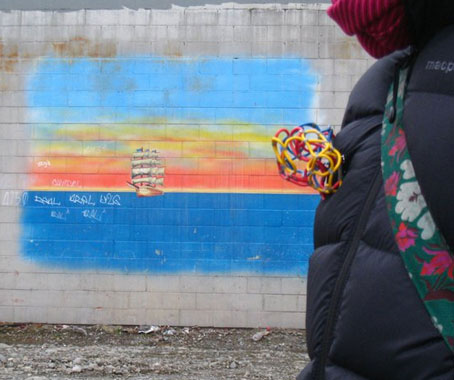
Brooch hosts will document their adventures through a series of photographs, which will then be compiled into a visual map and record of the city.
The project arose from Chan’s concept of the city as a living organism, a ’saprophyte’ that lives on decomposing matter and releases nutrients into the ecosystem.
Her brooches take the waste of the city, transform it and feed back as they are worn. In a city experiencing a state of change and rebirth, the brooches represent the ability for discarded and damaged materials to take on new life.
Host A Brooch blog
hostabrooch.blogspot.com
The National
thenational.co.nz
INDESIGN is on instagram
Follow @indesignlive
A searchable and comprehensive guide for specifying leading products and their suppliers
Keep up to date with the latest and greatest from our industry BFF's!
In the last instalment of our three-part performance seating series, Alex Bain from Architectus explains why sitting well shouldn’t feel like sitting at all and explores an unexpected success metric of the hybrid workplace: the grounding power of emotional support.
Blending versatile cooking with smart performance, Bosch AccentLine appliances bring a quieter sense of order and simplicity to the modern kitchen.
The Geelong College’s Sport and Wellbeing Centre ‘Belerren’ designed by Wardle is designed around bringing in natural light. But Shade Factor’s job was to help modulate and precisely control it for the most important competitive moments.
Stepping into Intuit’s Sydney workplace certainly doesn’t feel like walking into an office. Why? In this film, we discover that, when joy takes precedence as a design driver, even a high-performing commercial CBD headquarters can feel like an intuitive wonderland that invites employees to choose their own adventure.
Corporate Culture hosted two intimate breakfasts in the Wishbone Café on Thursday 17 and Friday 18 September, presenting the Carl Hansen & Son collection with special guest William Boesen, President Sales (Asia Pacific), Carl Hansen & Son.
Eat Green Design is an exciting 5 day event that explores sustainable consumption delivering a smorgasbord of raw and organic foods and locally sourced produce to tantalise taste buds. A collaboration between designers, restauranteurs and socially and environmentally conscious individuals.
When: July 17 – July 21
Where: Level 2/39 Little Collins Street, Melbourne
Details/Bookings: www.eatgreendesign.com
Temporarily located in a re-designed space during the State of Design festival, Eat Green Design presents a transitory hospitality, networking and creative environment that serves as an incubator for sustainable thinking and awareness with a focus on encouraging inquiry, involvement and action.
The internet never sleeps! Here's the stuff you might have missed
AJC Architects’ EPIISOD Macquarie Park brings a more residential approach to student accommodation, pairing warm interiors with shared amenity and a strong connection to campus life.
Melbourne-based architect and object maker Adam Markowitz blurs the line between design and craft, bringing a deeply considered, material-led approach to his work. As both a practising architect and furniture designer, Markowitz explores how objects can respond to space, light and human use.
Scheduled to open later this year on the banks of the Parramatta River, the 30,000-square-metre Powerhouse museum — designed by Moreau Kusunoki in collaboration with Genton — represents a major shift in the geography of Sydney’s cultural infrastructure.