An underlying sense of ambition flows throughout AMP’s new workplace – one that translates into a hub that fosters learning, relationships, and human and environmental well-being. Collaborating with both AMP and experience designers FreeState to create a masterplan, Hassell has created a 35,000-square-metre workplace that is a wellspring of culture and spirit.
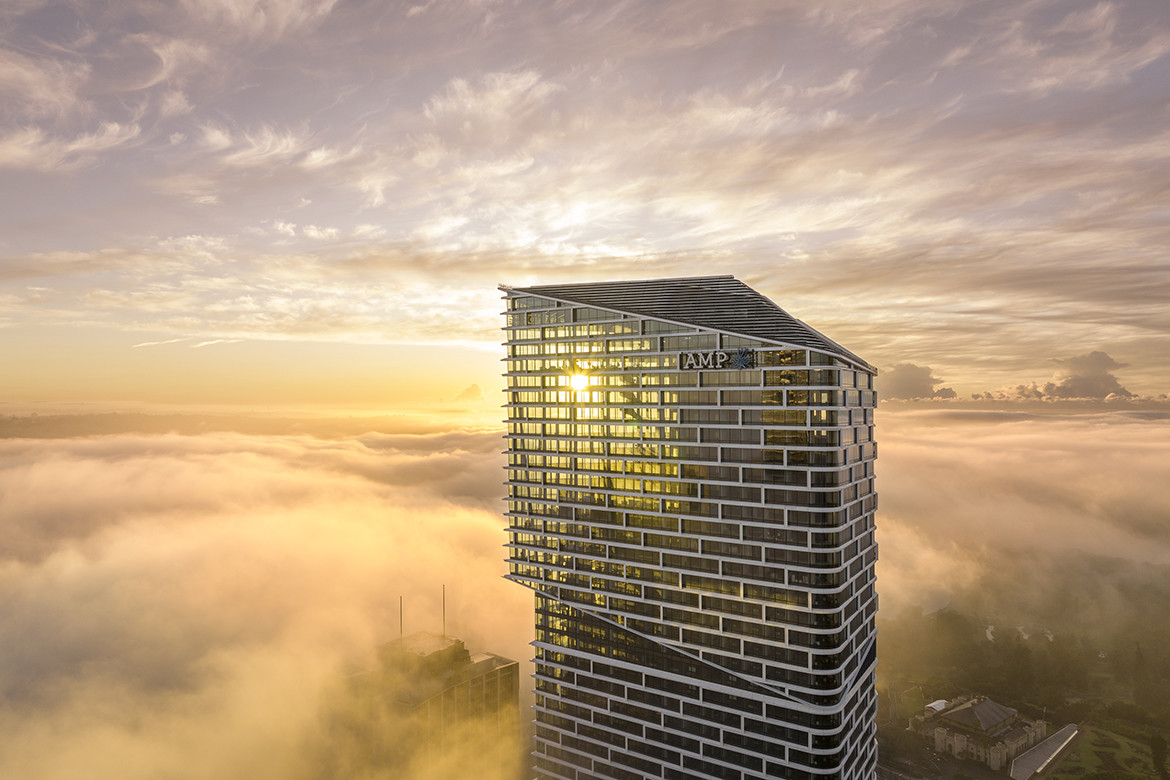
The space is highly activated and harbours rich cultural touches stemming from the basis of ambitious verticality provided by the striking Quay Quarter Tower base building by 3XN. The ingenious workplace design within the tower showcases Hassell’s eye for innovation and ingenuity.
The overall Quay Quarter project has been recognised internationally, winning the prestigious International High-Rise Award in Frankfurt, Germany. And most recently the International Architectural Awards’ 2022 ‘Office’ category was awarded to Quay Quarter Tower by 3XN during the World Architecture Festival.
AMP’s tenancy spans from levels 17 to 35 and goes beyond the pragmatism required to arrange a workplace of such monolithic scale. Hassell principal and commercial and workplace sector leader, Domino Risch, was part of the Hassell team that delivered on the workplace vision that interconnects stories, people and communities throughout the space.
“Conceived pre-COVID as a place of equality where everyone is welcomed, supported, and valued, this remarkable workplace is the physical embodiment of trust, openness and transparency,” says Risch.
Yet there is no denying that with the change in the workplace, this space has adapted toward ambitious heights.
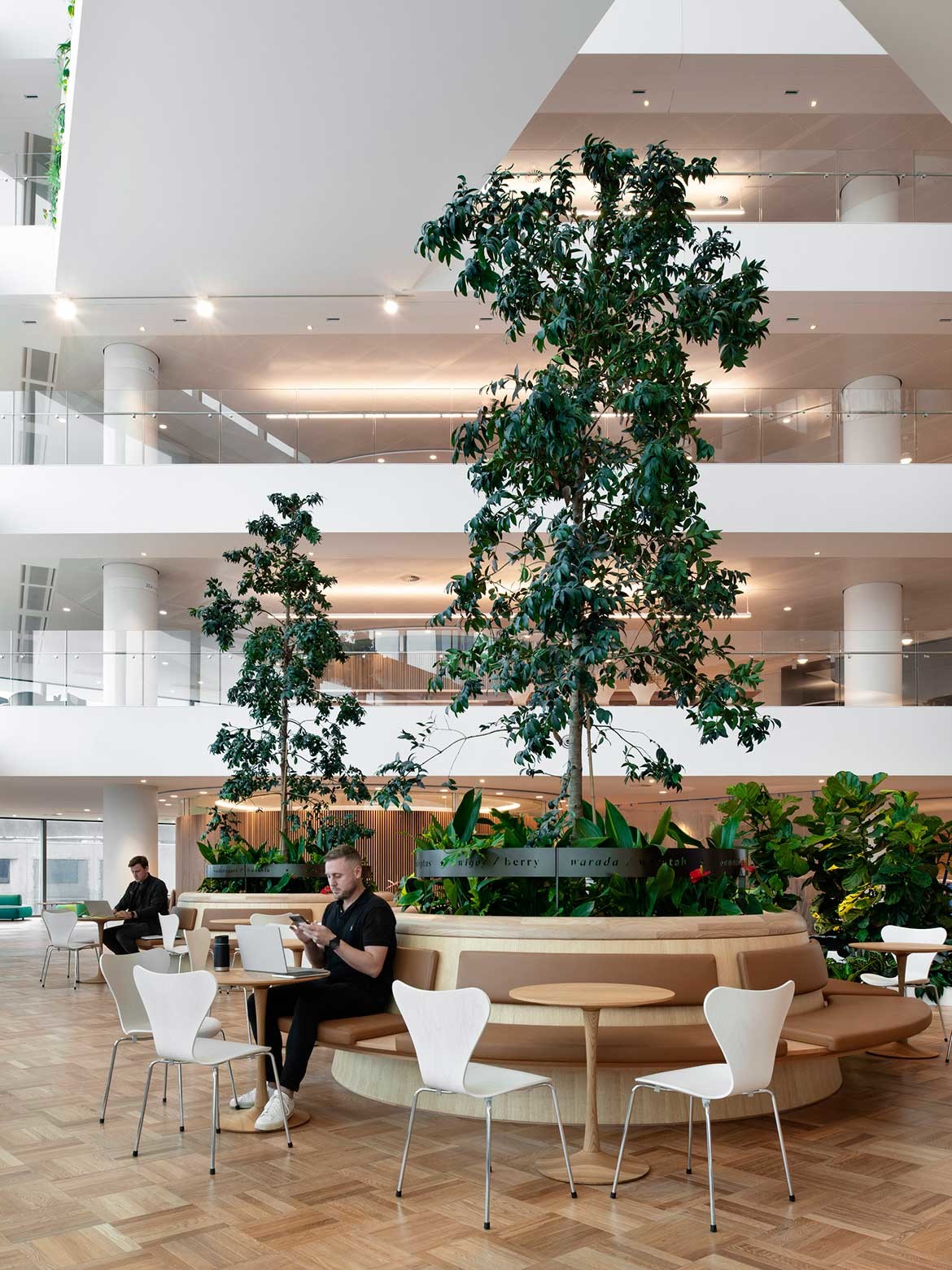
The interior rises via the base building atrium and spiral stairs, with Hassell inserting a series of bridges intersecting across the void; this promotes human scale together with radical transparency at all levels across four ‘vertical villages’. Experiencing such a large workplace by climbing the stairs and passing through the beautiful, greenery-laden vertical villages bring a sense of connection, shared purpose and joy.
Related: The Work Project and Hassell are changing the flexible workplace sector

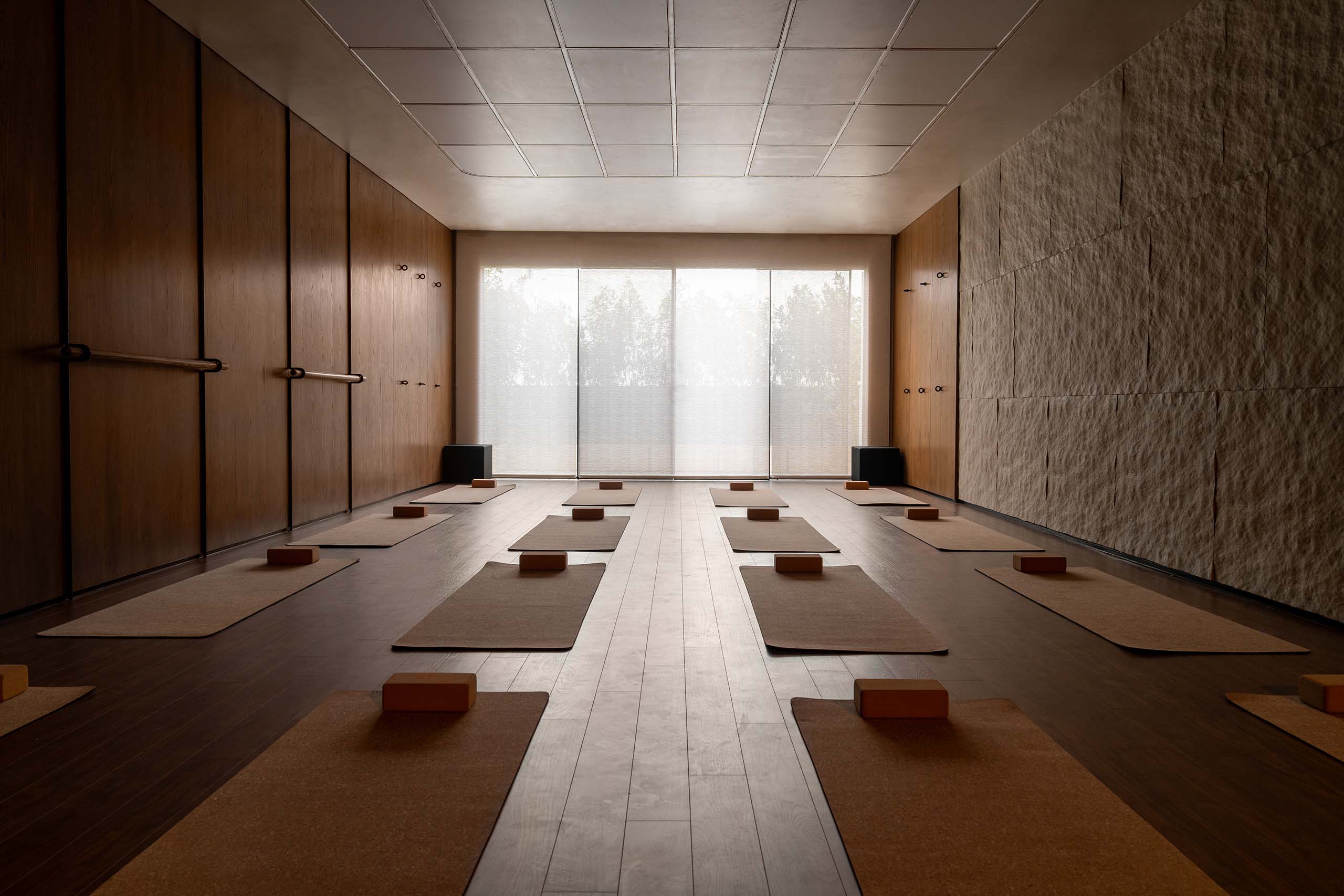
Every corner has a space that supports neurodiversity and varying work styles. This includes electronic sit/stand workstations, stairs for mobility, multipurpose rooms and sanctuary spaces with showers and changeroom facilities.
The theme of interconnectivity shines through the choice of materiality and palette. The natural materials complement the biophilic design, and the warm neutral colours allow natural light to reflect and reach every level. Thousands of plants and trees enforce the biophilic approach, and 12 different beautiful, mainly locally sourced timbers exude a comforting and productive atmosphere.
Throughout the design process, AMP was committed to engaging and reflecting its Reconciliation Action Plan (RAP) policy in recognising First Nations People. Integrating art into the space demonstrates respect and celebrates the history of place and culture of the Gadigal people to Circular Quay. Use of Gadigal language, totems and cultural influences on the design ensure meaningful connections to Country are embedded throughout the workplace.
“Art and ceramic installations were commissioned from local artists, as well as incorporating circular design in spatial planning to reflect the yarning circles, which are so important to Indigenous culture. This was all done in consultation with representatives of the Gadigal people and with AMP’s own purpose in mind – it was about strengthening their teams’ connection to the organisation and remembering their long history at Circular Quay,” says Risch.
As a global exemplar of a workplace in a new ‘upcycled’ building, various sustainability initiatives have been integrated into the workplace, achieving a 6-star Green Star Interiors Design rating and targeting a 3 Star Fitwell rating. Using original heritage lighting and loose furniture (now in its third life) both promote sustainability and delightful callbacks to the original AMP building, its workplace and its connection to Circular Quay and Sydney.
Hassell has cultivated a forest of productivity which will enable AMP to thrive for years to come.
Hassell
hassellstudio.com
Photography
Nicole England, Adam Mork

We think you might like this story on the future of urban design with Hassell’s Richard Mullane.