The home of architecture and design in the Asia-Pacific
Get the latest design news direct to your inbox!

Get the latest design news direct to your inbox!
Client: Canterbury College
Location: Waterford, Qld
Floor Area: 9,500 m2
Completed: 2007
Design Director: John Hockings, Architectus
July 3rd, 2008
A master plan prepared by Architectus to upgrade the existing campus highlighted the need for both the refurbishment of existing buildings as well as the design of new buildings.
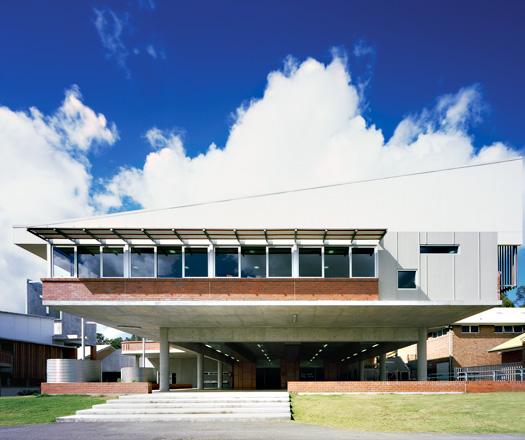
The new buildings include twelve classrooms with associated administration, library, multi-purpose spaces, and a new main entrance to the school. The buildings are sited to maximise their northern aspect whilst responding to
the surrounding context. The new junior school building relates directly to the existing oval by opening the northern facade through the use of glazing and verandah spaces.
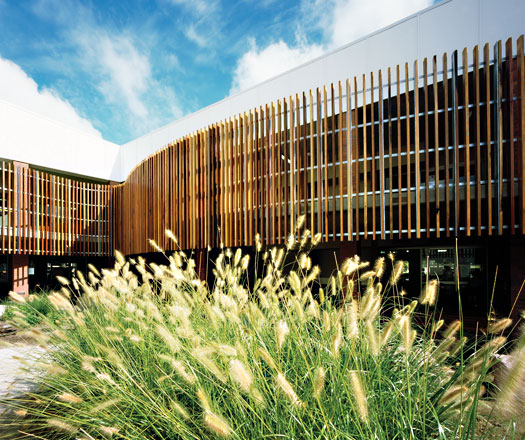
Material selection and landscaped spaces have been used to ensure a coherent campus design throughout. Courtyards provide outdoor classrooms and the generous verandahs are used for the gathering and teaching of students.
The development of the new junior school building relied on the refurbishment of the existing junior and middle school classroom buildings to reflect the qualities which are integral to the new building design.
The refurbishment of the existing buildings incorporates new verandahs, covered open learning areas and an amphitheatre. These spaces are linked to outdoor learning and courtyard spaces which overlap with the new Junior School buildings.
The design of classroom entry spaces, courtyards, joinery and the natural palette of materials have all been considered relative to the human scale and senses.
Project information and images courtesy of Architectus.
INDESIGN is on instagram
Follow @indesignlive
A searchable and comprehensive guide for specifying leading products and their suppliers
Keep up to date with the latest and greatest from our industry BFF's!
The internet never sleeps! Here's the stuff you might have missed