The retail industry has been struggling. With the advent of online shopping and a generation of people seeking experiences, the traditional staid models need to adapt. Within this environment, hair salons are just another example of a business model that is yet to be disrupted. As floor space, especially in demanding high street areas, continues to skyrocket, how can the humble hair salon keep pace?

This was the conundrum that Jared King, General Manager of OLSK, came across when his client and long time friend came to him. Rather than taking the expected route of designing a new space for just one salon owner, King contemplated another tried and true model from another industry – the co-working model – and Chiseled was born.
Working with Elvin Tan Design, King and the OLSK team set about designing a space that could bring together not one but four salon owners into one shared space to operate. All four contribute financially and bring their own clients along for the journey. “The owners have all come together and now they have created a new business where they’re all partners,” explains King.
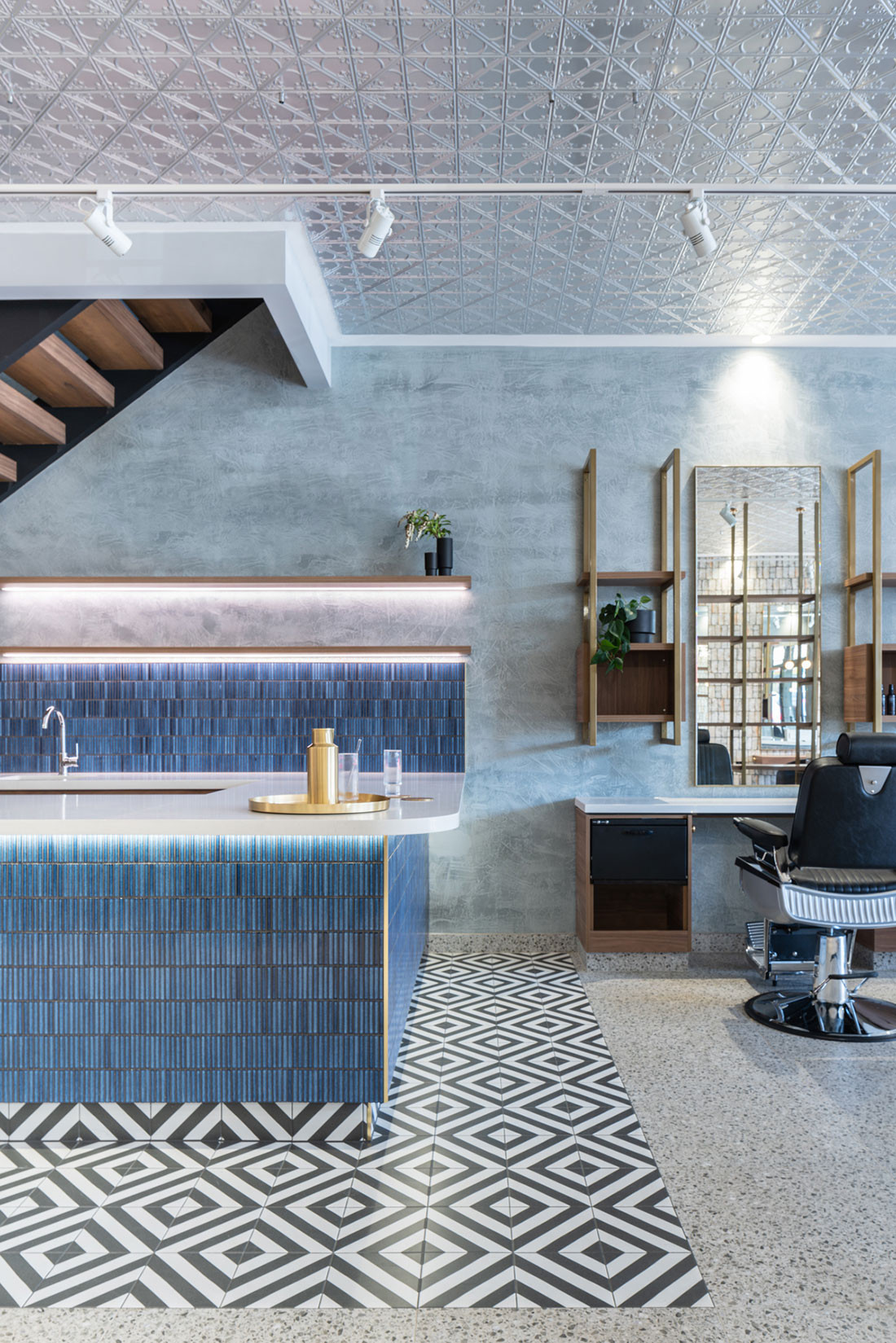
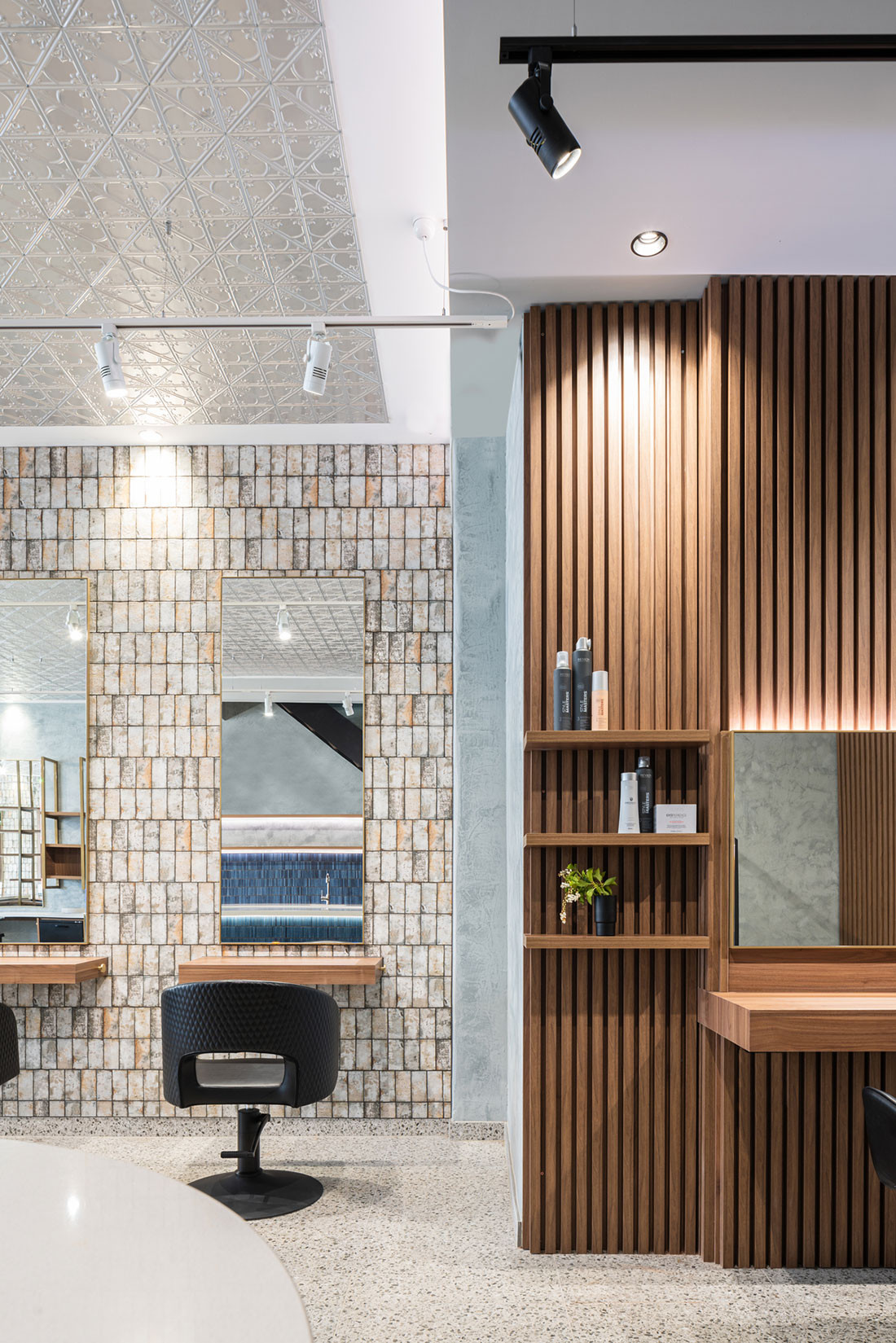
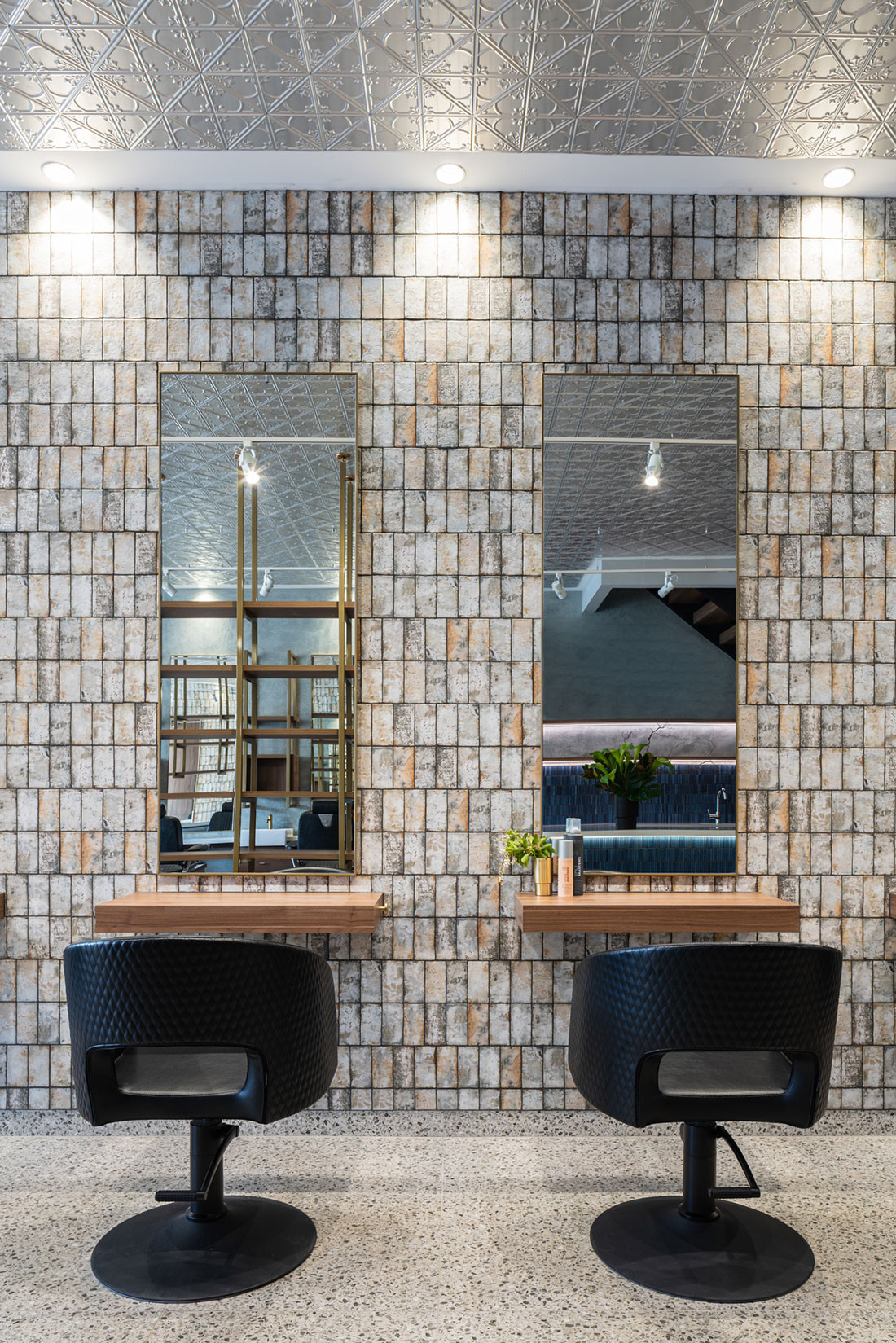
From a design perspective, a key challenge was how to cohesively reflect the four individuals and let them each have input without resulting in a project that was disjointed. On the design process, King says, “We thought about the notion of construction, and the main design theory was then based around layers, texture and colour, which also relates to details of having hair done.”
Spatially the project has been split up into a mix of key zones. The entrance and front of the space are where the barber and standard salon services are positioned, with both offerings being given an equal level of importance. At the rear are the washing and colouring stations, this was deliberate to relax customers when they’re “at their most vulnerable”, and the space is even more relaxing with a palette of natural timbers, no mirrors and a special green wall.

In the middle of the space is what has been coined as the Hub. Outside of the original brief, the Hub is all about creating an experience. “The Hub utilises the space under the stairs and is located in the centre of the salon so it acts like a hinge, servicing all areas. Instead of just making this a waiting area, we turned it into a bar where customers wait at the start of their session, then come back during treatment and then return again at the end to rebook,” explains King.
The concept of layers, texture and colour comes to life through the materiality. Materials have been layered in different ways so that “you can’t take it all in one go”. Maintaining a level of consistency has been accomplished by having the floor and ceiling in a single finish. A light terrazzo sits across the floor, while a pressed metal in the original aluminium lines the ceiling. Other elements include a Spanish tile and a concrete-look paint.

Beyond the design outcome, this project illustrates how industries can be revived by looking out to other models for inspiration. Chiseled offers a more sustainable business model for four hairdressers and invites the user into the space with its considered approach to how they might feel while having their hair done.