The home of architecture and design in the Asia-Pacific
Get the latest design news direct to your inbox!

Get the latest design news direct to your inbox!
JCU’s new research hub prompts Woods Bagot and RPA Architects to explore what it means to be in the tropics.
November 26th, 2010
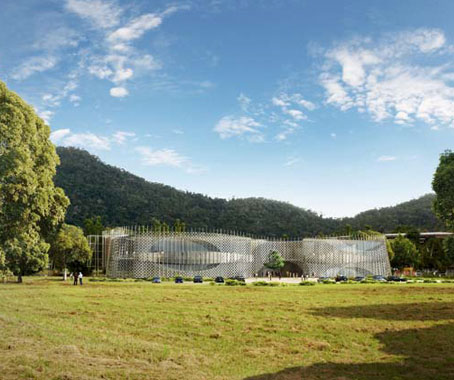
An innovative design that incorporates and celebrates its tropical surroundings has landed Woods Bagot and RPA Architects the design of the coveted Cairns Institute at James Cook University’s Cairns campus.
A $25 million project funded partly by a grant from the Federal Government, the Cairns Institute aims to establish James Cook University’s reputation as a key global institution and research centre. The building will provide a headquarters for leading researchers from around the world to examine key issues concerning people in the tropics.
With this objective in mind, Woods Bagot and RPA Architects created a design that embraces the campus’ rainforest setting and blurs the line between the building and the landscape, making the environment part of the experience.
Several cutting-edge design elements have been proposed, including a trellis that will encompass the building, providing sun control and contributing to the rainforest-meets-urban aesthetic.
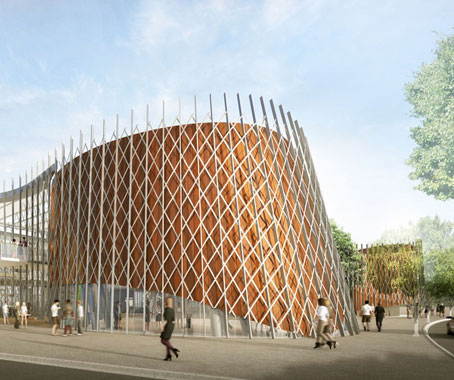
“We had an opportunity to create a building that represented its place and its context in a new and exciting way,” said Mark Damant of Woods Bagot. The Institute’s design elements will be key in attracting a high-calibre team of researchers. “It was crucial that our proposed building design would create an environment that optimises the working experience to a point that people would love engaging with the building,” Damant explained.
Construction of the Cairns Institute is set to begin before mid-next year and expected to take twelve months.
Woods Bagot
woodsbagot.com
INDESIGN is on instagram
Follow @indesignlive
A searchable and comprehensive guide for specifying leading products and their suppliers
Keep up to date with the latest and greatest from our industry BFF's!
The internet never sleeps! Here's the stuff you might have missed