Wood to Stone
Published
By
jesse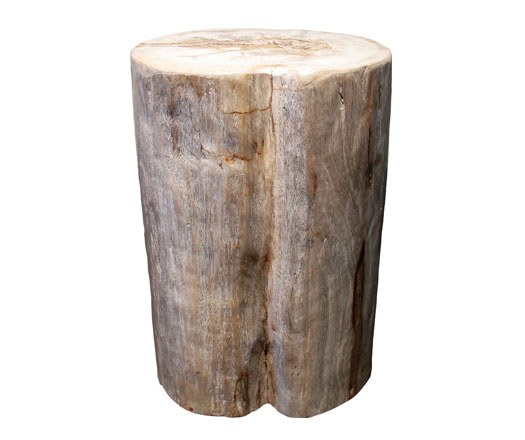
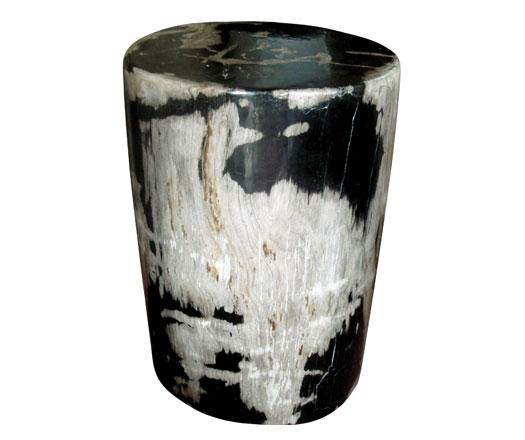
Petrified wood stools from Sentosa Designs combine the beauty of timber with the durability of stone.
Petrified wood, literally ‘wood turned into stone’, is the fossil of wood preserved when the tissues of the plant are replaced with minerals. The material, which has similar qualities to stone, can be polished and used to create stunning organic and durable furniture, such as Sentosa Designs’ petrified wood stools.
Petrification occurs underground when trees are suddenly buried by sediment – such as in a volcanic eruption – and the microbes that normally cause wood to rot are destroyed.
The process of petrification can take thousands of years, and over this time various silica-rich minerals – such as quartz, chalcedony, and jasper – replace organic matter, forming a stone ‘mould’ of the wood. Often the preservation is so fine that the cell structure of the original wood is still visible.
The varied colours add to the aesthetic appeal of the material, and are the result of trace elements dissolved in the silica –brown and amber shades are the result of iron, blacks and blues of manganese oxides. As petrified wood is a natural product, each Sentosa Designs stool completely unique.
The durability of petrified wood makes it particularly suitable in areas of high use – especially hospitality projects. Each stool weighs up to 85kg, a testament to the quality and robustness of the material.
The stools are 35-45cm in height and are available with 30cm or 40cm diameter, or can be custom cut to size to meet the needs of any project. Sentona Designs manufactures and wholesales top end designer furniture for the hospitality industry, and was founded by Amanda Cameron in 2008.
Sentosa Designs
sentosadesigns.com
(61 2) 8399 1009
Related Articles
Events
“I’m not trying to design a shape, I’m trying to shape a feeling”: Eugeni Quitllet & Pedrali in Milan
At Salone del Mobile 2026, Catalan designer Eugeni Quitllet launched Libre, a new seating collection with Pedrali that focuses on form, function and ergonomics.
Articles
Embracing elegance
On the occasion of Salone del Mobile 2026, the Opale collection designed by Patrick Jouin for Pedrali expands with two new iterations: a chair and a barstool with armrests.
Articles
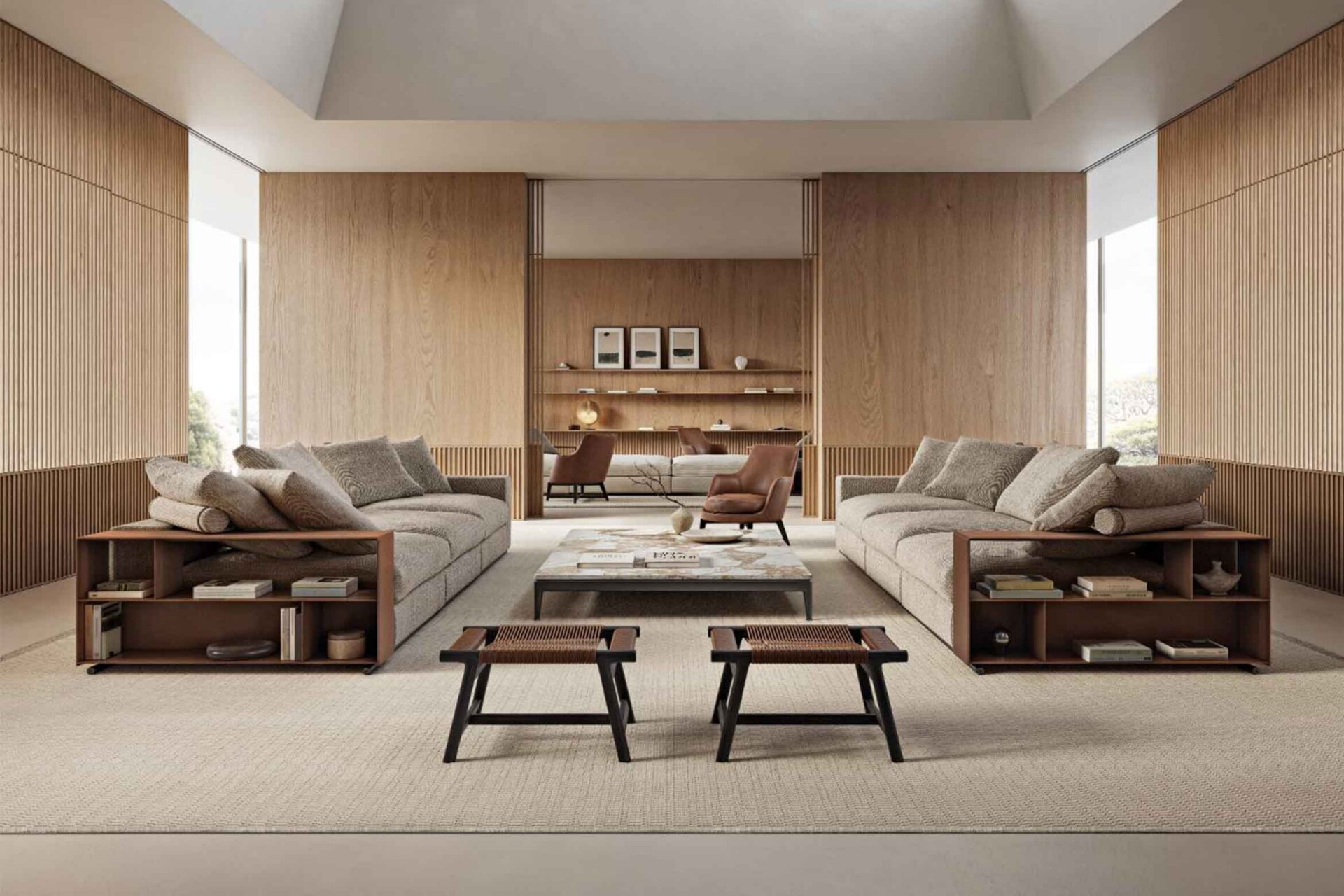
The sofa as landscape: How Groundpiece rewrote the rules
In 2001, Antonio Citterio designed a sofa that threw out the rulebook. A quarter-century later, Groundpiece remains Flexform’s longest-running bestseller – and it still looks like the future.
Articles
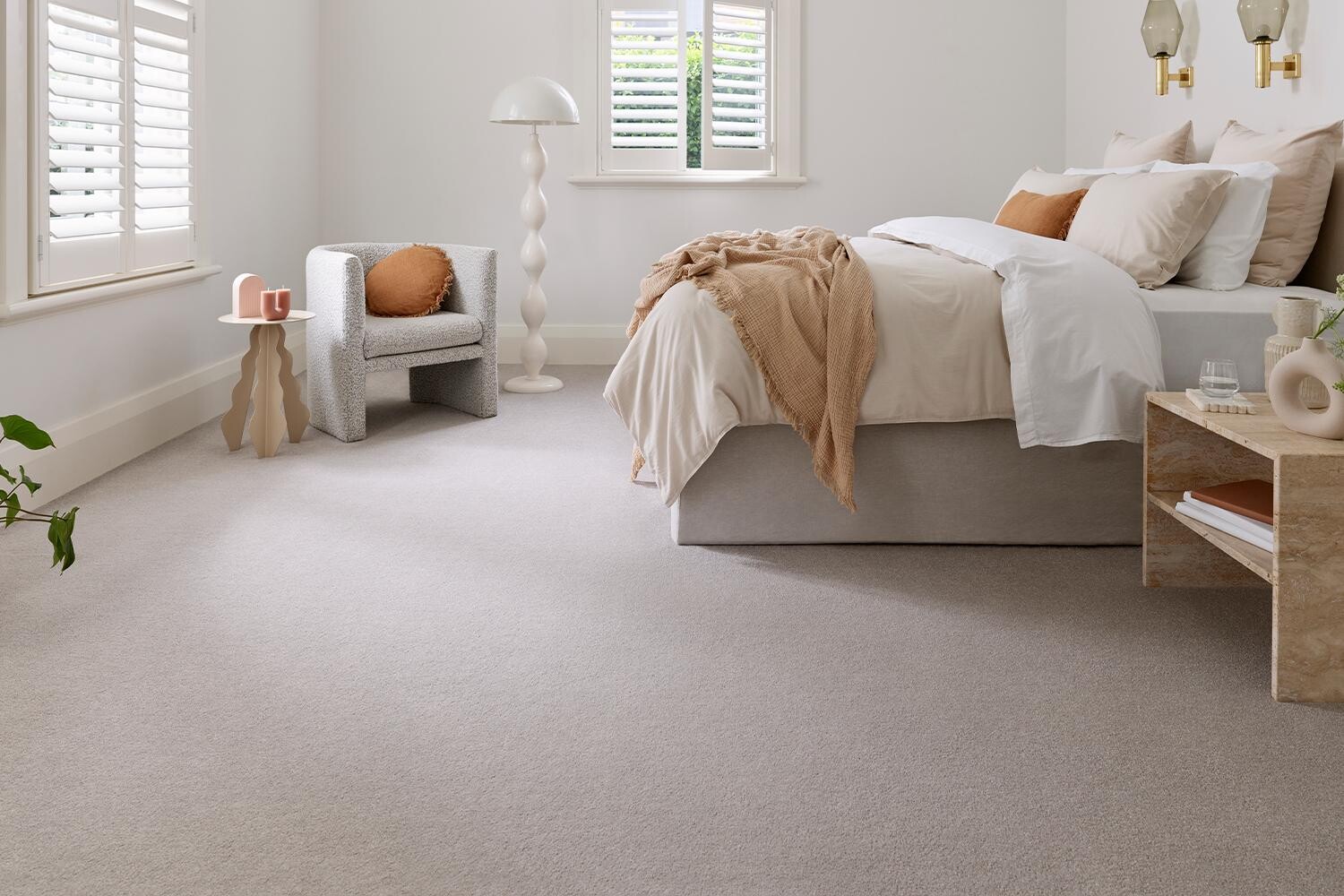
Design tricks for using carpets to create balance and depth
Good looks count, but function completes the space.