The home of architecture and design in the Asia-Pacific
Get the latest design news direct to your inbox!

Get the latest design news direct to your inbox!
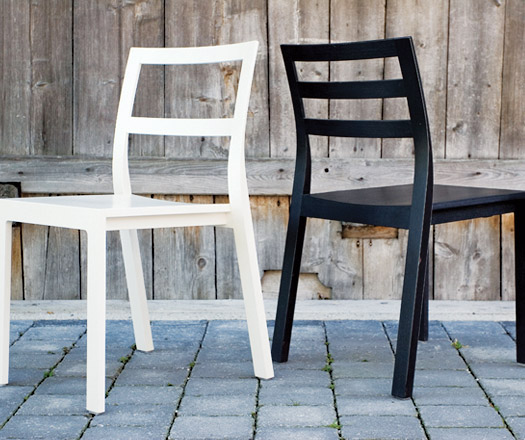
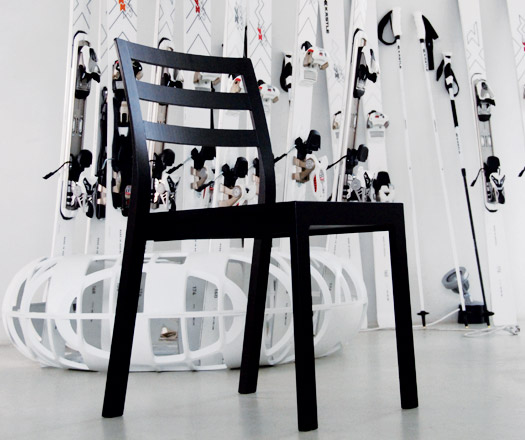
The HUSSL ST10 chair from Insitu draws from ski technology for its unique look.
March 31st, 2009
Furniture is an area of design with strong traditions, with many of the world’s top manufacturers still using traditional construction techniques. But the beauty of design today is our ability to borrow from technologies from the most unlikely of places.
The HUSSL ST10 chair from Insitu incorporates ‘sandwich’ technology – a technique more commonly used in ski construction. Modified and adapted into the chair’s design, the technique gives the ability to produce slimmer dimensions.
Constructed mainly with wooden materials, the chair uses the composite technique in the back legs – a wooden core reinforced with an aluminium cover. This creates a stable, yet flexible compound material and provides higher resistance to mechanical pressure and improved tensile strength.
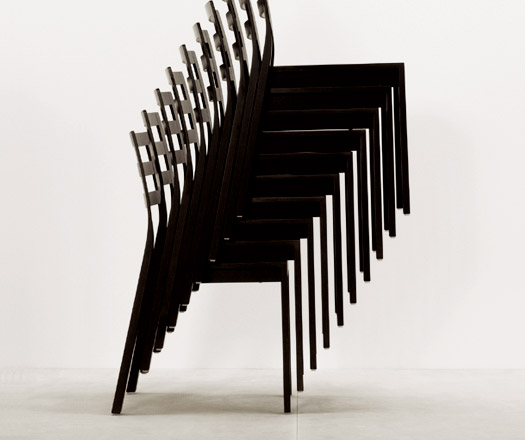
Tapering to just 8mm at the top, the back of the chair has a light springiness and filigree look: combined with its minimalist basic design, this makes the ST10 an extremely strong and comfortable stacking chair.
The chair’s front legs and ergonomically shaped seat are made of plywood, also reinforced with laminate on both sides. The slats of the backrest are made of solid Beechwood, reinforced with thin layers of laminate on both sides. The whole chair weighs 5kg.
The thin dimensions and variety of surface treatments offer a range of unique appearances – from structured laminate dark stained to fineline veneer finishes, stained wood tones and coloured lacquered finishes.
The ST10 design by PETER HUSSL and ARGE2 can be viewed at Insitu’s showrooms in Melbourne and Sydney.
insitufurniture.com.au
Insitu
melbourne
265 swan street richmond victoria
+61 3 9428 9622
sydney
ground floor 79 myrtle st. chippendale nsw
+61 2 96982290
insitu@insitufurniture.com.au
insitufurniture.com.au
INDESIGN is on instagram
Follow @indesignlive
A searchable and comprehensive guide for specifying leading products and their suppliers
Keep up to date with the latest and greatest from our industry BFF's!
The internet never sleeps! Here's the stuff you might have missed