The home of architecture and design in the Asia-Pacific
Get the latest design news direct to your inbox!

Get the latest design news direct to your inbox!
Simon Scott meets with French designer Joran Briand to learn about his creative evolution, his love of making surfboards, and how he used cutting edge concrete to clad a museum and a football stadium.
March 25th, 2014
“As a child I always considered the world as a creative playground” says 30-year-old Joran Briand. Like the ocean waves that inspire his thinking, the French designer is styling a movement in Paris that is embracing his curved design aesthetic.
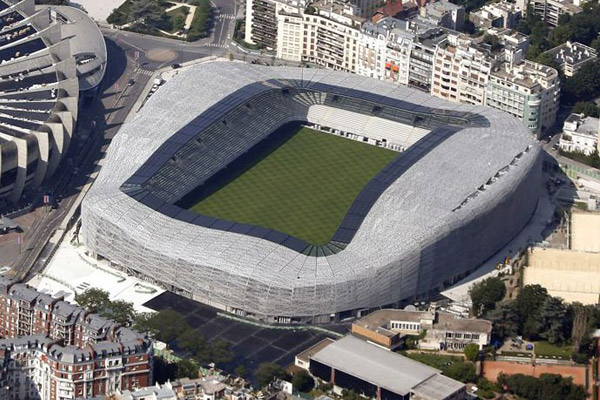
Jean Bouin Stadium, Paris. Photo: Samuel Lehuédé
The beginning of his design intuition was realised as a child growing up in Vannes, in the north-west of France. “I was ten years old when I started to paint and had my first experience with sculpture. That is how I discovered new materials, playing with plaster or resin. I was lucky to have open-minded parents, who cared about creation and making stuff with your own hands. They let me move into the garden or the porch to make my first creations” says Joran.
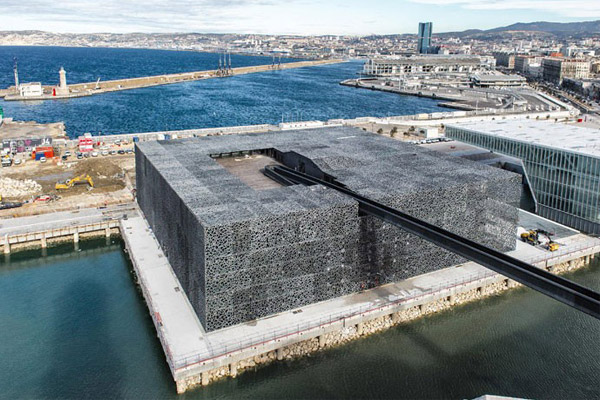
Mucem Museum Marseille, photo: Lisa Ricciotti & Charles Plumey
Those creations started with redesigning skateboards and surfboards, the elements that provided freedom in his world at a young age. On finishing school, Joran moved to Paris to study art, but was undecided on whether to do graphic design, sculpture, or drawing. “I had a brain wave when I visited the Radis Designers exhibition at the ‘Foundation Cartier’, in the 14th arrondissement of Paris. Their vision turned me upside down. They were questioning the objects status by working on the frontiers of art and applied art. It was a real shock, because in France people used to put people in compartments. Their new thoughts and their multidisciplinary vision had an immediate impact on me”. The experience taught Joran he could follow his intuitive design vision. “As a designer I could finally put my sleek stamp on everything.”
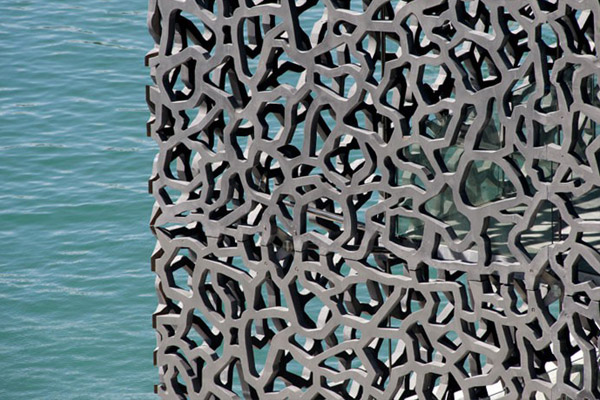
Mucem Museum Marseille, photo: Lisa Ricciotti & Charles Plumey
He studied Industrial Design at ‘École nationale supérieure des Arts Décoratifs’ in Paris, where design has been taught since 1766. It was here in his final year of study, a collaboration was born with French architect Rudy Ricciotti, who was working with the school on the development of a new high-performance concrete. “We started with small applications in buildings like the ‘Grand Moulins of Paris’, the ‘Charter Theater’ and then the ‘Mucem museum’ in Marseille.” says Joran. “We then worked on the Jean Bouin stadium in Paris.”
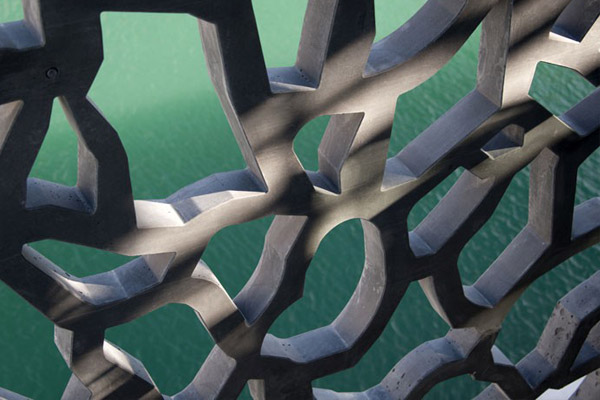
Mucem Museum Marseille, photo: Lisa Ricciotti & Charles Plumey
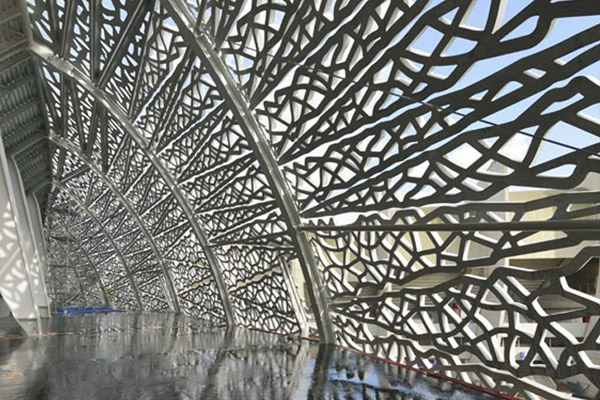
Paris’ newest sports stadium is wrapped in the curved concrete design of Joran and his studio, Trust In Design. “We’ve been working with the Rudy Ricciotti agency for over seven years to get this impressive result. Thanks to the trust of Rudy, we were able to push the research to the maximum on the high-performance concrete, and as a designer, I am really proud to work in those conditions” says Joran.
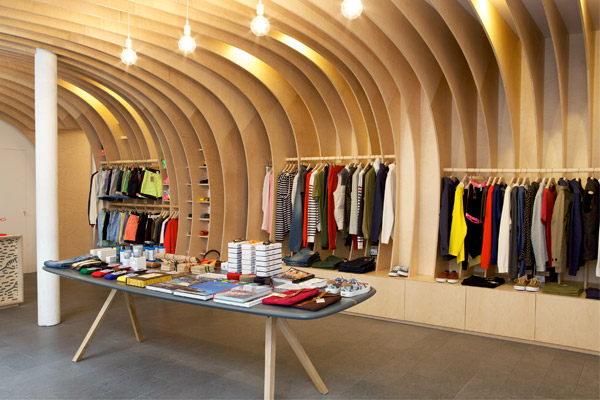
At the upcoming opening of the Jean Bouin stadium, Joran will come face-to-face with his contribution to the evolution of Paris. “It’s nice for a designer to be able to paticipate in the history of his own city. It is rewarding and inspiring” says Joran.
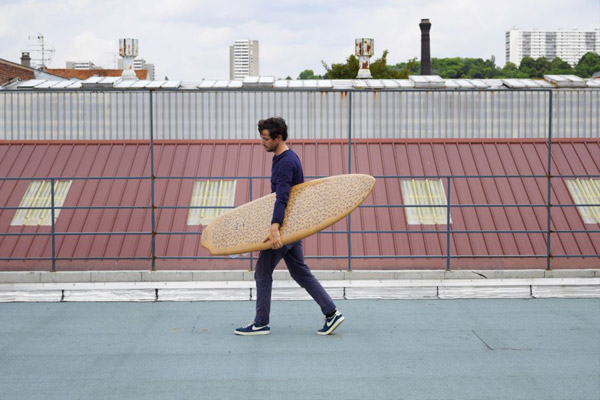
Photo: Samuel Lehuédé
This is the story of a young designer who followed his design intuition and trusted his vision, starting with creating sculpture at ten, to mastering his own surfboard at twenty, and now at thirty, is seeing his creative work exhibited on the Jean Bouin stadium in Paris.
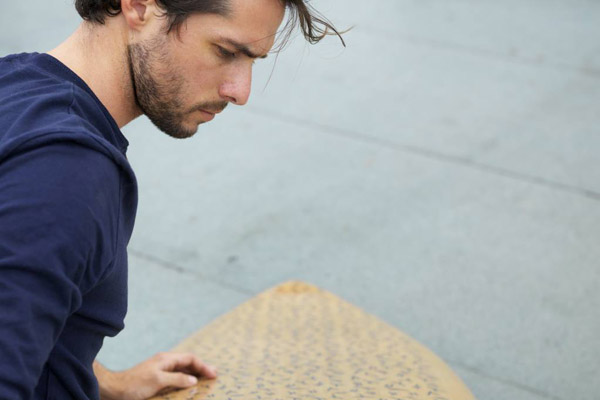
Photo: Samuel Lehuédé
Joran approaches every day with a calmness and balance like the the saltwater that flows over him. “Each day I start working with music and a good coffee. I always check the surf forecast, even when I am in Paris, so I can plan some free time to go surfing. Surfing means more than a sport to me. It’s a meditation. A surfboard is before all, a floating seat. I spend more time watching the horizon, sitting on my board, waiting for the swell, than riding it. I like this “off” moment when I can focus on myself.”
Joran Briand – Trust in Design
trustindesign.com/en
INDESIGN is on instagram
Follow @indesignlive
A searchable and comprehensive guide for specifying leading products and their suppliers
Keep up to date with the latest and greatest from our industry BFF's!
The internet never sleeps! Here's the stuff you might have missed