The home of architecture and design in the Asia-Pacific
Get the latest design news direct to your inbox!

Get the latest design news direct to your inbox!
Sometimes scrutinised for making recycling bins out of virgin polypropylene – NZ company Method have found success following their considered design process that ensures a long term focus is maintained.

Method recycling bins have been changing the way we see waste management in offices around the world, and in 2019, the brand itself are making strides towards a greener tomorrow. The New Zealand based organisation recently announced that the black components of their bins will now be composed of at least 50% recycled materials.
Method design and manufacture good-looking recycling bins for the modern workplace. Starting in Wellington, they now sell their bins around the world. Helping some of the world’s most influential organisations to recycle more, and waste less.
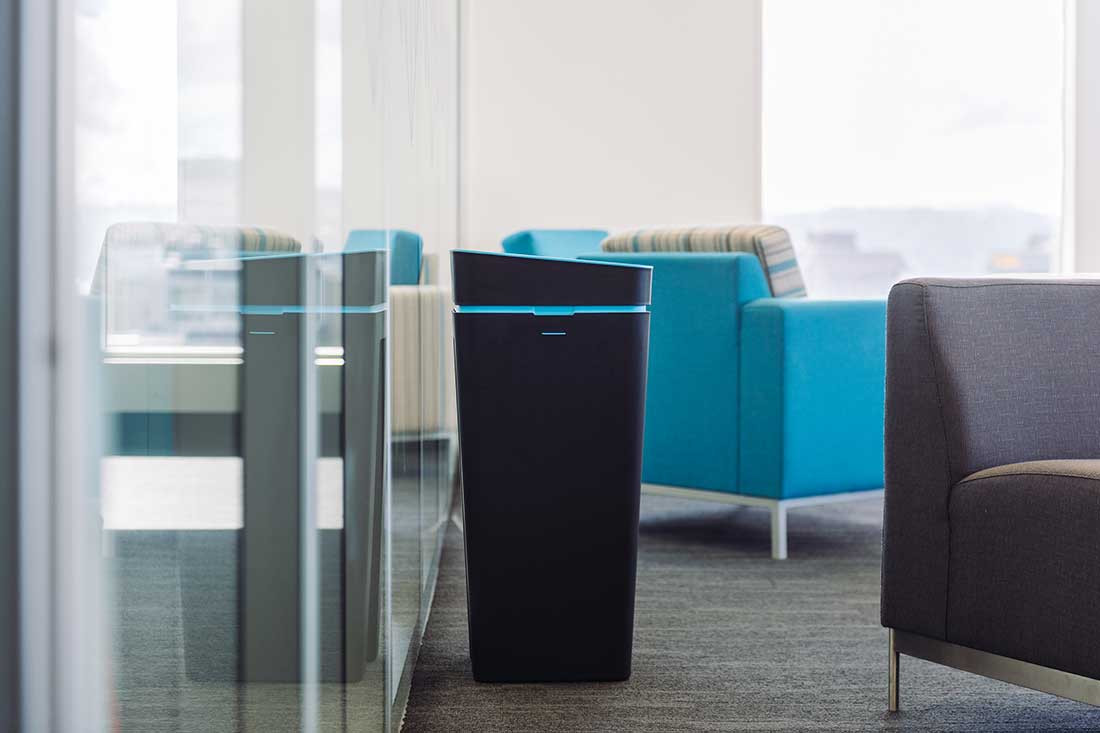
At its core, Method is driven by a philosophy of waste minimisation, believing in a circular economy of waste, and the introduction of 50% recycled content is a small but important step in the organisation’s journey.
Introducing recycled content to a design process isn’t as easy as it may be perceived. Recycled materials are highly variable by nature, and Method undertook an extensive research and design process to ensure recycling bin durability, life-span and the high-quality finish of the product was maintained.

An example of the recycled material Method uses in its design
The design of the new generation of Method recycling bins saw a priority of ensuring that when incorporating recycled materials the bins are still fully recyclable at the end of their lives, and the materials are able to be used at the same level. The result is an even greener solution to recycling, for the long-term, not the short.
This means that Method’s bins are still as good looking and durable with the recycled content as ever, and importantly at the end of their lives, they can be completely recycled and made into new bins. Capturing recyclables and incorporating them in such a way that they can be recycled indefinitely – this is Method’s philosophy of the circular waste economy in action.

Further, the considered integration of recycled materials into Method’s bins is evidence that manufacturers have the ability to collect and reuse recyclables to make a real difference. Particularly in Method’s case, this is an inspiring and powerful message to see the recyclables the bins collect transformed into new bins.
INDESIGN is on instagram
Follow @indesignlive
A searchable and comprehensive guide for specifying leading products and their suppliers
Keep up to date with the latest and greatest from our industry BFF's!
The internet never sleeps! Here's the stuff you might have missed