The home of architecture and design in the Asia-Pacific
Get the latest design news direct to your inbox!

Get the latest design news direct to your inbox!
Sydney-based designer, turned-street artist, Shannon Crees explains the relationship between urban art, design and architecture.

February 1st, 2009
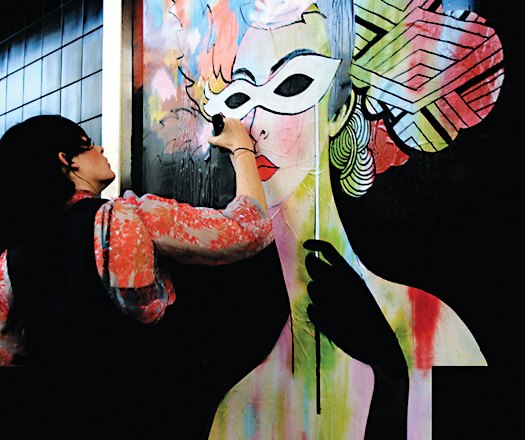
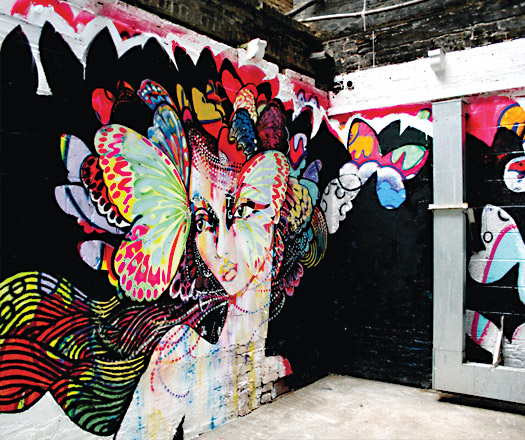
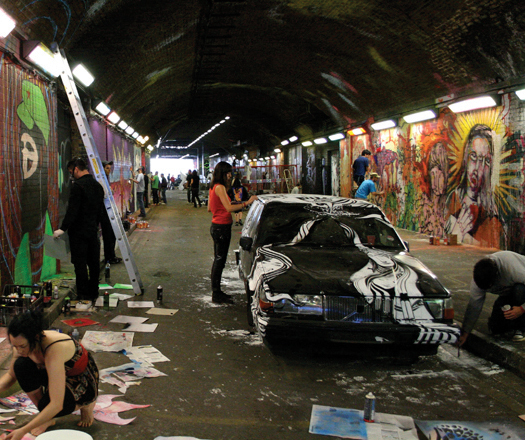
In an abandoned underground train tunnel beneath London around 50 street artists gather, busily spraying their designs onto the aged bricks and dumped car bodies. Among them is a lone Aussie, Shannon Crees.
The Banksy Cans Festival was held last year (2008) – the first event invited stencil artists to join the nameless, faceless, yet renowned street artist ‘Banksy’ in a defunct Eurostar tunnel. The second event saw Crees, Australian designer and artist, take up the challenge.
“We were like the renovation crew, the Banksy’s Cans II, and we were all freestyle artists, so we didn’t stencil, we just did it by hand, so it was a whole new look,” she says.
Crees studied and practised as a fashion designer and artist long before taking her art to the streets. “I thought, ‘I’ve done a big painting before, so what’s the difference doing it on a wall?’” she says.
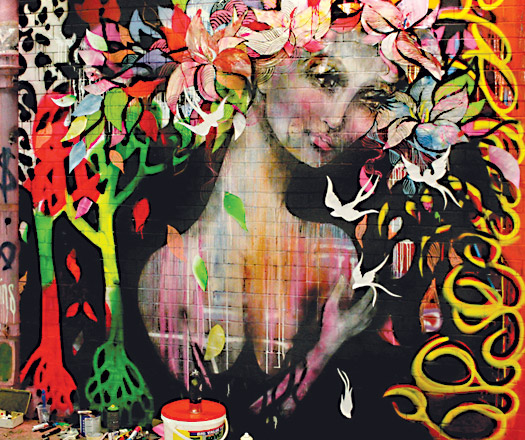
Crees’ optimistic style departs from the often dark and somewhat depressing work of her peers. She takes inspiration from the walls on which she paints.
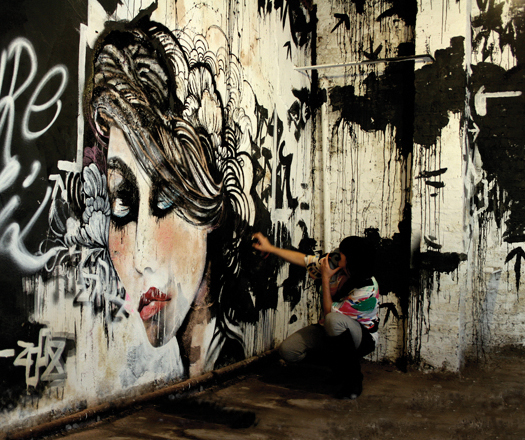
“Relating it to architecture, I just like working with buildings that are there – I like the older-style crumbling buildings.
“I’m more inspired by bleached out walls and falling down places. A modern place would be like a blank canvas I think – it would be a bit intimidating,” she says.
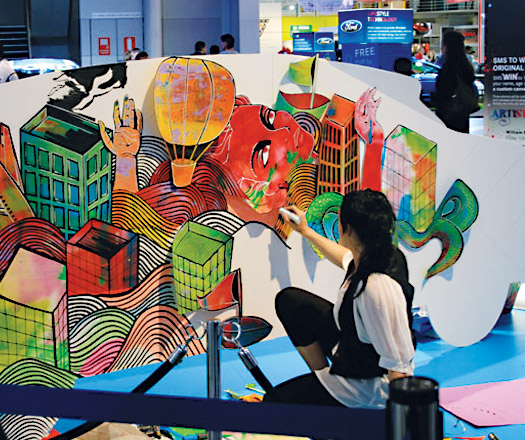
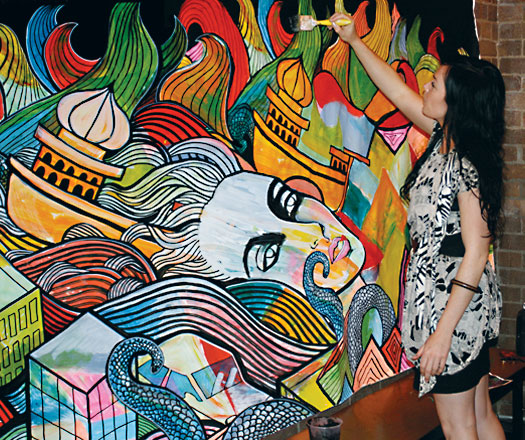
Crees has also taken to ‘live painting’, creating artworks in front of an audience, working on a project in East London, one at the Sydney Motor Show and other spaces in the UK and Australia.
“I think people appreciate it more when they see it happening.”
Crees will soon be taking part in a project painting electrical boxes as part of Leichhardt Council’s Insight/ Out of Sight competition. She will also being doing a solo show at the Verge Bar, The ArtHouse Hotel 275 Pitt Street Sydney, from 27 April – 24 May 2009.
INDESIGN is on instagram
Follow @indesignlive
A searchable and comprehensive guide for specifying leading products and their suppliers
Keep up to date with the latest and greatest from our industry BFF's!
The internet never sleeps! Here's the stuff you might have missed