The home of architecture and design in the Asia-Pacific
Get the latest design news direct to your inbox!

Get the latest design news direct to your inbox!
Jasper Morrison, the Bouroullec Brothers, Konstantin Grcic – you are no doubt already familiar with these names. All have designed for Italian timber furniture company Mattiazzi. What you may not realise is that behind the scenes, Mattiazzi is ensuring that its products and company culture embody a truly sustainable practice – right now and into the future. We get the lowdown from Nevio Mattiazzi, one of the founding brothers, at the District showroom in Melbourne.


More than the gamut of exceptional designers the company works with, Mattiazzi has built a reputation for the way it works with timber. And more recently the small, family-run Italian company is pushing ahead with its own environmental agenda.
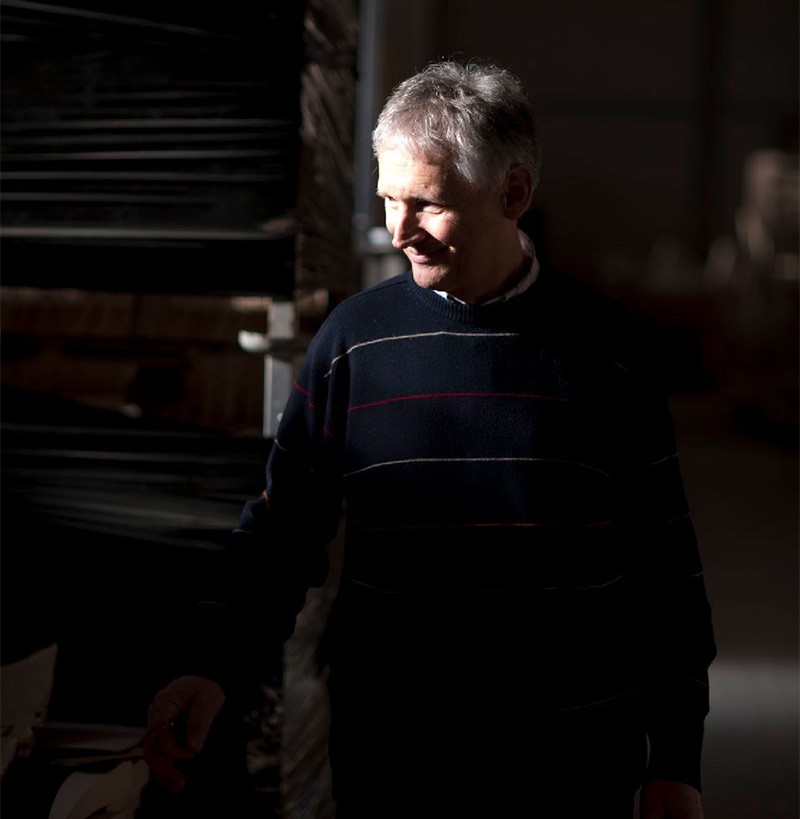
Nevio Mattiazzi.
Nevio Mattiazzi: We have always worked with wood. In order to continue being avant-garde, you’ve got to really evolve, and to keep being different. This is what we always think about whenever we start a collection.
Also, our company has developed, and our people have too. Many have developed this obsession for woodworking. Until a few years ago, wood was not a material that was used much. For example, walking through Milan Salone there would be lots of upholstery and plastic. Now it has moved onto wood, and organic forms, which is what we have been doing from the very beginning.

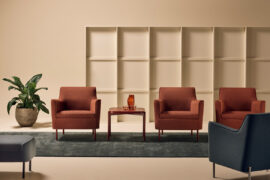
Primo by Konstantin Grcic.
We see wood as being a noble material. And now there is a lot more appreciation for it. It was forgotten and now it’s back on the main stage. For us, timber is a very special material, it’s constantly living – it changes with time, it gets old with time. There is a unique tactility and warmth to it.
You get a different feeling when sitting on a chair that is made of wood, compared to plastic or metal. So yes, we have a love affair with timber that is only getting stronger with time.
We have always kept a close eye on the environment and in 2010 we decided to make an important investment for the company – to produce 100 per cent environmentally friendly products. Our factory is powered by 100 per cent clean energy (solar). That means all the machines and computers, lights… everything is powered by the sun. Right now we actually create more energy than what we need.
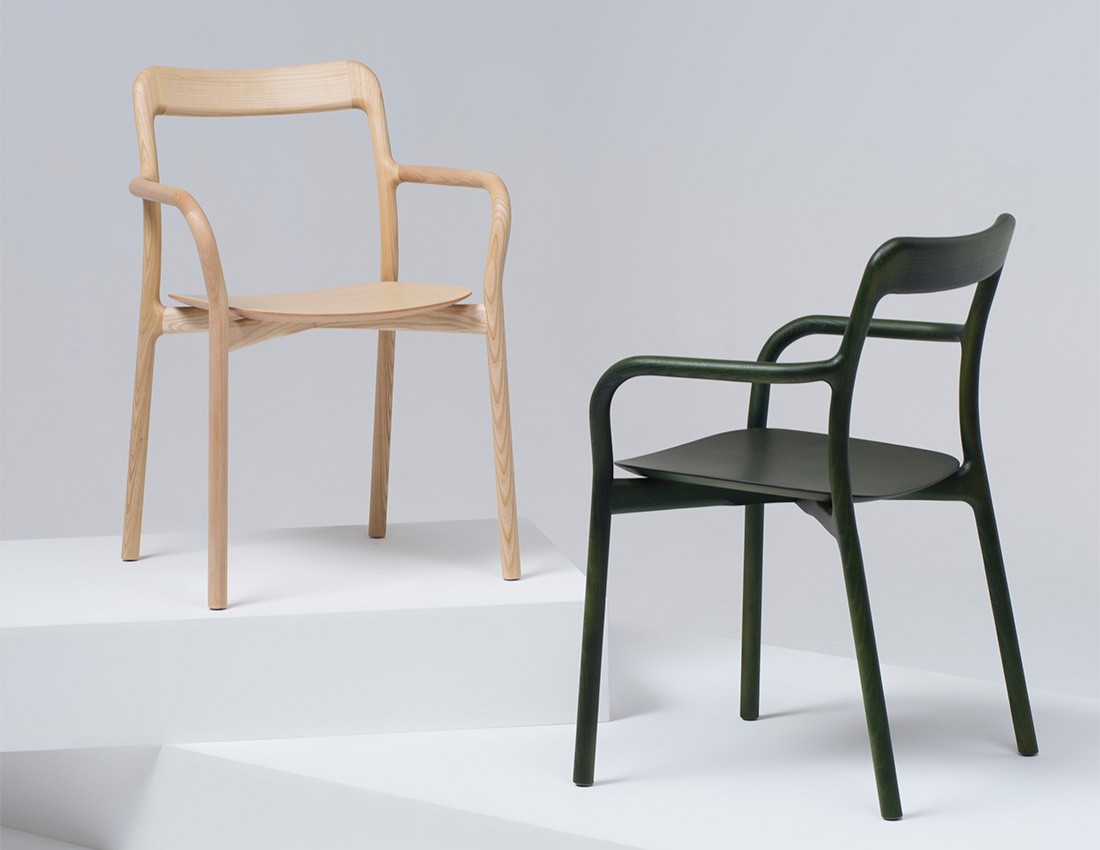
Branca designed by Sam Hecht.
In addition to that, all of our lumber is certified. For each tree that is cut down, another one is planted. We have inspectors that come to the factory to see how we manage our waste, what kind of glue we use, what kind of processes we have put in place, and how we take care of the environment in general. We use all the sawdust created during the manufacturing of the products to heat the entire factory. We vacuum it all into containers and recycle it.
The climate is changing, we need to really preserve it. You live in this wonderful country with a lot of green surrounding you, and I think that it’s important to understand that it deserves to be protected.
Everything we make is a combination of machines and hands. We use the most sophisticated machinery available on the market. But I always say this, that machinery is available to anyone, it’s like a Ferrari. Anyone that has the money can buy a Ferrari, but there are people who know how to drive it and people that do not. To drive it is not easy. You might have a great engine in front of you, but to make it work properly is a different story.

So that’s where the operator makes a huge difference. And Fabiano’s son is in charge of the CNC department, he does an excellent job in making those machines perform in the best possible way. And that’s what makes a huge difference.
But that’s only half of the work. When a piece comes out of the machine it’s brutal and rough. Then people’s hands are the key to give it the final smooth finish. And the level of finesse that we want on our products would not be possible to achieve with a machine. Just impossible.
We offer our own taste, or our designers, in terms of colour. But we are also very flexible in that regard too. We do often have clients that want something produced in their own colour to suit their home or their design scheme and we are more than happy to accommodate.
There are also other kinds of customisations that we are asked about, which is sometimes possible and sometimes not. But regardless, we’re always open to a discussion.

Osso by Ronan and Erwan Bouroullec.
It’s a decision that we collaborate with our art director on, taking into consideration what projects we have already made. And always thinking and keeping a very close eye on the material that we know so well.
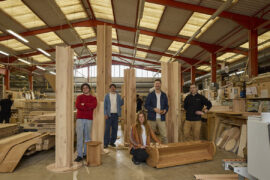
The designers that we work with are the best out there and we feel very privileged to work with them. For us, it’s also important to see how they feel when they come to our factory. They get the chance to walk through the factory, they smell the wood, they experience the atmosphere and get a true sense of how we’re a family-run business.
The world is getting smaller and smaller, and even though Australia seems so far away, we share and a lot of similarities. I have noticed that people in Australia appreciate craftsmanship and organic forms. They value our philosophies around environmental responsibility. As such, and thanks to our exclusive partner in Australia, we have GECA certification for all our products. Australians have good taste and appreciate the quality of our furniture. They like organic, round and familiar shapes. And this is what our furniture is all about. Plus, many Australians have such refined taste in selecting furniture.
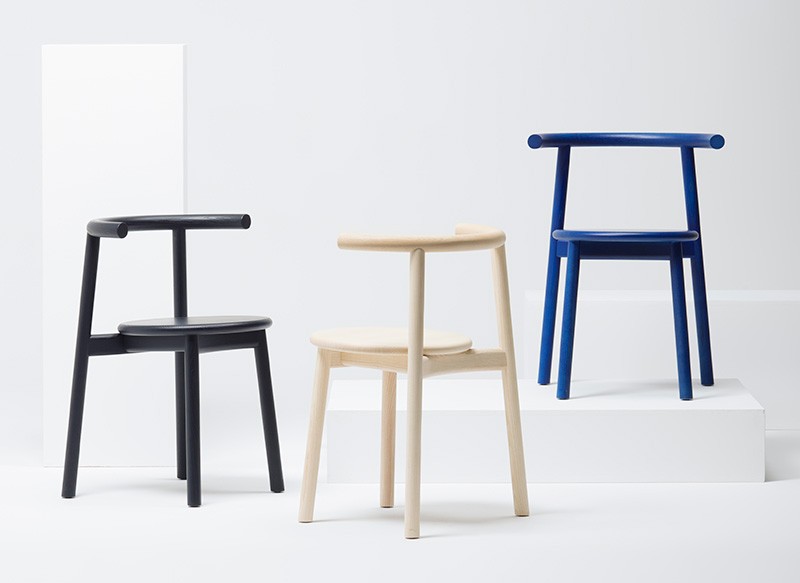
Solo by Nitzan Cohen.
Catch our interview from Salone with Konstantin Grcic.
–
Always be inspired by design. Sign up for our newsletter.
INDESIGN is on instagram
Follow @indesignlive
A searchable and comprehensive guide for specifying leading products and their suppliers
Keep up to date with the latest and greatest from our industry BFF's!
The internet never sleeps! Here's the stuff you might have missed