The home of architecture and design in the Asia-Pacific
Get the latest design news direct to your inbox!

Get the latest design news direct to your inbox!
We sit down with Andre Fu, a leader in creating bespoke projects defined by a seamless alignment of cultural and design sensibilities.

One of the most highly regarded categories in the INDE.Awards is The Luminary. The Luminary seeks to showcase an exemplar practitioner who, through their work, has made significant contribution to architecture and design and in 2021 three expert and iconic design professionals have been named in the shortlist. Each is a powerhouse of design and Penelope Forlano, Jean-Michel Gathy and Andre Fu exemplify all the characteristics that it takes to become a winner of the category.
As supporter of The Luminary, Wilkhahn is itself a brand that leads by example, manufacturing and supplying products to the global architecture and design community.
For more than 100 years, Wilkhahn has set the direction of workplace design with innovative and trend setting products that speak of quality. Ever ready to deliver outstanding solutions to the commercial architect and designer, it is fitting that Wilkhahn is the sponsor of The Luminary where, being the best, is recognised and applauded.
By understanding what it takes to become a luminary we can start to grasp the thinking of each of the shortlisted. Here we have the privilege – alongside Wilkhahn – to delve into the design mind of Andre Fu, Founder of Andre Fu Studio in Hong Kong.
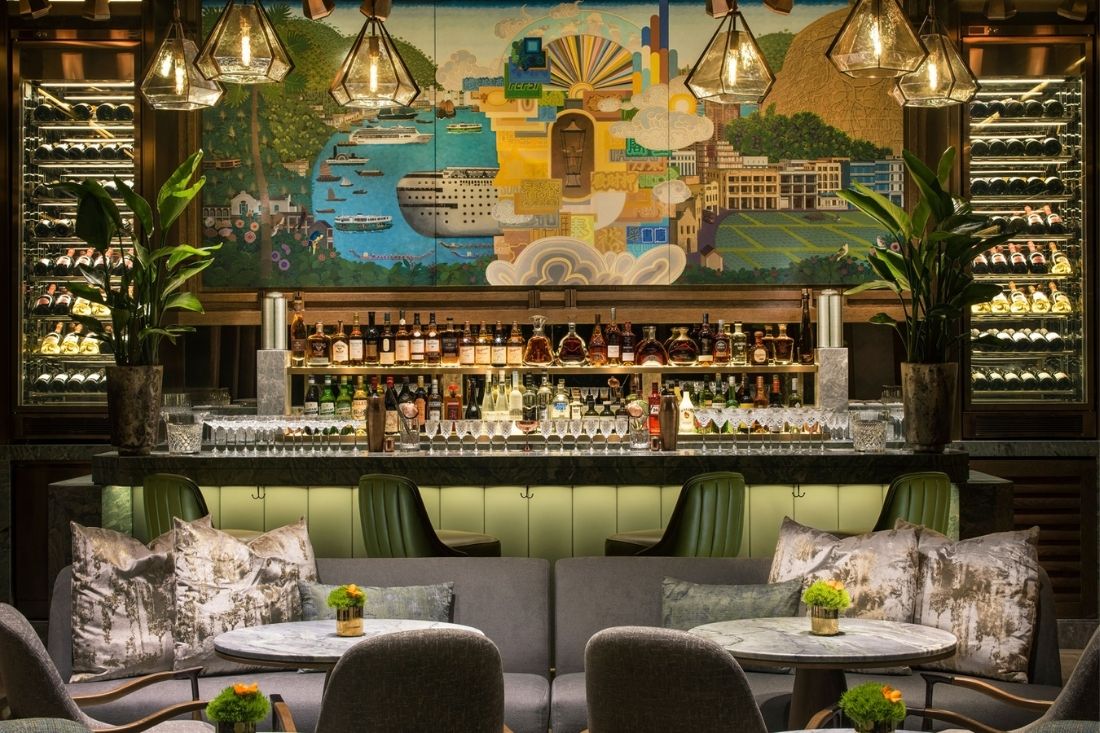
For the past 15 years, Fu has led his practice creating bespoke projects defined by a seamless alignment of cultural and design sensibilities, modern luxury, art and craftsmanship and he has received countless accolades and awards in the process. We asked Fu some questions about his thoughts on design, work-processes and the future and the answers are indeed illuminating.
WILKHAHN: How does design and product help to encourage people to visit and interact with buildings and spaces?
ANDRE FU: I believe a great design should embrace cross-cultural nuances, be contemporary with its time and exude relaxed luxury. Ultimately, it is about the essence of experiences – I always believe an environment ought to be genuine and specific for its consumer, and not about creating mere spectacles.
How can you adapt or change design to facilitate certain emotional reactions, whether that be interaction, learning, relaxation or enjoyment?
I believe I am influenced by things that surround me – from a whimsical moment that I would observe from a vintage café, to mid-century architecture that I admire. My designs are purely a genuine reflection of the life that I lead, the people that I meet and the way I see how culture can be infused into each and every spatial experience to provoke emotional reactions.
How can an approach to design help to convey what a business or space is about?
My design process is highly organic – typically it begins with a series of in-depth conversations with the client to understand the genuine vision behind the project. I would also allow myself the time to understand the context of the site, its neighbourhood and its character. The narrative of the project would naturally fall into place and there would be a mental collage that starts to take shape – at that point, I would pick up a pencil and start to draw as a very first step to begin the process.
What role does design have in creating and fostering wellbeing? How do you approach this?
I think the notion of wellbeing is key – it boils down to thinking about the person using the space and for them to feel that the design is putting their experience in first place. I have always asked my team to imagine if they were the one using the venue, for example, in the context of a hotel guestroom, where they would place their bags, how they would sit in the room and how they would switch on the lights. The essence of the experience boils down to the micro details which could touch the heart of the guests.
How important is the value of “craftmanship” to your work?
Craftsmanship is a key part of my work – I always believe in the authenticity of each experience and the human touch is always a critical element of my work.
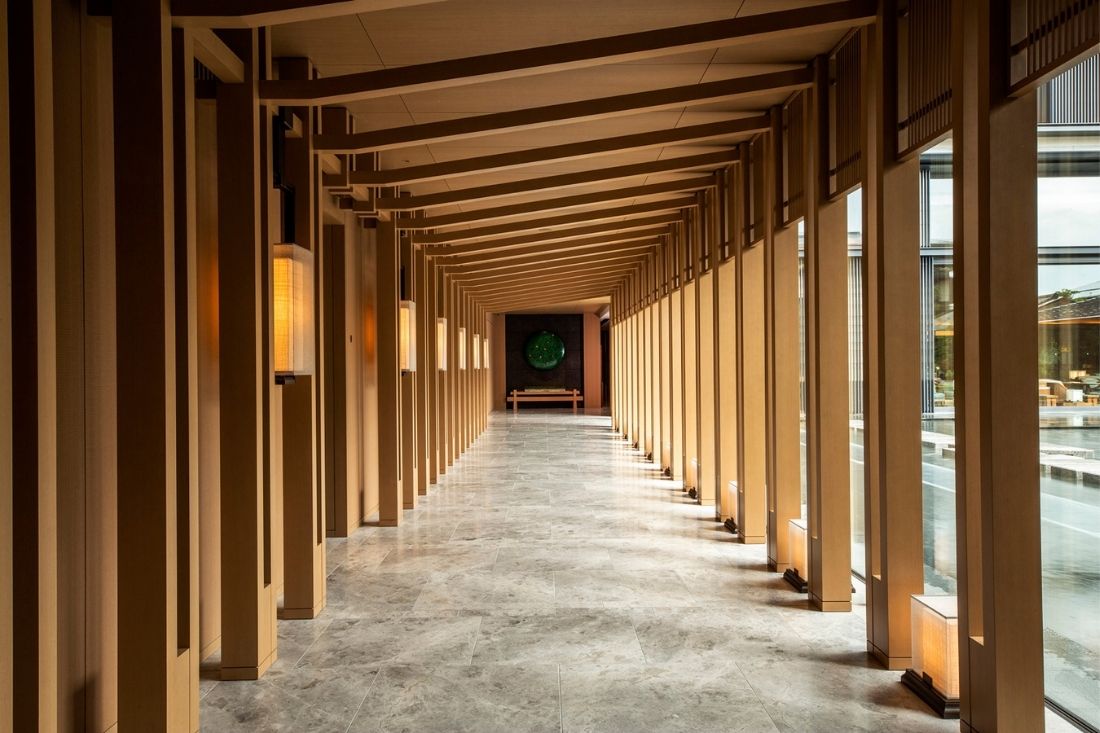
In one of my recent projects in Kyoto, Hotel the Mitsui, we have worked closely with a kimono fabric artisan to create some bespoke fabric for the guestroom headboards, whilst a selection of handmade pottery pieces has also been introduced to accentuate the tactility of the spaces.
How does approach to a project change depending on the country and/or industry?
I have always believed in experiences that are simple and pragmatic. With the way we have all learnt to work across the globe with digital platforms, I believe the purpose of travel shall take on a different light. In many circumstances, leisure travel shall be a key driver in the hospitality sector and future travellers will want to experience destinations that have a genuine cultural point of view. Luxury hotels shall revolve around the essence of expressing a unique persona – a destination that embraces culture, heritage and a candid sense of place. In terms of public spaces, it shall be about having the feeling of being a part of a vibey community, yet having the option to be discreet and private. It is all about a balancing act.
My approach to each project follows a path of process, yet the pursuit to come up with a specific narrative distinct to its context, cultural background and purpose shall shape the direction in which the project shall evolve and develop. The process to collaborate with local consultants, artisans and culinary experts always gives me a huge amount of inspiration – I believe in the notion of ‘authenticity’, it is about a genuine story with my personal perspective.
As architects and designers look to the future and anticipate change, so too Wilkhahn plans ahead, designing products that will stand the test of time. By delivering best practice through quality, design and manufacture, Wilkhahn stands out from the crowd as a luminary in its own right.
Join us when we reveal the winner of The Luminary and all other categories at the 2021 digital INDE.Awards on 5th August. Register your interest here.
INDESIGN is on instagram
Follow @indesignlive
A searchable and comprehensive guide for specifying leading products and their suppliers
Keep up to date with the latest and greatest from our industry BFF's!
The internet never sleeps! Here's the stuff you might have missed