The home of architecture and design in the Asia-Pacific
Get the latest design news direct to your inbox!

Get the latest design news direct to your inbox!
AvroKO is a master at creating hospitality environments that are as engaging as they are impeccable. Behind the design is a human-centred process of ‘hospitable thinking’.


“Hospitality has become a real through-line in so many different sectors,” says William Harris, a Founding Partner at New York, San Francisco, London and Bangkok-based studio AvroKO. Established with the coming together of four Partners in 2001, the studio is the creative force behind some of the world’s most impeccable bar, restaurant and hotel interiors. But increasingly, says Harris, clients have been coming to AvroKO from a variety of sectors.
“There are shifting perspectives about how people want to live their lives and define success on their own terms,” he says, citing today’s “mash up” of coworking, living and F&B spaces by way of example. “But there’s also a palpable sense, in general, of global anxiety right now. I think that’s one reason why a sense of hospitality is infiltrating other industries. It’s a way to help ground people – to [help them] feel there’s a bit of safety in their experience,” he says.
Union bar at The Opposite House in Beijing was informed by the 1920s and the age of early modernism – a time of transformation and experimentation. The design allows for an easy transition between day and night use.
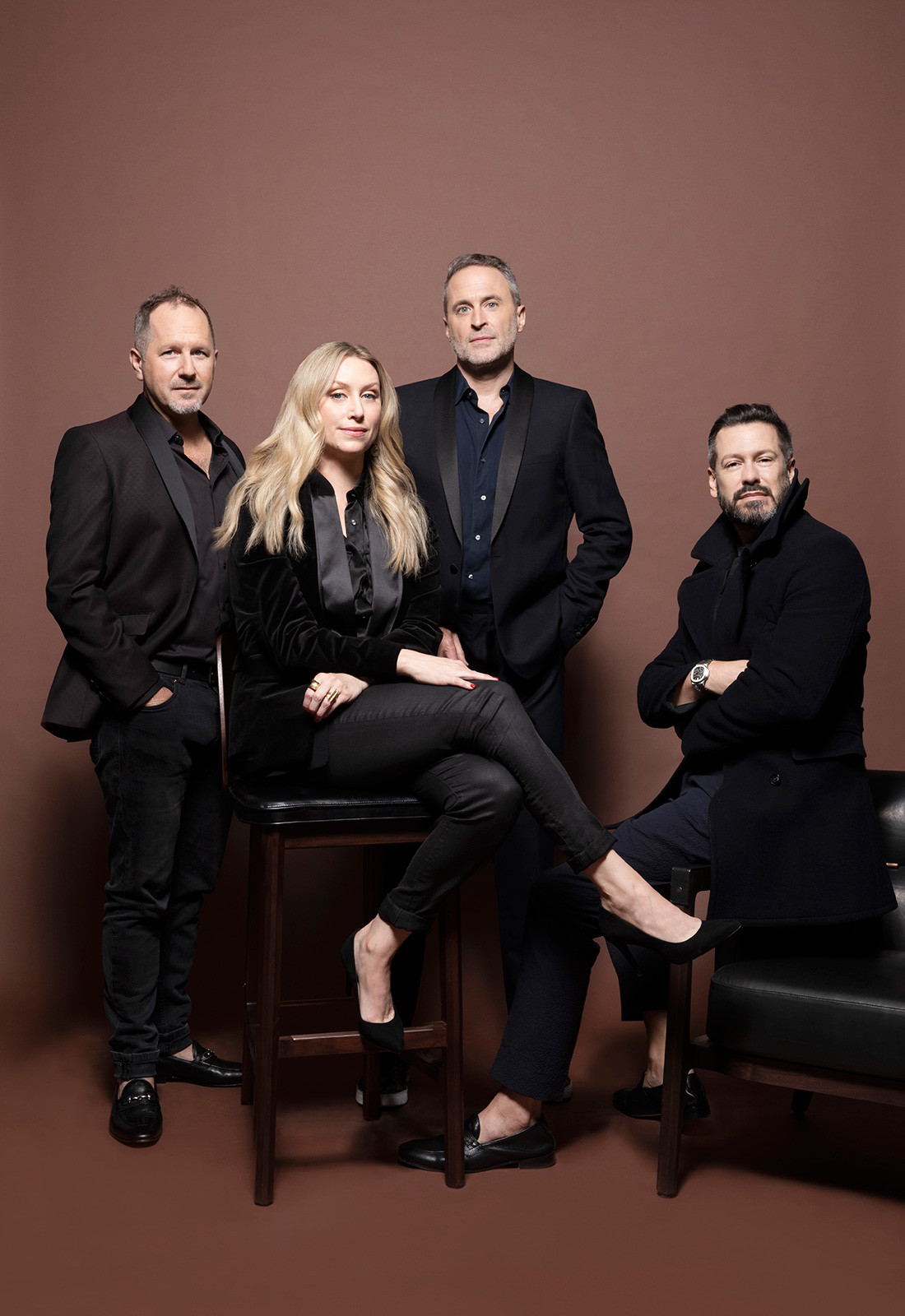
Consideration of the physical, emotional and psychological realms has always been central to the work of AvroKO – one of the world’s most celebrated design studios specialising in hospitality spaces. The studio’s four Founding Partners – Greg Bradshaw, Adam Farmerie, Kristina O’Neal and William Harris – met during college in the US and joined forces to design a project ‘from top to bottom’ for a client. The integrated design approach was so successful that they merged to form AvroKO, building the studio on the strategy of delivering a single conceptual narrative across all aspects of a project – from interiors to menus, lighting to uniforms, art installations to wine bottles.
Emotionally connected experiences in spaces that deeply resonate are the holy grail of this approach, and AvroKO has excelled in creating them. A driver has been a process the studio calls ‘hospitable thinking’. During the development of a project, ‘hospitable thinking’ will see the designers drawing from behavioural science and environmental psychology, and giving deep consideration to basic human needs, such as feeling safe and comfortable. “It’s how you think about people – how you can make them feel more welcome in a space,” explains Harris. The trick is pairing feelings of safety with the impact of the unexpected – the delightful ‘wow’ moments that capture the imagination.

At Chinese restaurant Nan Bei, situated on the nineteenth floor of the Rosewood Bangkok, a dramatic custom light fixture hovers over lounge settings beside the bar.
This is also where AvroKO excels. Harris likens it to making people forget about their phones for a while. He mentions the atrium lighting installation at Chinese restaurant Nan Bei (Rosewood, Bangkok) as an example – a dramatic array of lights and bird sculptures that cascades downwards, beautifully framed, as one emerges from the elevators. This sort of unexpected encounter “helps you feel present – really in that moment,” he says. It’s one of many impressive moments at Nan Bei, where every surface, object and touch point references the Chinese folklore story of the Weaver Girl and the Cowherd with richness and consideration.
Is that what we really want from our experiences of hospitality venues these days – to feel, and to be engaged by a space? Or are there other factors at play? “Hospitality has definitely gotten more multi-experiential and more layered,” says Harris. “People are looking for more experience, more variety, more options. Often in spaces we’re creating many different experiences through different parts of the day so people can really craft their own experience and tell their own story. It’s more complex and layered than it was in the past.” That extends to preferences for customisability, but also to less fuss – even in the luxury end of the market. “Being able to find your own experience [is important]. Let it be relaxed, but let it be really unique,” he says.
Chinese-inspired portals separate the bar, bar/dining and main dining spaces at Nan Bei. Bespoke textured green plaster on the walls and lapis lazuli stone on the bar play off against warmer tones.
There’ll be even more opportunities to encounter AvroKO’s particular take on hospitality design in Asia with the firm working on projects in Bangkok, Phuket, Chongli and Jakarta. Harris is upbeat about the studio’s growing activity in this region. “It’s a very exciting time to be working in Asia. There’s a cross pollination happening within the region. It’s particularly exciting for us to have our Western offices and to have our Asian office as well, because there’s so much learning that you can glean from each culture – from clients as well as consumers.”
He adds, “I’m incredibly happy with the work we’ve done out of our Bangkok office – all our offices, really. It’s a testament to our partners and clients as well. There’s been a lot of trust and a lot of great opportunity to shift certain dialogues.”
INDESIGN is on instagram
Follow @indesignlive
A searchable and comprehensive guide for specifying leading products and their suppliers
Keep up to date with the latest and greatest from our industry BFF's!
The internet never sleeps! Here's the stuff you might have missed