The home of architecture and design in the Asia-Pacific
Get the latest design news direct to your inbox!

Get the latest design news direct to your inbox!
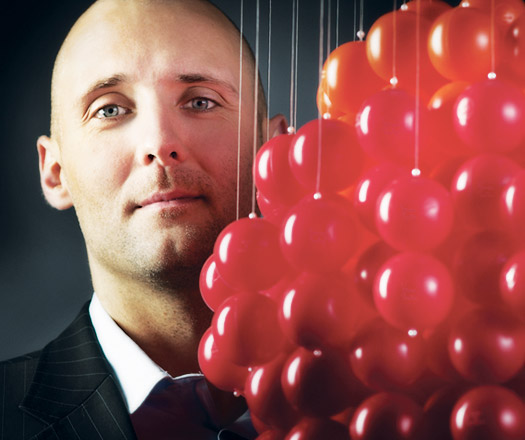
Indesign’s Anna Marsh speaks with Peter Frandsen during his visit to Australia.
April 15th, 2009
Corporate Culture launched ‘The Masters’ collection last month over an intimate lunch with international guest and managing director of Verpan, Peter Frandsen.
The collection brings together Corporate Culture’s select range of influential brands including Bestlite, Carl Hansen, Fritz Hansen, Hay, Louis Poulsen and Verpan. On an international scale these brands are considered ‘Masters’ of their works.
Indesign magazine’s Anna Marsh caught up with Frandsen to get the low-down on his Australian tour and Verpan.
AM: What brings you to Australia?
PF: I’m visiting Australia to meet with Corporate Culture, Verpan’s exclusive Australian partner. I’m here to visit showrooms in Sydney, Melbourne and Brisbane and meet with clients and professionals from the architecture and design community.
Verpan’s relationship with Corporate Culture is new. We have been working with them for three quarters of a year now and have recently started installing Verpan products in the showrooms.
AM: How does the response in Australia compare to overseas? Do you notice a difference, do certain pieces attract more attention than others depending on where you are?
PF: It is pretty much the same product that people are responding to worldwide. The response we see in Australia is quite similar, the ‘Shell’ and ‘Spiral’ are very popular. The most popular pieces of Verpan are quite international.
I enjoy working with Australians, a lot of the specifiers and architects we work with are quite international and very established.
AM: Can you tell me about your relationship with Marianne Panton?
PF: I have a great relationship with Marianne Panton. She is the one responsible for the Panton estate after [Verner] Panton died.
Marianne was always very involved with his designs. She was the business side of the Panton estate; he was the creative side. She was the one taking care of the contract with the manufactures and was very much involved.
She helped out with the designs and exhibitions he did so her knowledge of the design is very deep.
AM: How is Marianne Panton involved in the production of new designs?
PF: The way it works is that when we launch a new item, we make the first prototype, which is then physically approved by her [Marianne]. Either we bring it up to Switzerland or she comes to us.
Marianne goes through the new products, when she feels that it lives up to what Panton wanted to make and achieve we are allowed to produce.
Even in her own house, in the way she lives – she has kept a lot of things the way they were when Panton was alive. It is very important for all of us to work with people who stay loyal to his designs. That is what we are trying to achieve.
AM: Can you comment on the importance of lighting in defining a space, to create the environment?
PF: People are starting to see the value of a nice design. It is one thing to have beautiful carpet and beautiful furniture but if you have an ordinary light it will ruin the whole deal.
Panton’s idea was that when you come into a room you are inspired by what you see. We are also trying to convince people that it is important to finish a room, lighting included.
Light is what you feed off, it puts you in a good mood. If you are sitting in your house and you have a beautiful light to look at and it gives a nice, ambient feel, it finishes the space off.
Verner Panton was very much into that, which is why he wanted to do more than just furniture, he wanted to do the entire installation. Panton was working very hard when he created his designs, trying to make something special that would enhance the room.
It is a privilege to work with Verpan and Marianne Panton. When people hang Panton’s design, they remain in place for years. I take great pride working with classical design, today design doesn’t always last very long, things are always new.
Verner Panton deserves every bit of the recognition he is getting today.
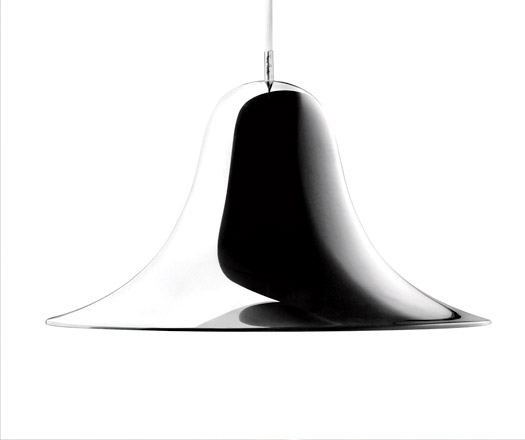
’Pantop Pendant’ (Verpan)
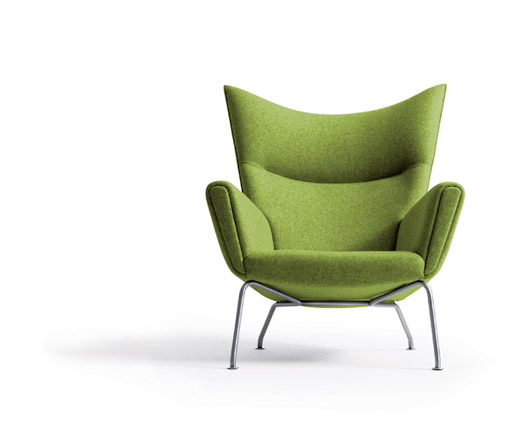
’CH445’ (Carl Hansen, part of the Masters Collection)
INDESIGN is on instagram
Follow @indesignlive
A searchable and comprehensive guide for specifying leading products and their suppliers
Keep up to date with the latest and greatest from our industry BFF's!
The internet never sleeps! Here's the stuff you might have missed