The Samsung Bespoke range, which has seen the tech giant expand its offerings into the interior design world, has expanded once more, with a number of refrigerators added to the collection.
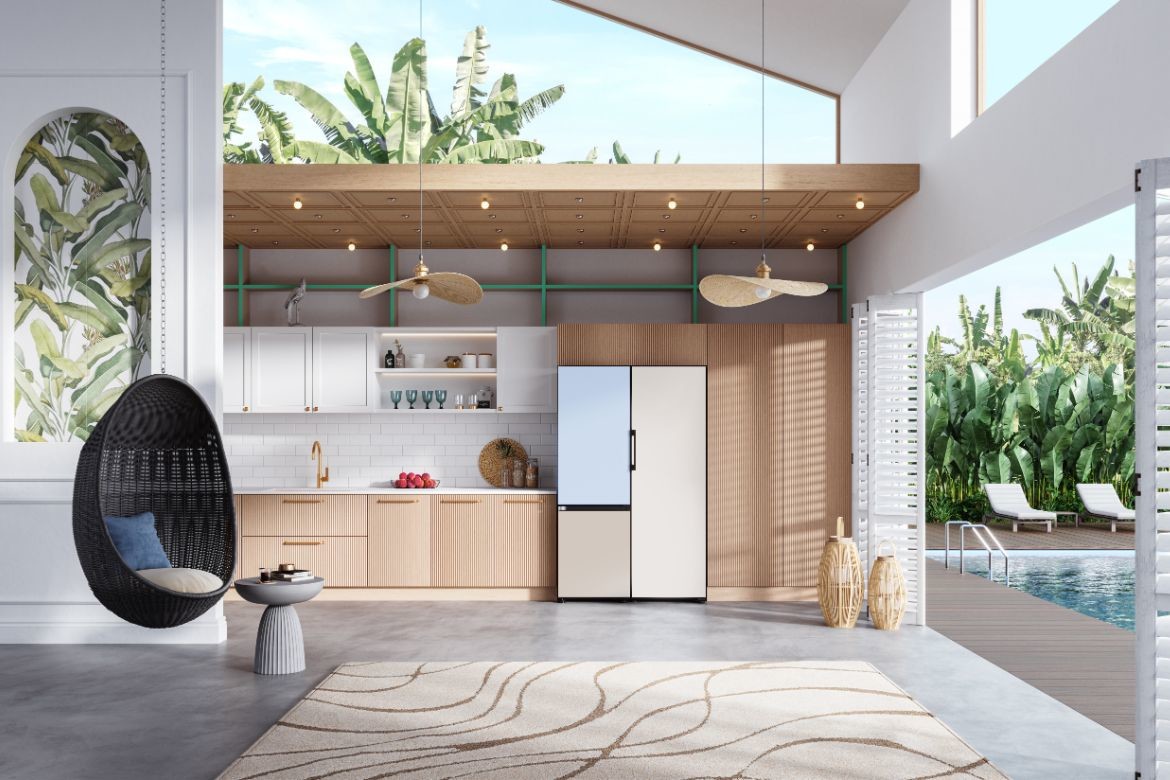
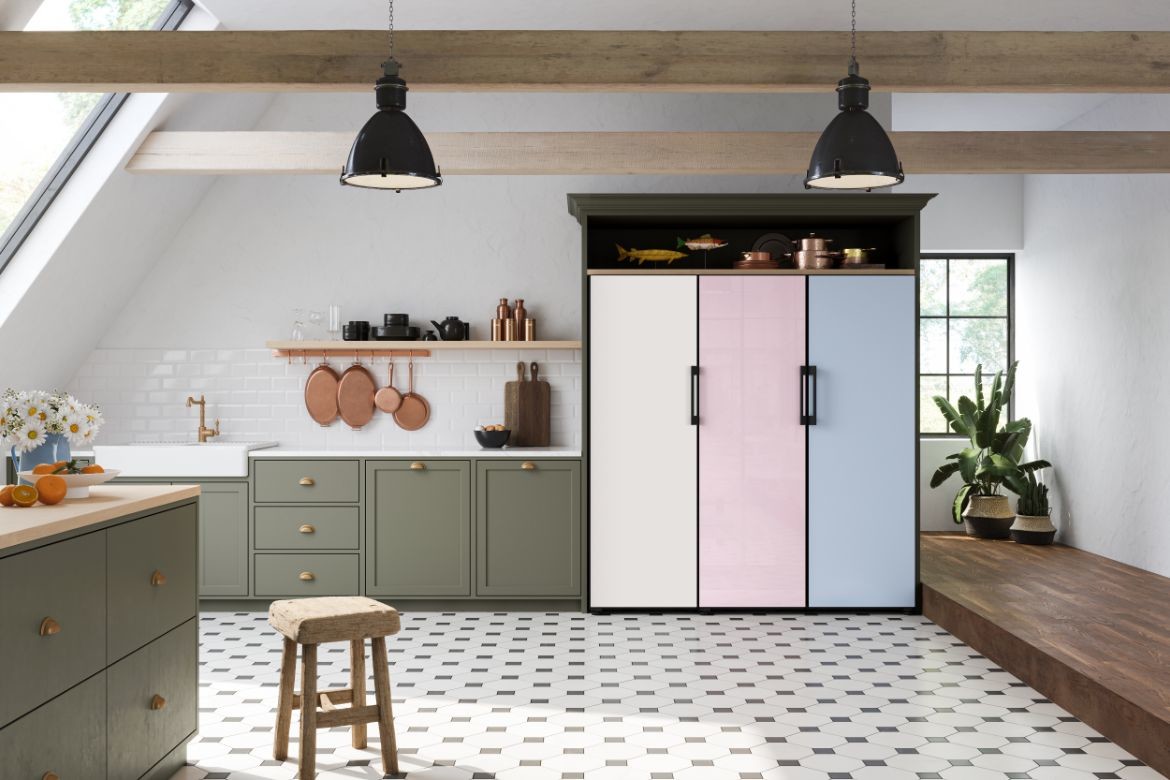
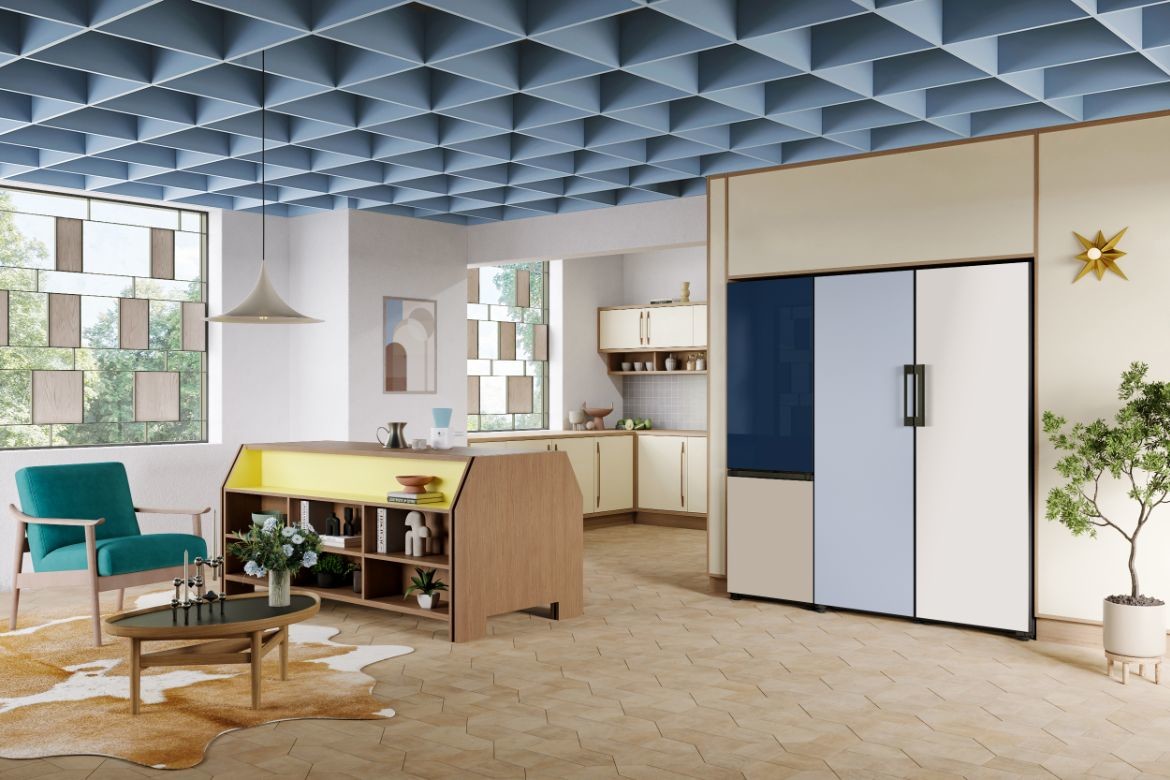
The new appliances give homeowners the ability to completely customise the size and colour of their fridges, with colour options able to be applied to individual fridge and freezer doors. It results in flexibility for designers and homeowners to put their appliances at the forefront of their kitchen, as opposed to sitting in the background.
And the new range is perfectly timed, given Australia’s increasingly bold and experimental approach to kitchen design.

Samsung Electronics’ vice president – consumer electronics, Jeremy Senior, says the new range of appliances was born from trends that came about during the pandemic.
“We’re constantly assessing consumer feedback and insight. We’ve seen this constant change in desire for more colour in appliances. It’s been a long time from whitegoods, to stainless steel to black stainless. That trend is changing again,” he says.
“Samsung’s been at the colour party now in different categories. From a home appliance perspective it is quite new to us, but with trends accelerating through covid we really began to embrace it.”
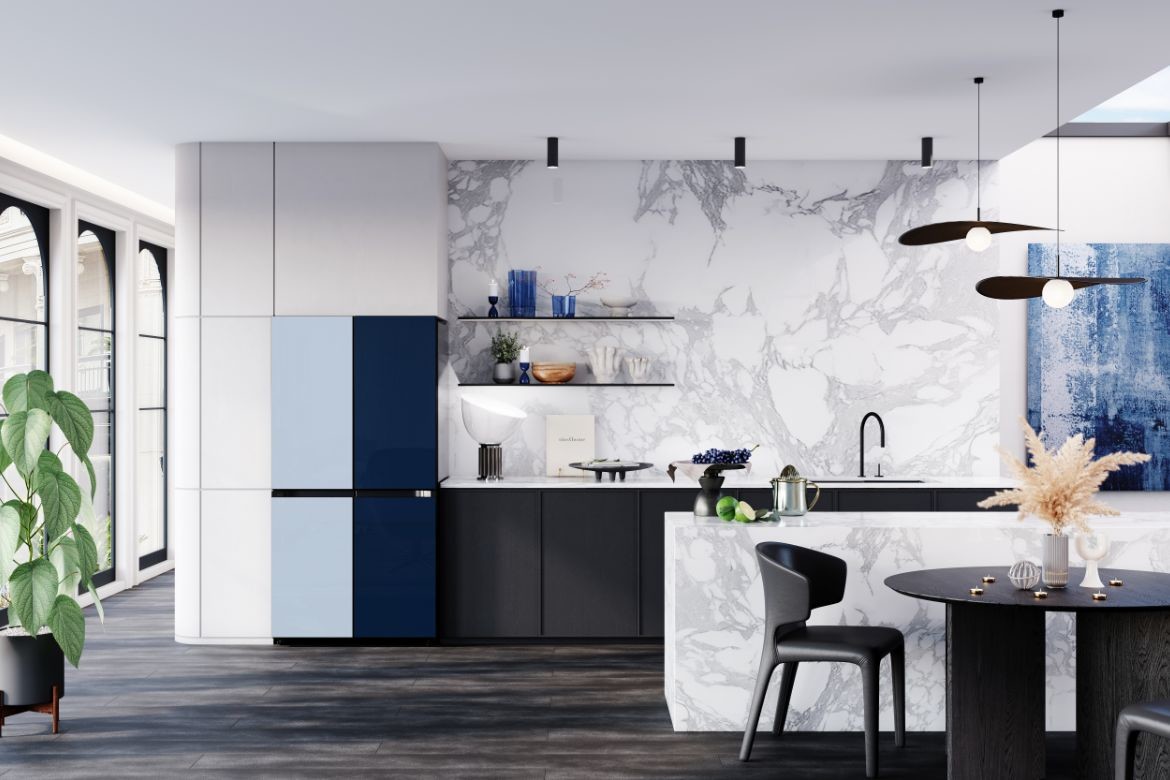
“There’s two aspects to customisation,” says Senior. “One is the option to change colour, the second is the customisation of space, which allows for the product to grow with you and your circumstances.”
The range of refrigerators offer up a selection of modular fridges that account for personal taste, lifestyle needs and sustainability. Fridges are available in four-, two- and single-door options, as well as a French-door refrigerator which comprises an integrated beverage centre.

Interchangeable door panels give homeowners the opportunity to make their fridges sit out from the kitchen cabinetry. ‘Cotta white’ and ‘cotta charcoal’ are available in a metal finish, while ‘clean pink’, ‘clean navy’, ‘satin blue’, ‘satin grey’ and ‘satin beige’ are available for glass doors, with more colours and finishes to be available in the future.
Prominent interior designer and Australia’s Best House host, Briellyn Turton, says Samsung’s new range is ideal given the smattering of colour that now exists across Australian kitchens. Turton recently designed a sample space for the manufacturer to outline the form and function of the refrigerators within a contemporary kitchen.
“We wanted to play the brief on what people are doing, what they’re searching and what they want in their homes,” she says.
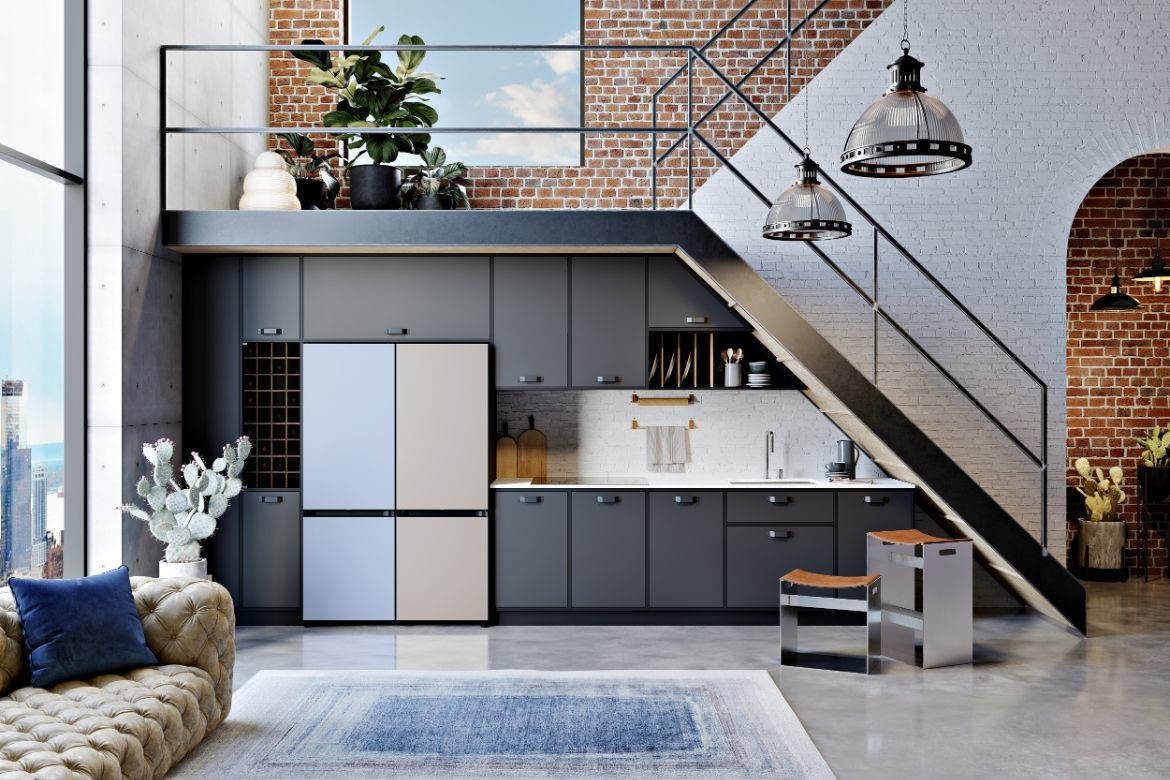
“Coming out of COVID, I know we’ve said it 500 times, but it actually is relevant because people were stuck at home, they began to look at their house under a microscope and identify what they loved and hated, which made people bring their personality into the home.”
Individual temperature controls for each section of the refrigerators are on offer, with Triple Cooling providing optimal control. FlexZone and Convertible Modes can transform freezer modules and compartments into additional fridge space when required. Select models additionally feature wine shelves and slide and fold shelves, with French-door models Wi-Fi enabled.
Samsung
samsung.com
We think you might like to watch this webinar featuring Li Edelkoort on new living trends.