The home of architecture and design in the Asia-Pacific
Get the latest design news direct to your inbox!

Get the latest design news direct to your inbox!
The NGV Architecture Commission Design Competition is calling for entries for its fourth iteration, presenting the opportunity for an architect to propose a temporary pavilion that bridges design and art.
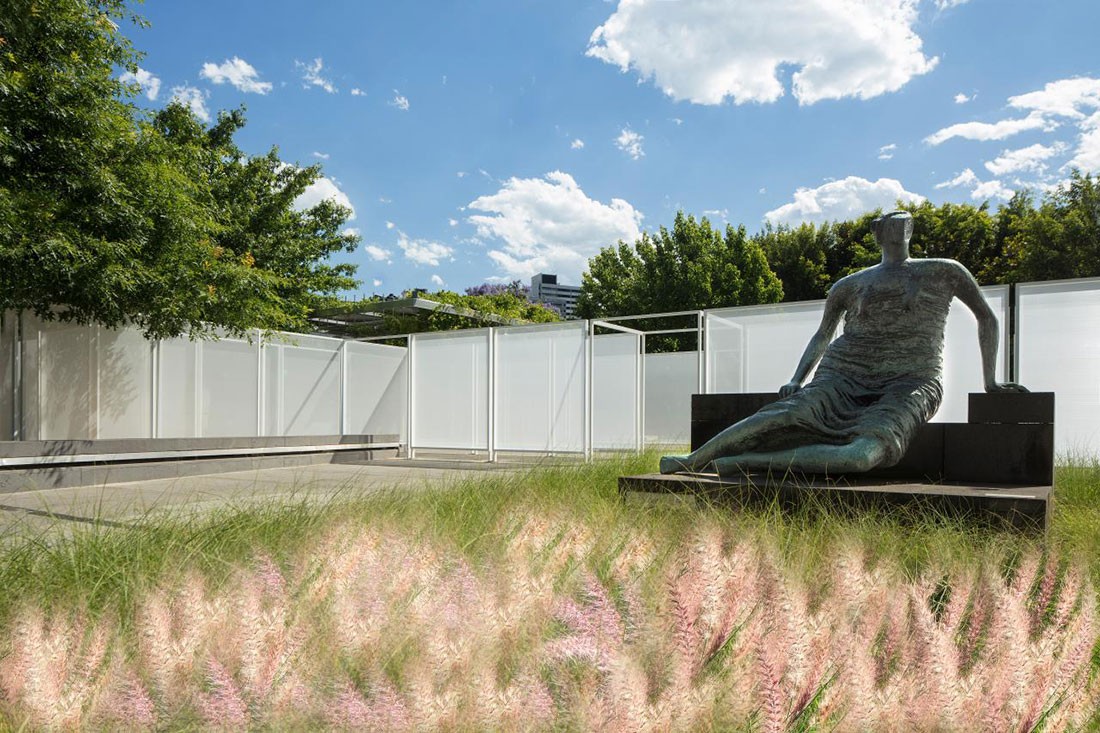

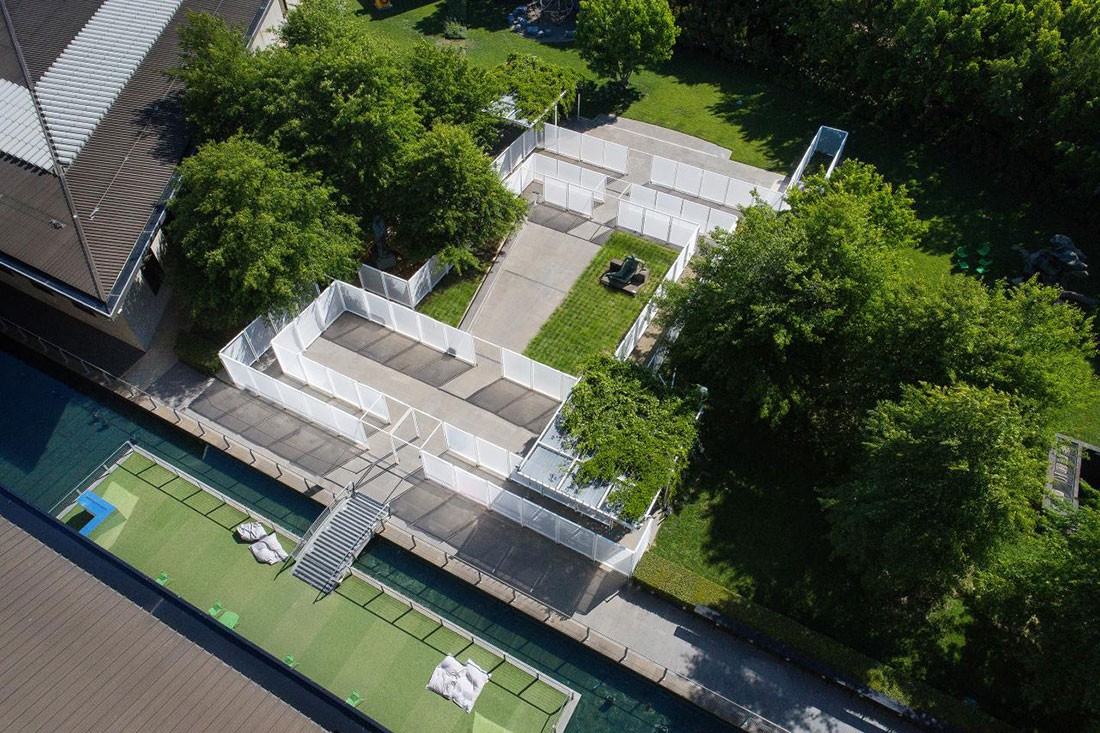
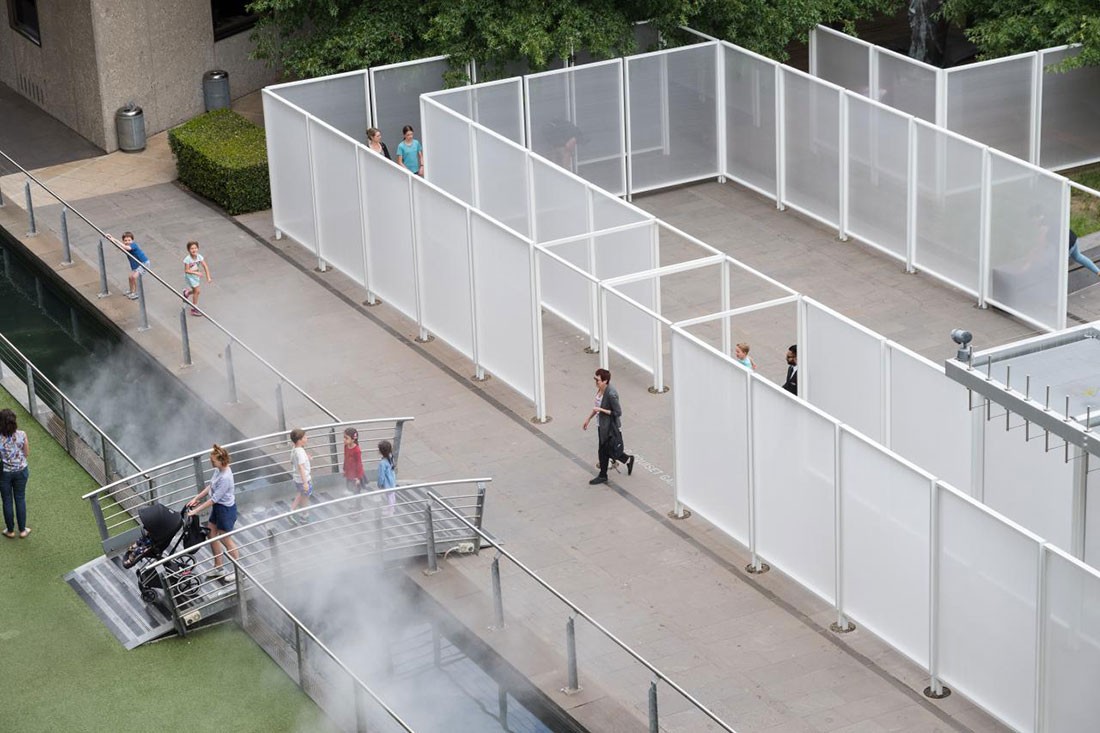
Retallack Thompson and Other Architects Garden wall 2017.
February 7th, 2018
Four years ago, one of Australia’s great civic spaces took further steps towards icon status. The National Gallery of Victoria (NGV)’s Grollo Equiset Garden has, in this relatively short time, become synonymous with the NGV Architecture Commission, a national design competition that has seen the gallery’s outdoor haven metamorphose into a spiralling net of polypropylene fuschia blooms one year, and a hot pink car wash the next.
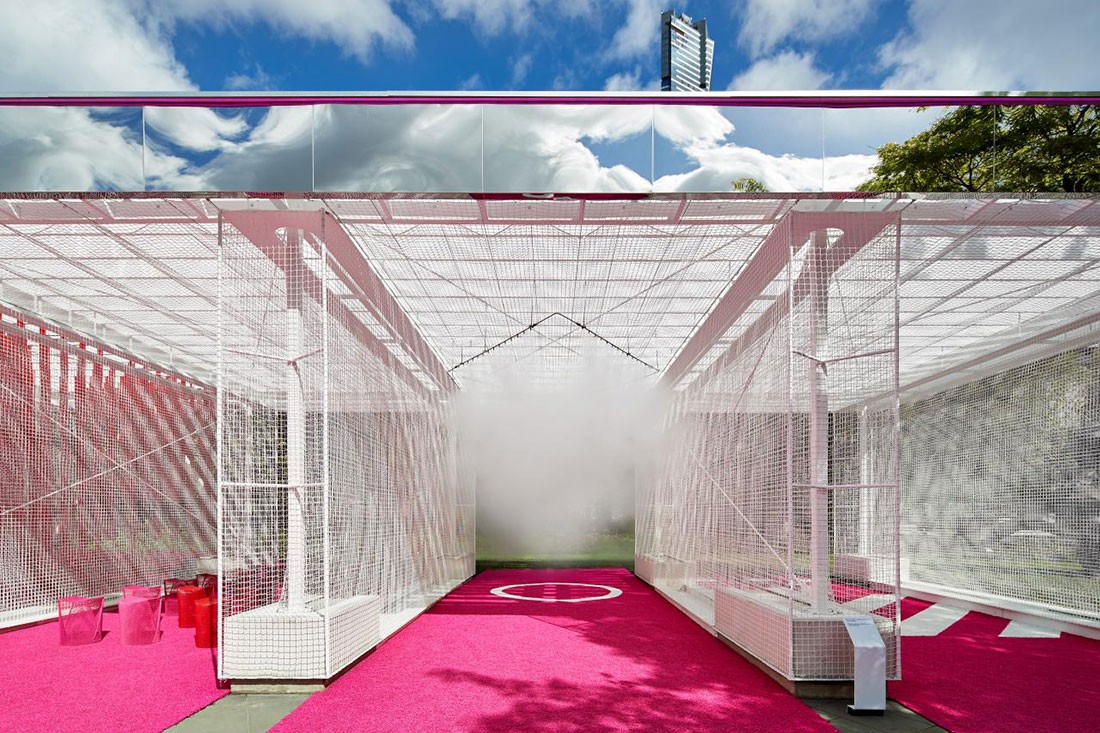
The 2016 NGV Architecture Commission, M@STUDIO Architects Haven’t you always wanted…? © M@ STUDIO Architects. Photo by Peter Bennetts.
Architecture is an unusual medium for a gallery to pursue, if not just for the pragmatic reason of scale. For this reason, the limits of dabbling typically stop at architectural photography or draft sketches – assuming there is any such dabbling to begin with.
The NGV Architecture Commission was launched as an attempt to curb this established boundary between art and architecture in the gallery setting. In fact, it was part of a slate of design-led innovations instigated by the NGV in 2015, one of which was the creation of the Department of Contemporary Design and Architecture, a first-of-its-kind initiative for an art gallery in Australia.
Retallack Thompson and Other Architects Garden wall 2017.
In all of its iterations to date, the annual Architecture Commission Design Competition, led by the new(-ish) department, has resulted in something halfway between architecture – with all its connotations of robust permanence – and the ephemerality of installation art. Not only that, but each winner has produced a wildly different concept, meaning that the Grollo Equiset Garden has itself become a place of perennial transformation and ephemerality.
Barely a month after the installation of the most recent commission, an opaque labyrinth of mesh-clad walls by Retallack Thompson and Other Architects, the garden is set to shed its skin once more.
This week, the NGV launched its 2018 Architecture Commission Design Competition, calling on architectural practices to submit their own transformative visions. Ever seeking the element of surprise, the brief is categorically liberal. It asks entrants only that their design is “inspiring”, and capable of “[engaging] visitors and [encouraging] participation”.
As per usual, the competition will be run across two stages. An “anonymous” stage one calls for “high-level design proposals”. From here, five individuals or practices will be chosen to proceed to a paid stage two, with the final winner invited to realise their concept in time for the 2018 summer.
INDESIGN is on instagram
Follow @indesignlive
A searchable and comprehensive guide for specifying leading products and their suppliers
Keep up to date with the latest and greatest from our industry BFF's!
The internet never sleeps! Here's the stuff you might have missed