Tsuboya by Yasushi Horibe, photo by Tatsuya Tabii.
We look back at the Hiroshima Architecture Exhibition in late 2025, where Junya Ishigami, Yasushi Horibe and Hideyuki Nakayama designed three poetic mobile kiosks.
It was a chilly autumn day when I went hunting for three small structures in Hiroshima, designed by different notable Japanese architects. They were for the Mobile Kiosk – Small Architecture Project, one of the programs of the triennial Hiroshima Architecture Exhibition. Hosted by the Kambara & Tsuneishi Foundation, headquartered in Fukuyama city, this inaugural event ran from 4th October to 30th November 2025.
Story continues below advertisement
Based on the theme ‘Architecture: A New Stance for Tomorrow’, the works of 23 architects and architecture groups were exhibited across seven venues ranging from temples and art museums to hotels in the Seto Inland Sea region, specifically in the cities of Onomichi and Fukuyama. Over 200,000 people attended. Local companies sponsored the realisation of the mobile kiosks. New versions will be added at the next two events in 2028 and 2031, with the previous iterations continuing to be utilised.
“They will provide locational context for interpreting architecture within history, landscape and the totality of human endeavour,” according to event organisers.
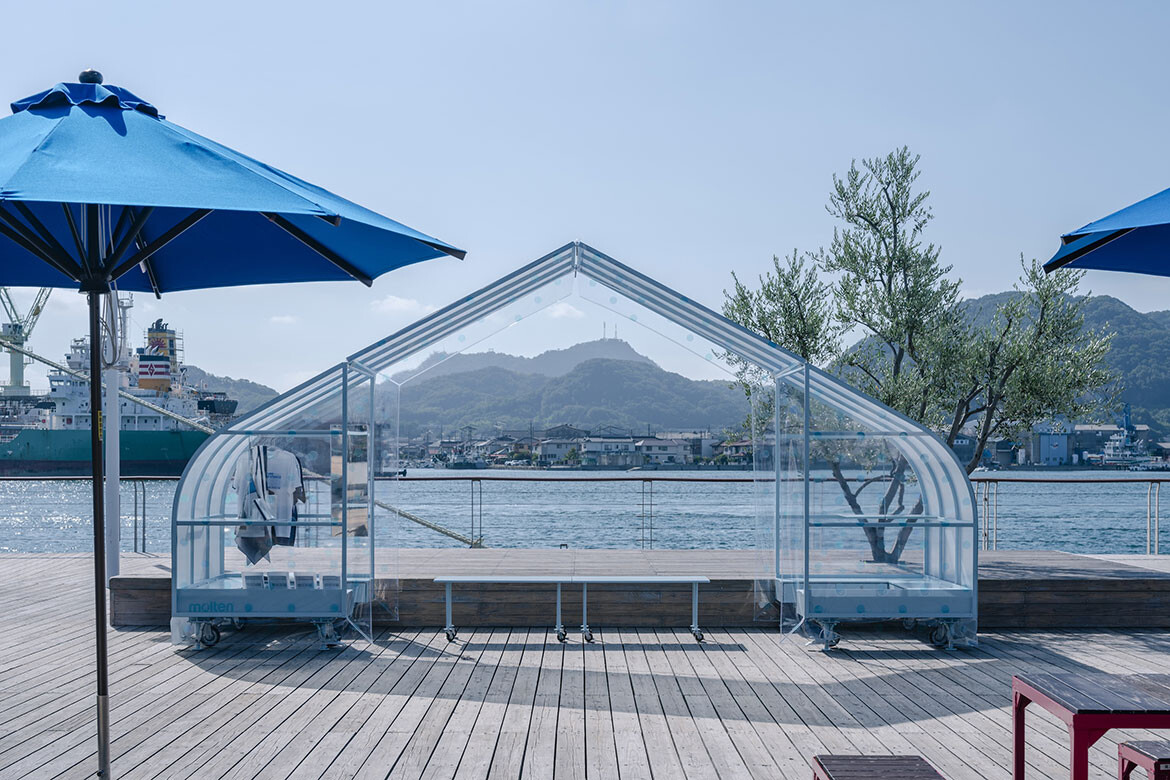
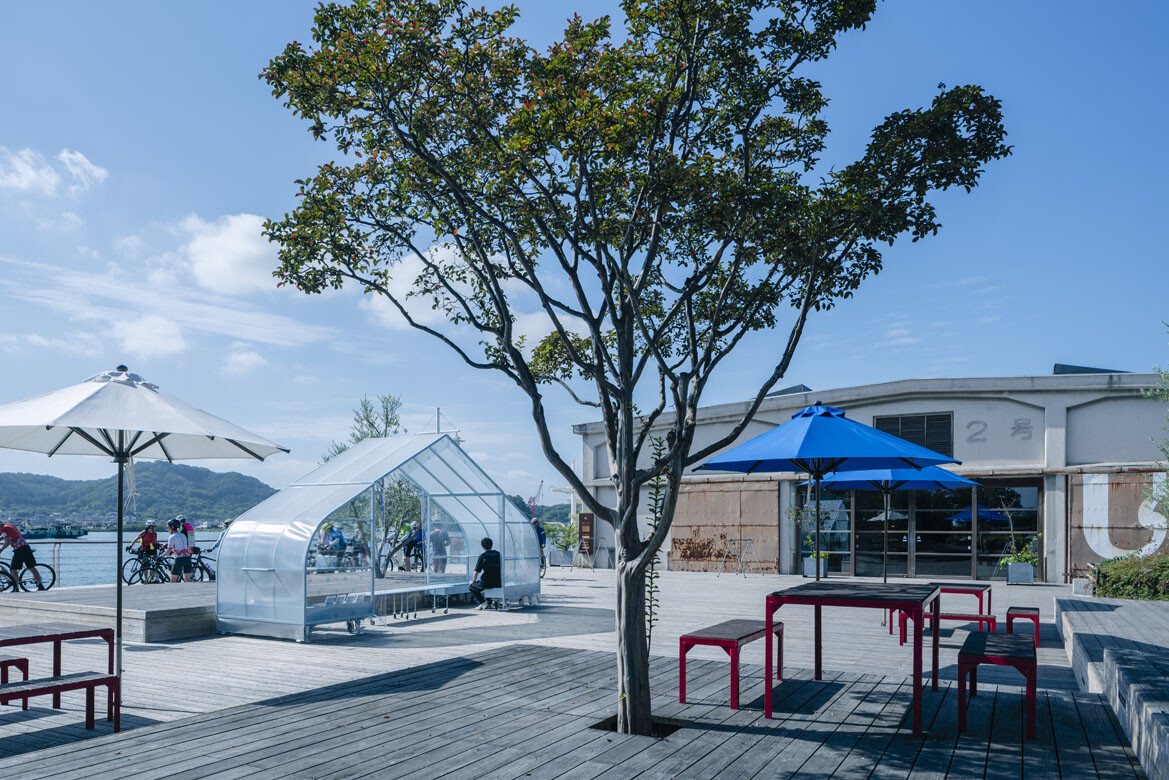
I found the first kiosk on the waterfront boardwalk outside ONOMICHI U2, a restored warehouse transformed into a lifestyle venue. Titled ‘Kiosk Through Which the Landscape Passes’, it was designed by Hideyuki Nakayama, the principal of Hideyuki Nakayama Architecture.
Story continues below advertisement
“With the kiosks covered in translucent film the various objects stored inside them appear to float against the backdrop of the surrounding landscape,” Nakayama described of the baby blue, gable roof-shaped structure. Looking through the kiosk toward Onomichi Station, I saw the people of Onomichi going about their day; looking toward the water, I observed gargantuan docked ships.
Its lid-like roof retracts downwards to close. When opened, it shelters an inviting space for displaying items or holding children’s workshops, unfolding “like a large, transparent sketchbook, with different pictures ‘drawn’ each day against the changing backdrop of Onomichi’s sea and sky,” Nakayama described.
Story continues below advertisement
He wanted to not merely “create a kiosk that sells merchandise, but to design a ‘space’ where meaningful things could take place.” This manifests the values of Molten – the kiosk’s sponsor that manufactures sports equipment and motor parts.
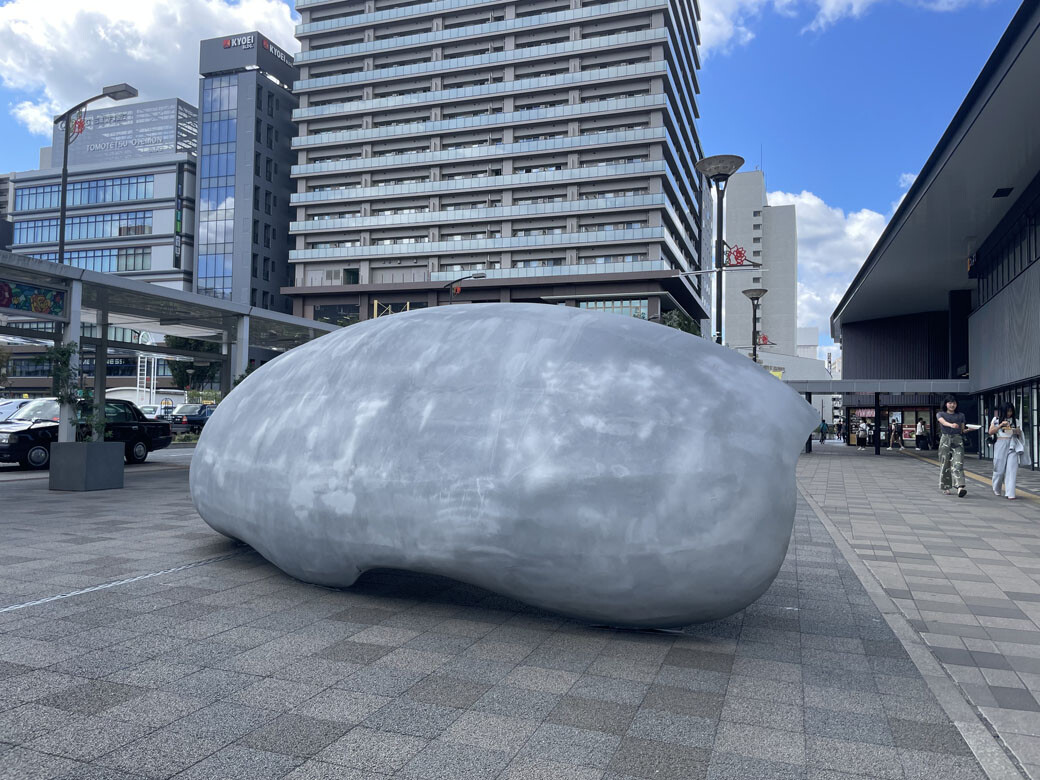
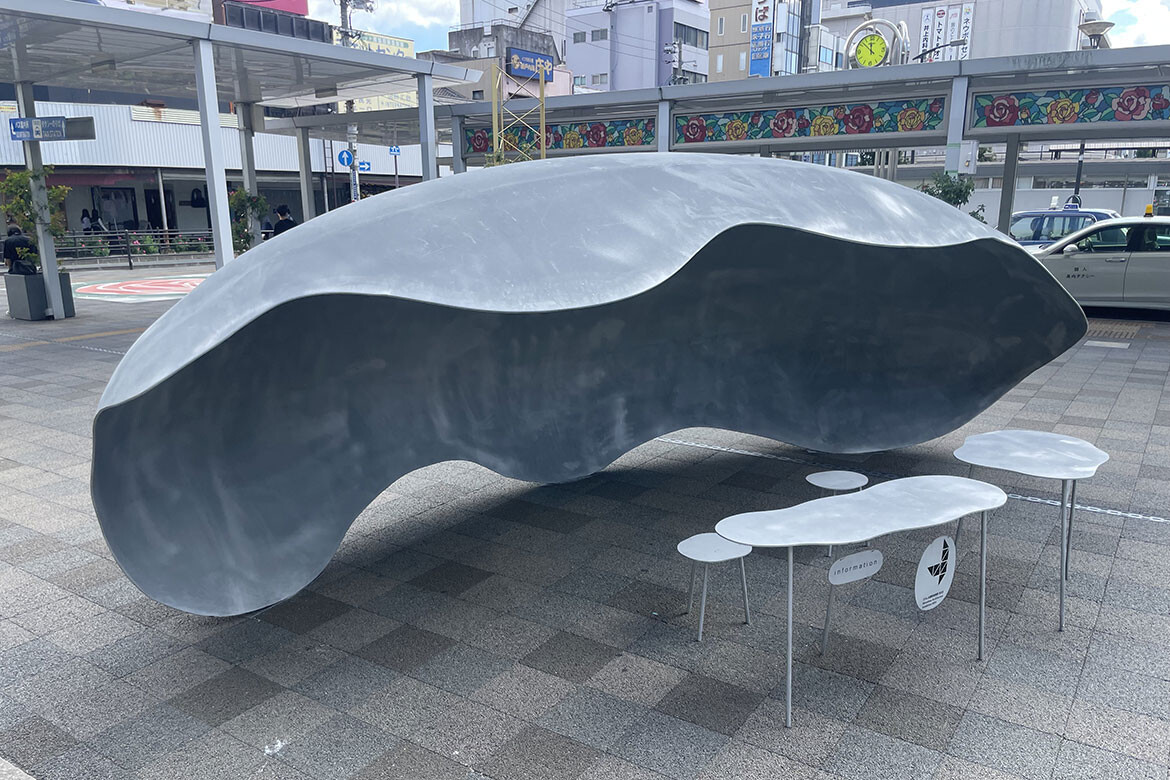
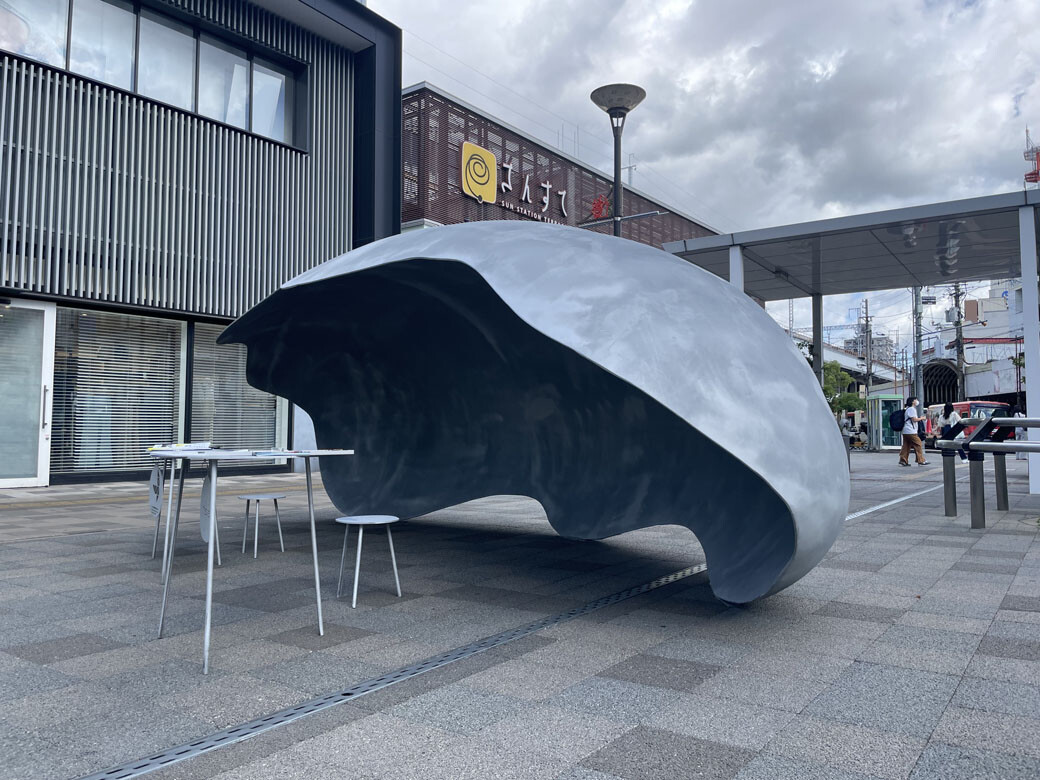
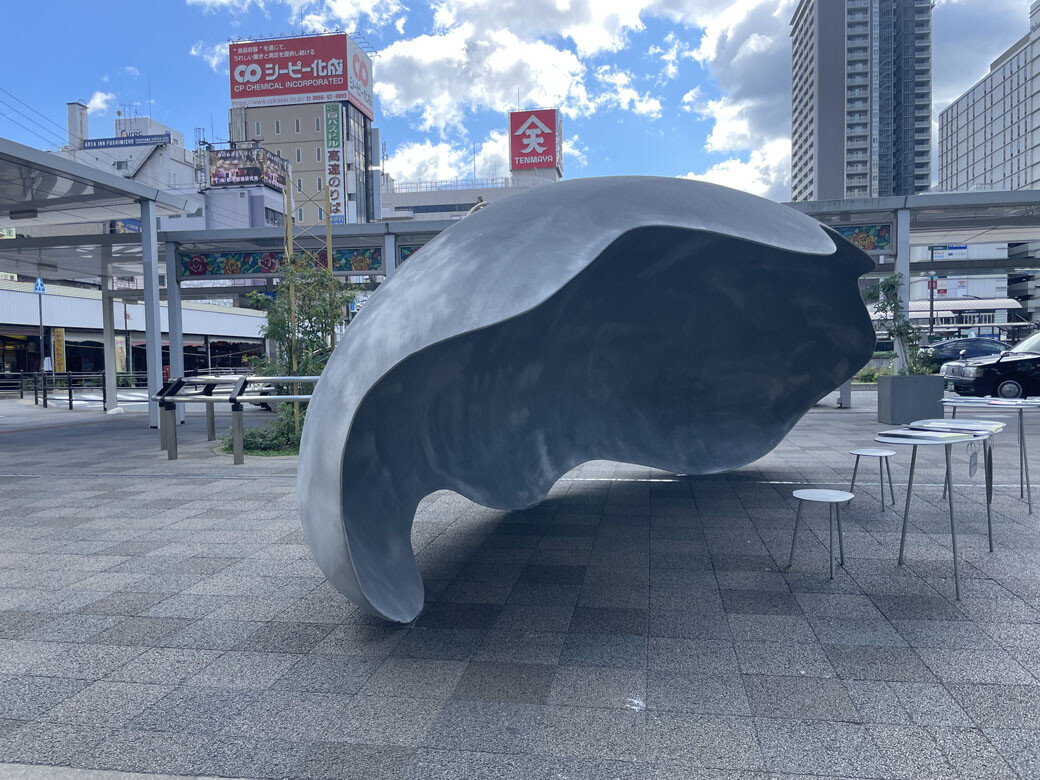
Outside the JR Fukuyama Station’s south exit, I found Junya Ishigami’s ‘Cloud Descend.’ Its curvy form opening up on one side was an anomaly among the city’s composition of glass, concrete and boxy architecture. Built in collaboration with Tsuneishi Shipbuilding & Tsuneishi Kamtecs, it functions as a visitor information centre.
Related: Integrating Japanese bathing rituals into bathroom design
The kiosk, “teetering precariously [as if] on the verge of falling over”, evoked clouds gently touching the land. “It is installed like a ship leaning to one side, balanced by the principle of a self-righting toy and achieved by making the base heavy,” commented Ishigami. Inside, tables and chairs were designed to have similar organic lines.
Ishigami had written some lines that give clues to his thinking behind the kiosk’s design. An excerpt read:
“I imagined clouds drifting down from the sky
onto the Seto Inland Sea.
They were tiny, delightful clouds.
Clouds that had floated high in the sky
gently settled upon the sea
right before our eyes.
Just like ships.”
Like in shipbuilding, the kiosk was made by bending steel plates into three-dimensional shapes and welded together. “When I toured Tsuneishi Shipbuilding’s factory, I was overwhelmed by the sheer power of process visible before me: bending steel plates into three-dimensional shapes and then welding them together to create massive ships. The ships are at architectural scale, and yet they float on the ocean and move. The work taking place at the factory was evocative of a building site,” shared the architect.
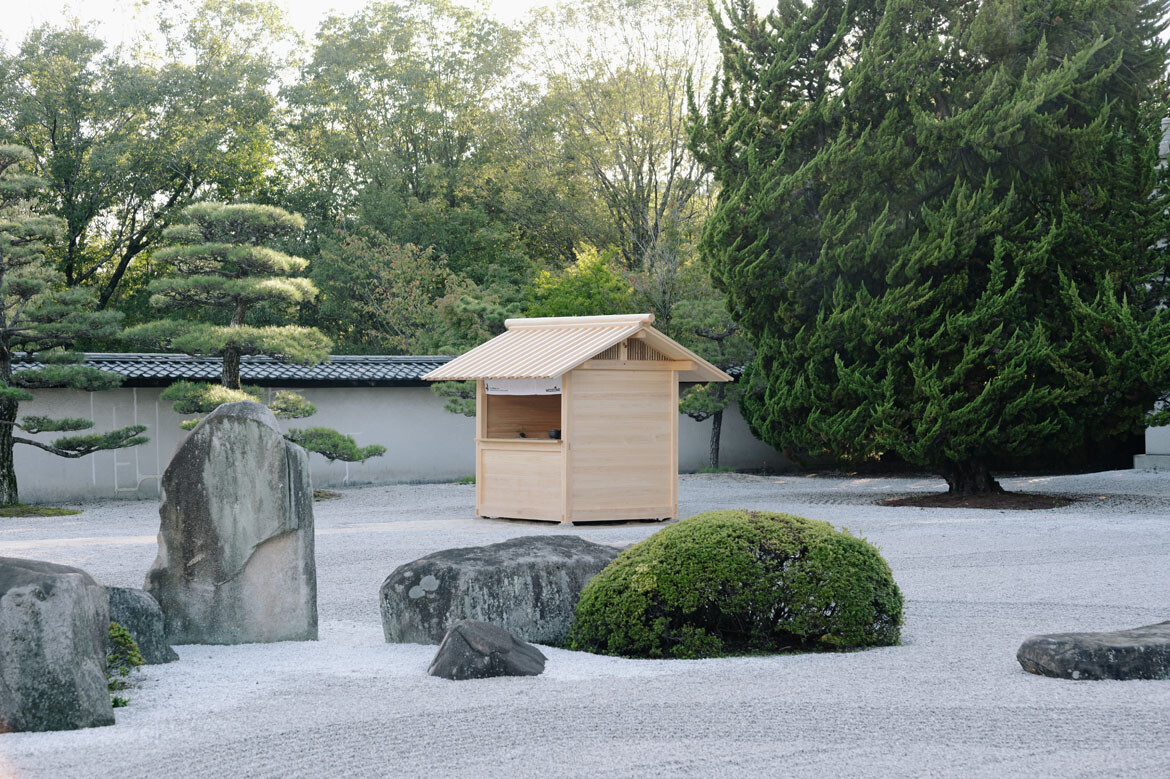
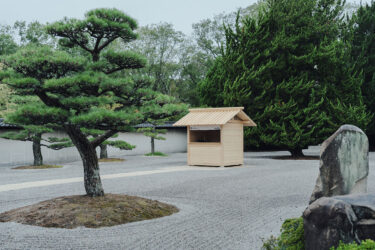
To find the third kiosk, I hailed a car from Fukuyama Station toward Shinshoji Zen Museum and Gardens. After clambering up a slope flanked by trees whose leaves were announcing the autumnal season, I spotted the structure titled ‘Tsuboya’ resting on the pebbled Garden of Ignorance within the grounds of the 400-year-old Shinshoji Zen Museum.
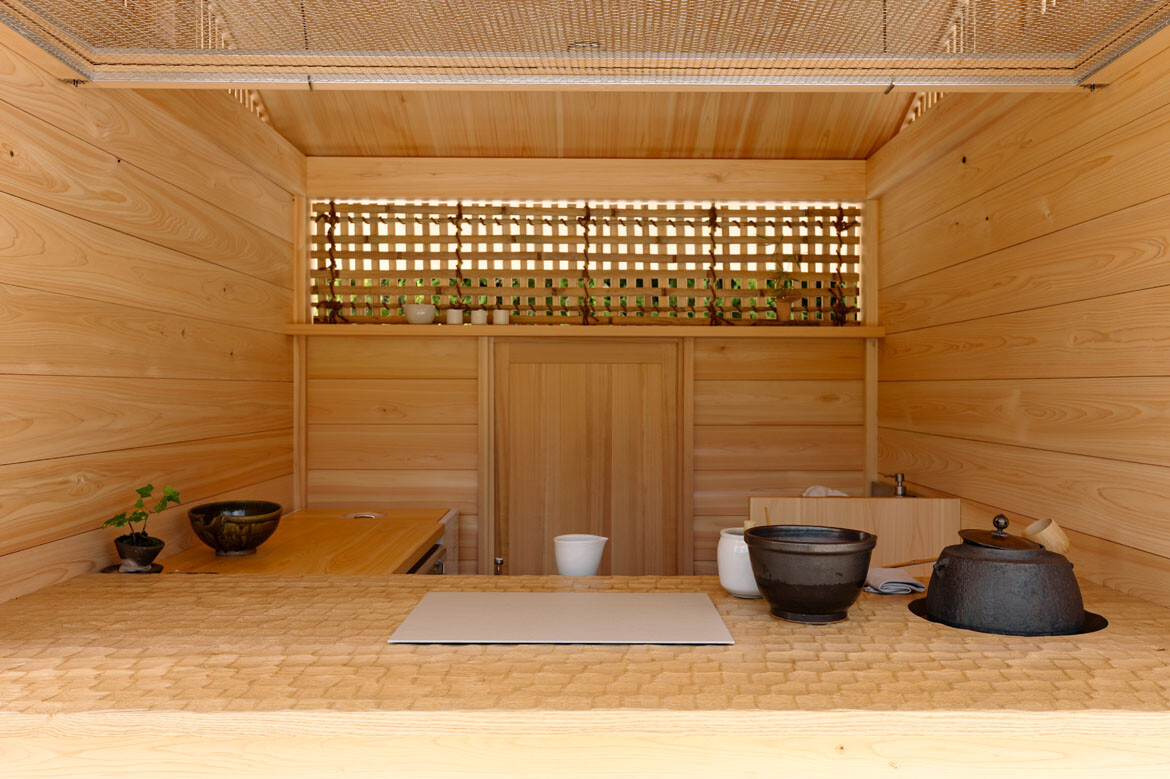
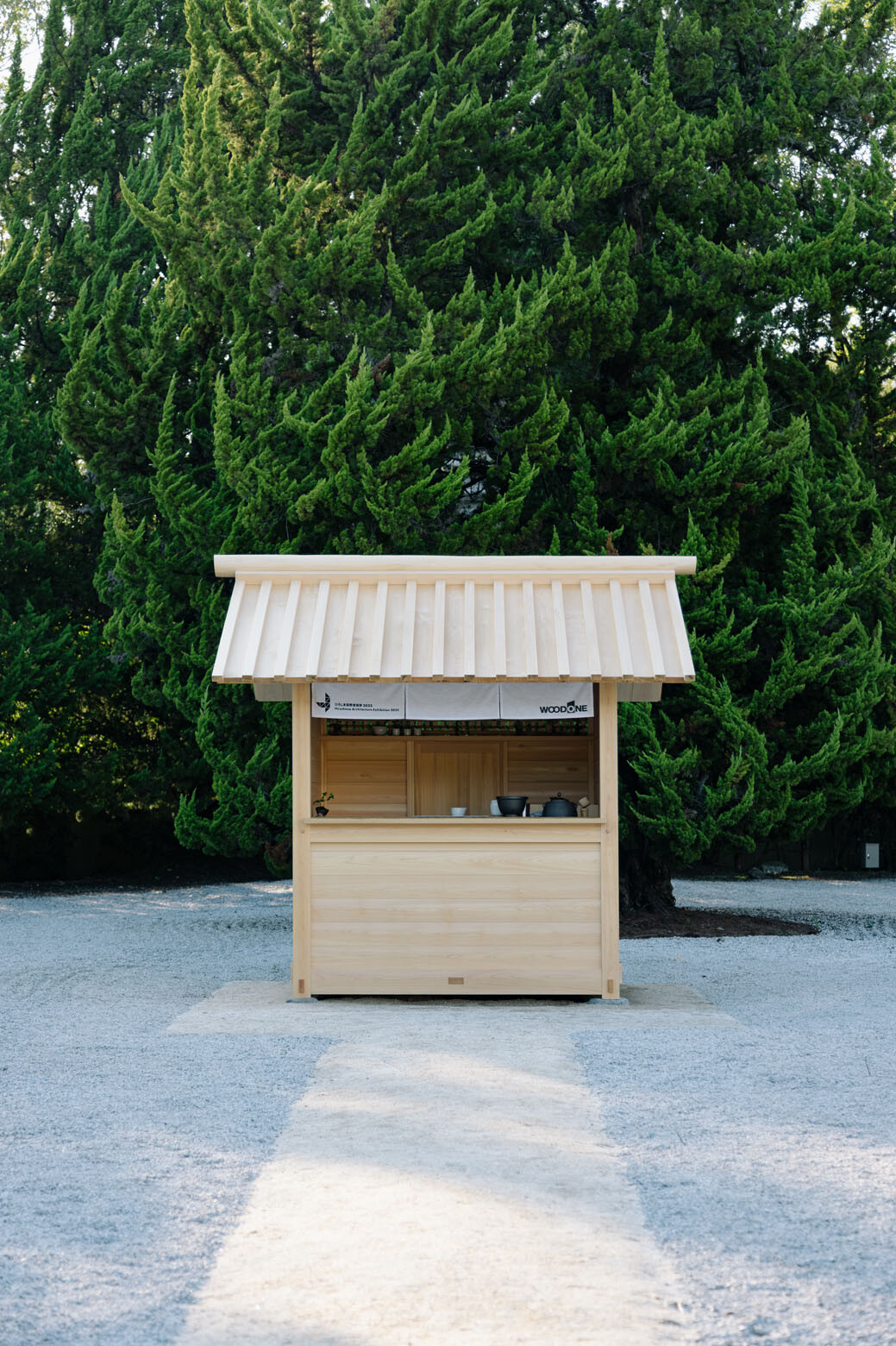
Yasushi Horibe, the founder of Hane Architecture Workshop famous for projects like Guntû – a luxury cruise plying the Seto Inland Sea – designed the kiosk. It is a small hut made of solid Yoshino cypress timber, and functions as a matcha stand, reached via traversing a path between the pebbles.
“I believe architecture is not merely physical; it is a ‘way’ – like the tea ceremony, judo or bushido. It is a single path stretching from the past to the future, and this project exists along this path,” stated Horibe. Buying a drink from here was a special occurrence as the gardens are usually off-limits.
Heritage woodworkers from timber company Wood One built the kiosk. “I see it as an important opportunity to consider what can be done to preserve the kinds of materials that we are familiar with today, and the traditional hand-carving carpentry techniques that are disappearing before our eyes,” Horibe commented.
Its name ‘Tsuboya’ means ‘one tsubo’. “According to the traditional measuring system, 6 shaku (1,820-milimetre) by 6 shaku (1,820-milimetre) equals one tsubo. This unit of area has always formed the basis for human residences and land in Japan,” Horibe explained on the kiosk’s concept.
This reference to architectural scale provides poetic grounding to the design. As dusk fell and the setting sun’s rays washed across the garden, the kiosk’s light wood structure took on a golden sheen that was mirrored on the temple behind, marking an ethereal conclusion to my search and stitching the structure intimately to time and place.
Hiroshima Architecture Exhibition
hiroshima-architecture-exhibition.jp
Photography
Various & courtesy of Hiroshima Architecture Exhibition