The home of architecture and design in the Asia-Pacific
Get the latest design news direct to your inbox!

Get the latest design news direct to your inbox!
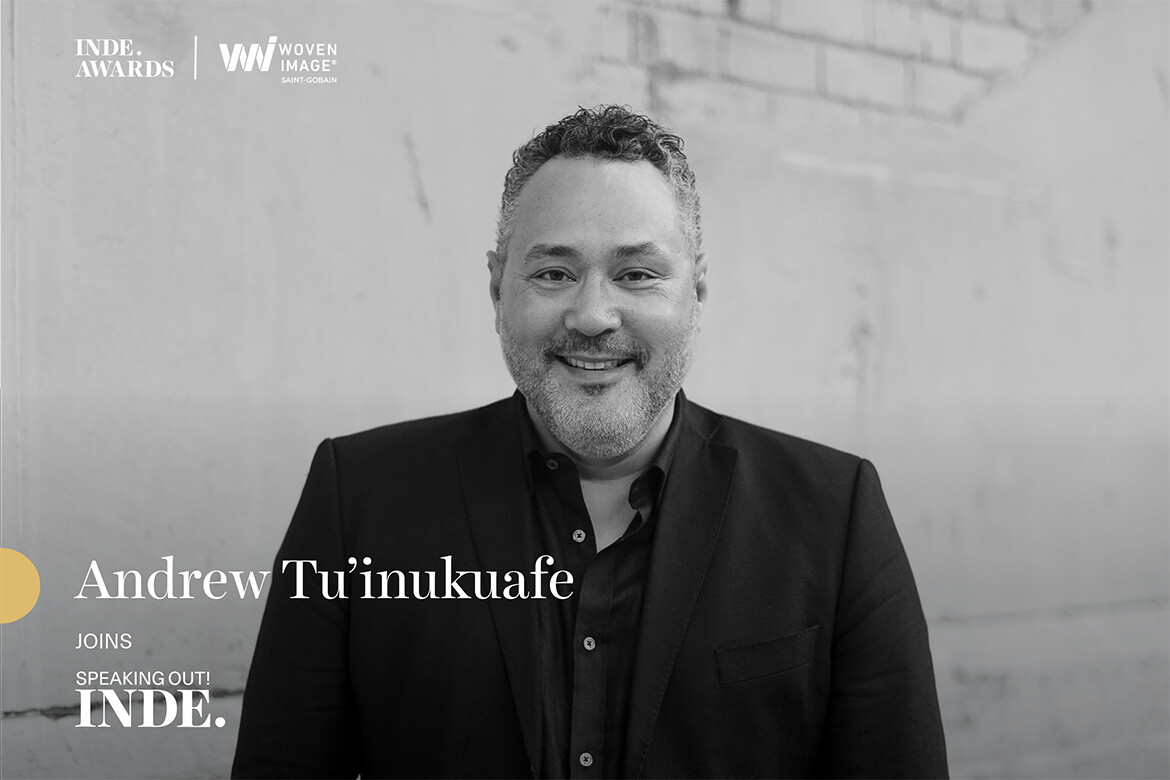
In this SpeakingOut! episode, Andrew Tu’inukuafe, Warren and Mahoney, explores the importance of Indigenous knowledge, design rooted in place, and the power of collective thinking in shaping meaningful, enduring projects.
April 8th, 2026
As part of the SpeakingOut! series for the 2026 INDE.Awards, Program Director Jan Henderson sits down with Andrew Tu’inukuafe of Warren and Mahoney – named a Luminary at last year’s INDE.Awards. Proudly supported by Woven Image, Category Partner of The Luminary at the 2026 INDE.Awards, this conversation celebrates leadership, legacy and the ideas shaping the future of design across the Indo-Pacific.
Andrew reflects on Warren and Mahoney’s 70+ year legacy, describing the practice as a “harmonious melding of creative and technical.” With projects spanning Aotearoa, Australia and the Pacific, the studio’s philosophy is grounded in the belief that where you come from shapes how you design. A key theme is the idea that constraint can catalyse innovation, an approach Andrew sees as distinctly Australasian and Pacific. He also emphasises the importance of collaboration, both internally and with external experts, noting that “many minds make great work.” This openness to diverse perspectives underpins the studio’s ability to create architecture that is both rigorous and resonant.
Interestingly, Andrew didn’t set out to become an architect. With early interests in drawing and reading, it was a friend’s suggestion that led him to the field, one he describes as endlessly rewarding. Today, he still finds magic in seeing ideas come to life, reflecting on how each project carries “many hands and heads and hearts,” and ultimately takes on a life of its own.
A standout focus of the conversation is Warren and Mahoney’s advanced Indigenous design approach, including its specialist unit, Te Matakīrea. This initiative embeds Indigenous perspectives into the design process from the outset, ensuring projects are informed by a deep understanding of place. Andrew explains that engaging with First Nations knowledge is not just a design gesture, but a fundamental way to create meaningful architecture – one that reflects history, culture and connection to land. This approach often involves collaboration beyond the studio, bringing in cultural experts to guide and enrich the process.
Warren and Mahoney’s work is helping to shape a more culturally responsive and inclusive design industry. By championing Indigenous engagement and embracing regional identity, the practice is contributing to a broader shift towards architecture that is grounded in authenticity and respect. Andrew also speaks to the growing influence of Australasian design on the global stage, suggesting it’s time for the region’s unique perspective to be recognised alongside established movements like Scandinavian design.
A sincere thank you to Andrew Tu’inukuafe for sharing his insights, and to Woven Image for their ongoing support of The Luminary category at the 2026 INDE.Awards.
Discover more from this inspiring conversation, listen to the full SpeakingOut! Episode here now. Entries to the 2026 INDE.Awards are now closed, stay tuned for the Shortlist Reveal in July!
INDESIGN is on instagram
Follow @indesignlive
A searchable and comprehensive guide for specifying leading products and their suppliers
Keep up to date with the latest and greatest from our industry BFF's!
The internet never sleeps! Here's the stuff you might have missed