The home of architecture and design in the Asia-Pacific
Get the latest design news direct to your inbox!

Get the latest design news direct to your inbox!
The world renowned architect is to design a landmark building for UTS.
June 22nd, 2010
Yesterday UTS announced their decision to build a Frank Gehry icon as part of its City Campus Master Plan that will cost the University $150 million.
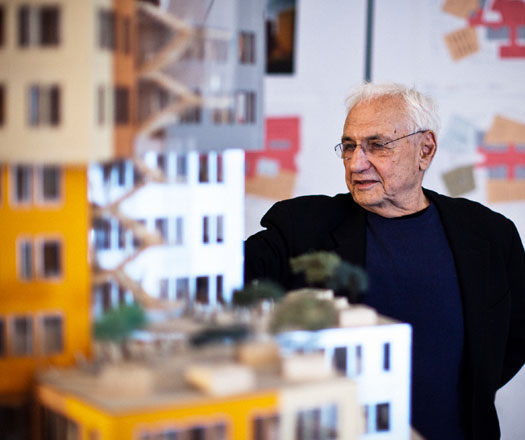
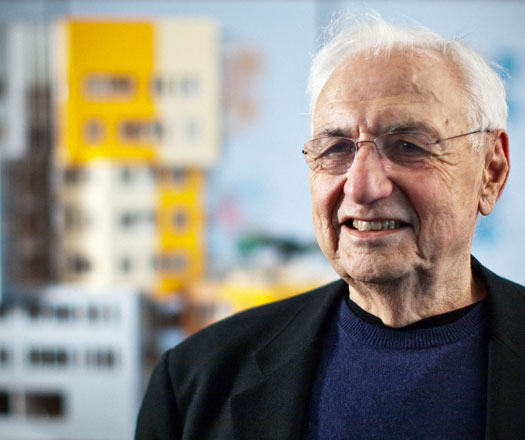
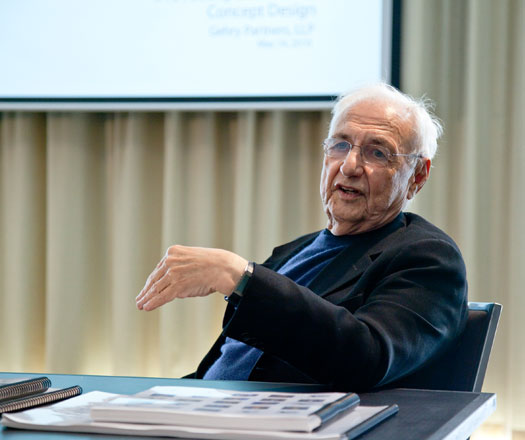
After receiving UTS Council approval on Wednesday 16 June, Gehry talked at a press conference at UTS about his landmark building which will be between the ABC building and the Powerhouse Museum.
The decision to commission the Pritzker award-winning architect is part of “a bold vision for the university to become one of the leading universities of technology in the world,” said Vicki Sara, Chancellor of UTS.
Frank Gehry, along with his colleagues at Gehry Partners, have spent six months refining the proposed concept design.
“The design Gehry put to Council was creative and innovative, capturing “the spirit of UTS,” Sara said.
“What I presented today was a trajectory,” said Gehry of his earlier meeting, suggesting that it was still “premature” to discuss the plans.
A touch jet-lagged, but effortlessly cool and casual, Gehry spoke about the design’s sensitivity to the site and its surrounds and his goal to create “a sense of campus”.
“I’m a golden rule guy”, said Gehry. “Our intent is to be a good neighbour, one that doesn’t copy or mimick, and won’t be insulting.”
“We’ve analysed the issue of building in this space. We’ve built a big model of the area in a 10 to 15-block radius so as to examine the character. We want to understand the scale of the building and the light and sun. A lot of it is intuitive.”
One journalist asked Gehry to reveal some sense of approximate dimensions, shape and light, but was met with jovial “no” from Gehry.
Ross Milbourne, President of UTS described it as “an important linchpin for the university” and revealed the specifications for the site to be 16,000 square metres and a maximum height of 50 metres.
Chinese business leader Dr Chau Chak Wing has donated a total of $25 million to UTS – $20 million of which will support the new Faculty of Business Building designed by Frank Gehry.
The building is expected to be completed in 2013.
UTS
uts.edu.au
INDESIGN is on instagram
Follow @indesignlive
A searchable and comprehensive guide for specifying leading products and their suppliers
Keep up to date with the latest and greatest from our industry BFF's!
The internet never sleeps! Here's the stuff you might have missed