The home of architecture and design in the Asia-Pacific
Get the latest design news direct to your inbox!

Get the latest design news direct to your inbox!
Over the past weeks we’ve noticed a series of articles that question the media’s role in the design industry. Let’s talk about it.
April 29th, 2015
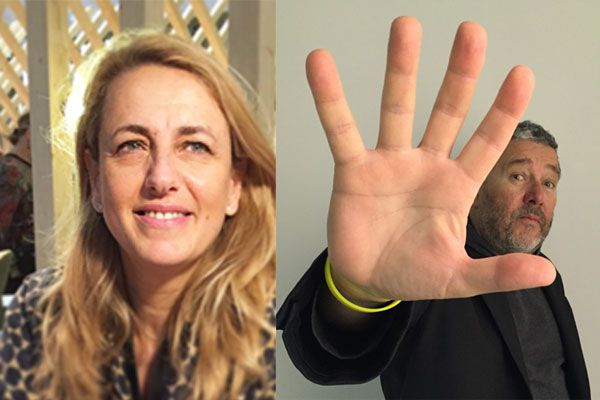
Above: Patricia Urquiola and Philippe Starck. Image via Dezeen
Ranging from laments at the proliferation of ‘smartphone journalism’ to an angry response to critiques of the celebrity status some architects and projects achieve, there’s been wide discussion around the topic.
As members of the media, we ourselves constantly receive requests from architects and designers to promote their work, and our relationship with them is often shaped around a reciprocal support of one another. So, where do the boundaries lie? Is leveraging a designer’s celebrity to drive social media engagement justified if we helped build that celebrity? Or have designers become the prize ponies who get trundled out to please the crowds and feed the media frenzy? And do we have the right to then question or criticise their celebrity?
We see the crux of the issue beginning with the hordes of self-appointed, unregulated media and the brands that set their designers punishing schedules of interviews and public appearances. At this year’s Milan fair, we chose to veto interview opportunities with some celebrity designers, as we realised we would be receiving a 15-minute window only, where a harried designer would share the same pre-packaged phrases that they had been presenting to bloggers all day. No chance to establish a rapport, no ability to tailor a set of questions for a specific angle or audience. And, as dezeen’s article points out, those interviews and images are plastered across the web immediately, with no editorial analysis, compromising and precluding any meaningful discussion. So where’s the value?
Don’t get us wrong – interviewing famous designers is an honour and a pleasure. But we also want those interviews to be unique, and substantial enough to transcend the sound-bite. We believe designers’ time is just as precious as ours and that one good interview is more beneficial – to designer, brand, and media – than a dozen poor ones.
Below is some further reading on the subject, we encourage you to have a look and share your thoughts on our Facebook page.
Dezeen: Digital media is turning design fairs into”a kind of wild west” say designers
Architecture and Design: Zaha Hadid Director calls out “ignorant” architecture critics, says he doesn’t design for iconicism
INDESIGN is on instagram
Follow @indesignlive
A searchable and comprehensive guide for specifying leading products and their suppliers
Keep up to date with the latest and greatest from our industry BFF's!
The internet never sleeps! Here's the stuff you might have missed