The home of architecture and design in the Asia-Pacific
Get the latest design news direct to your inbox!

Get the latest design news direct to your inbox!
The 2011 Graduate Showcase revealed a new generation of designers who are experimental and explorative in their style. Alice Blackwood reports from the runway.
March 17th, 2011
There was a touch of whimsy and a fleeting sense of fantasy to the Graduate Showcase parade at the L’Oreal Melbourne Fashion Festival.
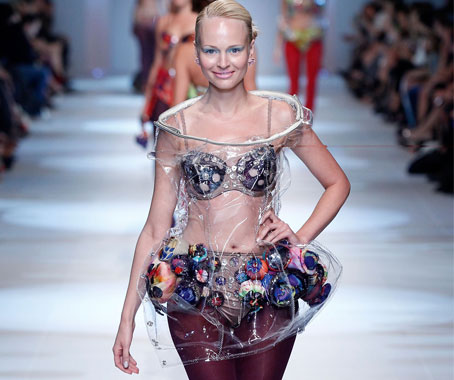
Genevieve Kulesza
Twelve emerging fashion designers were selected for the show, their collections tapping into themes of high fantasy and Gothicism one might associate with cult classics such as The Labyrinth and Where the Wild Things Are.
Colourful patterning in soft, warm hues and strong geometric lines (White3) featured heavily, those bright, eye-drawing elements strongly reminiscent of the dreamy bohemian style of renegade label, Romance Was Born.
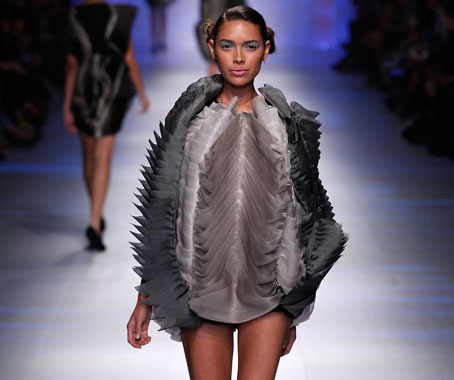
Threaded throughout was a strong sense of the handmade, expressed through intricate cuts and hand-drawn patterning and prints (Kate Watson and VW406).
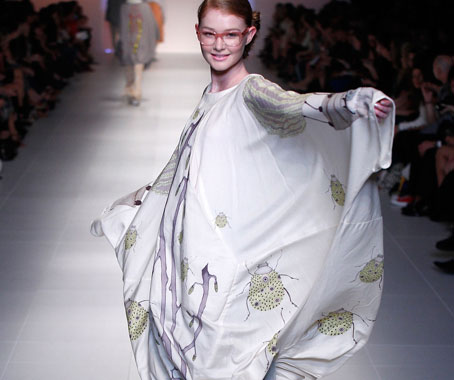
Kate Watson
A series of structured men’s jackets and pants were juxtaposed against swirling dresses and skirts (Ana Diaz), as well as sheer layers (Kate Sala). Huiee infused kimono elements into the collars and lapels of men’s jackets, adding large, stiff bows to further accentuate the theme, while softening the overall effect.
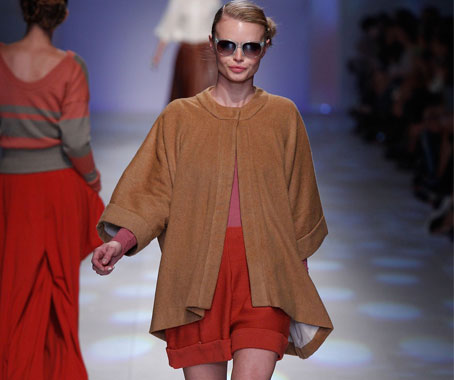
Ana Diaz
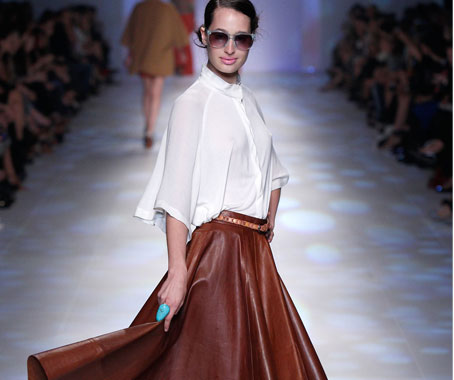
Ana Diaz
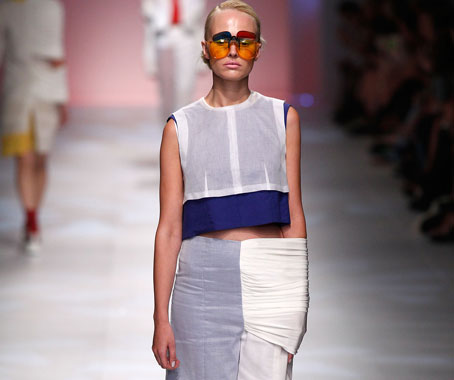
Kate Sala

Huiee
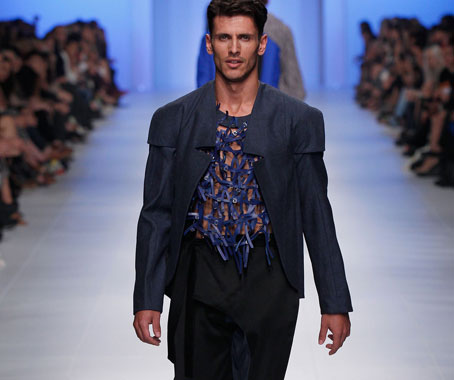
Huiee
But nothing could beat the collection debuted by Celene Bridge, whose models strutted down the catwalk with intriguing animal heads, oversized bear paws, and delicate skeletal pieces attached to their fragile frames.
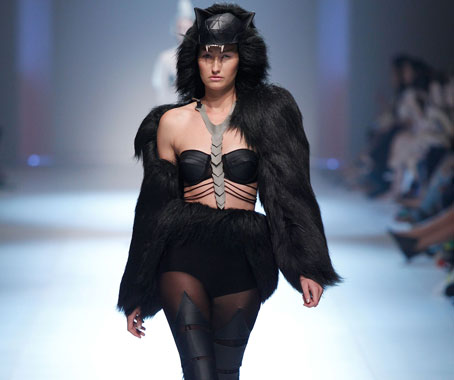
Celene Bridge

Celene Bridge
Stand-out fashion designers to watch include: Sarah Mok, Ana Diaz, Kate Sala and Celene Bridge.
Hero Image: Ephemeral Reverie. Photography by Lucas Dawson Photography
L’Oreal Melbourne Fashion Festival
lmff.com.au
INDESIGN is on instagram
Follow @indesignlive
A searchable and comprehensive guide for specifying leading products and their suppliers
Keep up to date with the latest and greatest from our industry BFF's!
The internet never sleeps! Here's the stuff you might have missed