The home of architecture and design in the Asia-Pacific
Get the latest design news direct to your inbox!

Get the latest design news direct to your inbox!
DQ Editor Alice Blackwood heads to the Design Institute of Australia for 175 Years of Victorian Design.
December 13th, 2010
Hi all,
I dropped in at the Design Institute of Australia the other day, in their Collins Street offices in Melbourne’s CBD.
There I discovered their new Design Gallery, which is situated at the front of their offices – and what a great space it is!
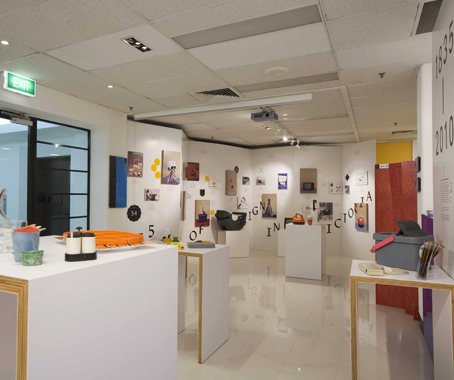
The exhibition currently on show is 175 Years of Victorian Design and is a treasure trove of everyday objects which, amazingly, have all been designed in Victoria.
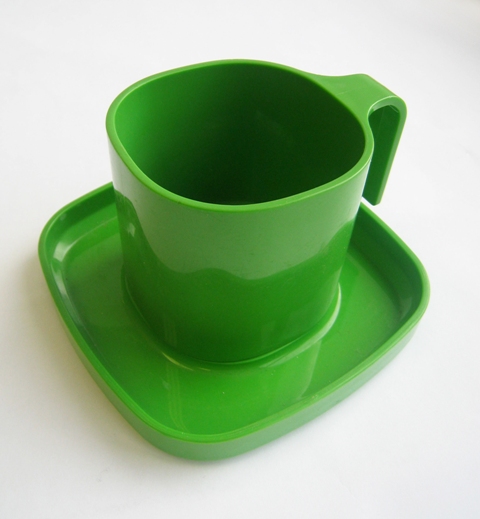
From 1835 to 2010, curator Ian Wong has collected some really cool examples (all original!) of objects we use day-in day-out.
Word on the street is that Ian is an avid collector and has picked up many of these items on show at weekend markets and vintage/op shops… love it!
There’s the Redheads Safety Matches designed by Brian Sadgrove in 1975;
the Commonwealth Bank logo by Ken Cato (1990);
Freddo Frog by MacRoberton’s (1930);
the very familiar Baby Capsule by Robert Pataki and Phillip Slattery (1982);
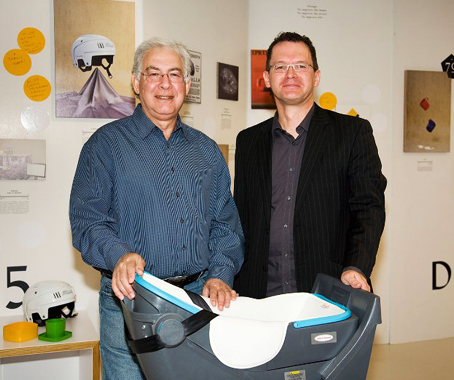
Rob Pataki and Ian Wong with the baby capsule
the Oates All Australian Mop Bucket – something you’ll find in almost every Australian home – by DesignLab (1988)…
and the list goes on!
The exhibition is definitely worth visiting – it’s a real eye opener to discover that the objects we so often taken fore granted, owe their existence to talented Victorians.
175 Years of Victorian Design runs until 23 December 2010.
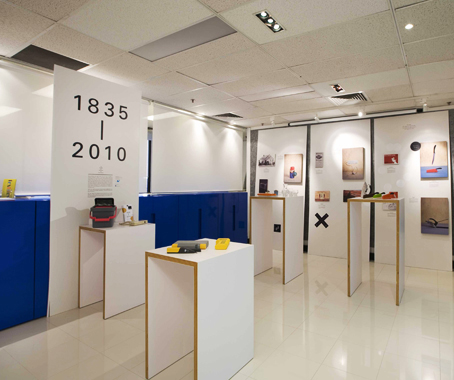
Design Gallery at the Design Institute of Australia
Level 1, 175 Collins Street, Melbourne
Open: Monday – Friday, 10am – 4pm
Admission is free
design.org.au/gallery
For more from Alice, check out the Design Quarterly blog.
INDESIGN is on instagram
Follow @indesignlive
A searchable and comprehensive guide for specifying leading products and their suppliers
Keep up to date with the latest and greatest from our industry BFF's!
The internet never sleeps! Here's the stuff you might have missed