The home of architecture and design in the Asia-Pacific
Get the latest design news direct to your inbox!

Get the latest design news direct to your inbox!
An embracement of emerging technologies is seeing design accelerate and evolve in ways never thought possible.
September 11th, 2012
Time-poor and working across time zones; today’s designer is increasingly hemmed in by demands on output driven by unrealistic deadlines.
If design itself is a process of problem solving, then the approach to bettering the practice also calls for a pragmatic, out-of-the box solution.
Looking beyond traditional means and adapting technological advancements developed for other industries has seen the onset of a new era in design support, a suite of options that go beyond our present understanding of Computer Aided Design (CAD).
A lot is said of ’The Cloud’. The concept of this intangible ’tool’ can be a difficult one to grasp – an invisible entity: storing, connecting and enabling people in different places to link up, digitally.
In definition, perhaps not far off what we lay-folk understand of the Internet – but the nature of this hub allows for interactive, memory-free interaction and perhaps most excitingly: cross-pollination of ideas in real-time with multiple stakeholders.
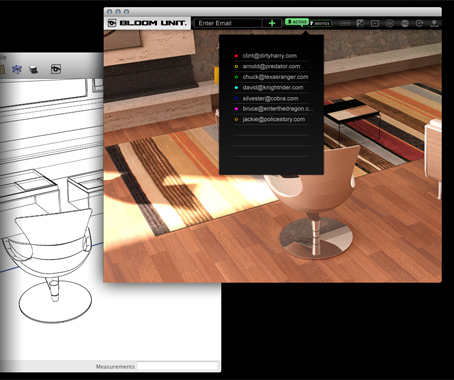
Tools like the Bloom Unit product are proving to support and enhance the architect and designer’s experience rather than inhibit the creative process.
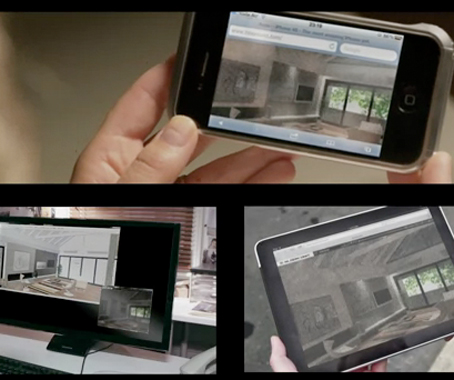
Adopting The Cloud as its platform; Bloom Unit effectively allows a visual conversation to take place with multiple users, in real-time, in a way that puts everyone on the same page (as it were).
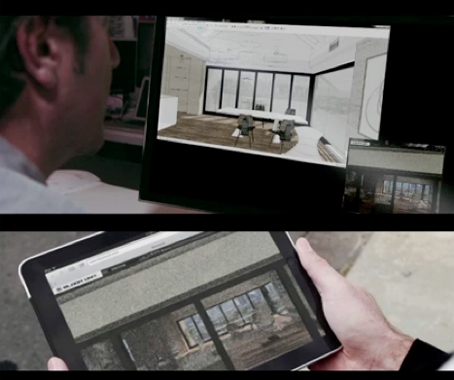
As the promotional video demonstrates: an architect in his office calls his client in another city. The client when prompted opens an email on his tablet or laptop, whilst on the phone the client is walked through the project (in full render), with interactivity possible from both ends. When a third party’s input is required, they are called and using their smart phone screen: instantly brought up to speed.

Doing away with geographic constraints, conflicting schedules and meetings that are hard to lock-in, the immediacy and efficacy of this tool (even in its infancy), signals a exciting new era in how design and development will be further enabled and improved by an innovative application of emerging technologies.
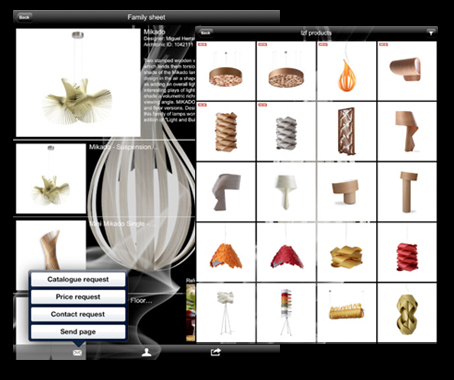
In a broader sense we are also seeing the consumer and specifier markets being tailored to. Globally, behind Singapore, Australia is the second highest adopter of smart phone technology per capita. There is no denying that we are partial to an app, increasingly we are seeking new means of bringing our professional needs and resources within reach.
With an industry-wide push away from printed marketing material, the past decade has seen the face of supplier-promotion change drastically.
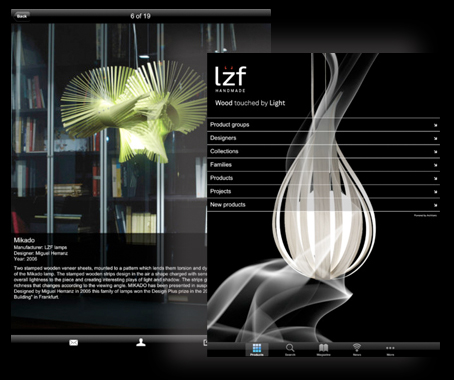
From a manufacturers perspective brands like Spanish lighting supplier LZF Lamps have seen fit to branch their catalogue and specification collateral into the digital realm – into the palms of their buyers, and they’re not alone.
Launched in 2012 (in its first incarnation), the Lzf Lamps App has proven itself a triumph, affording designers an instrument that slickly conveys the essence of the brand and what it is they supply in an accessible, sharable format. Part branding exercise, part contact portal, the app has become the new sales call – available around the clock.
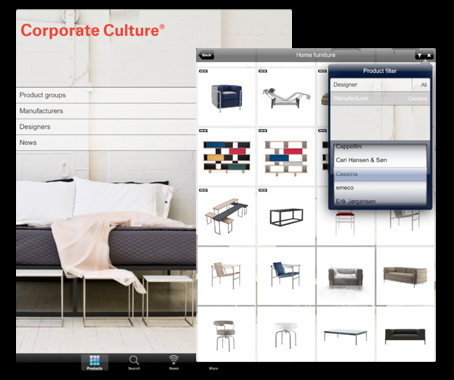
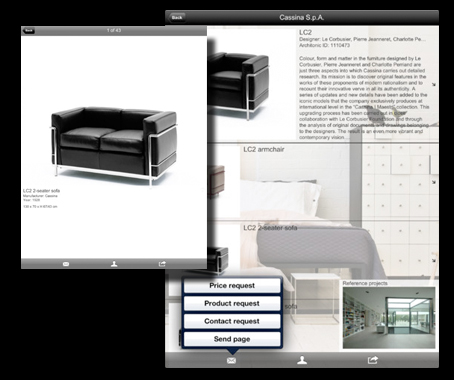
Locally, this trend is also taking hold. This week Corporate Culture announced their own smart phone and tablet application. Representing an enviable stable of design houses and manufacturers, Corporate Culture have been able to amalgamate all their products, their supporting documentation and present it in a fashion that is easy to navigate, investigate and reference.
As the adage suggests: “a rolling stone gathers no moss” and with the speed that technology is becoming integrated into the process of design and design communication, we watch with fascination to see where the next ten years will take us.
Bloom Unit
Lzf Lamps
Corporate Culture
INDESIGN is on instagram
Follow @indesignlive
A searchable and comprehensive guide for specifying leading products and their suppliers
Keep up to date with the latest and greatest from our industry BFF's!
The internet never sleeps! Here's the stuff you might have missed