The home of architecture and design in the Asia-Pacific
Get the latest design news direct to your inbox!

Get the latest design news direct to your inbox!
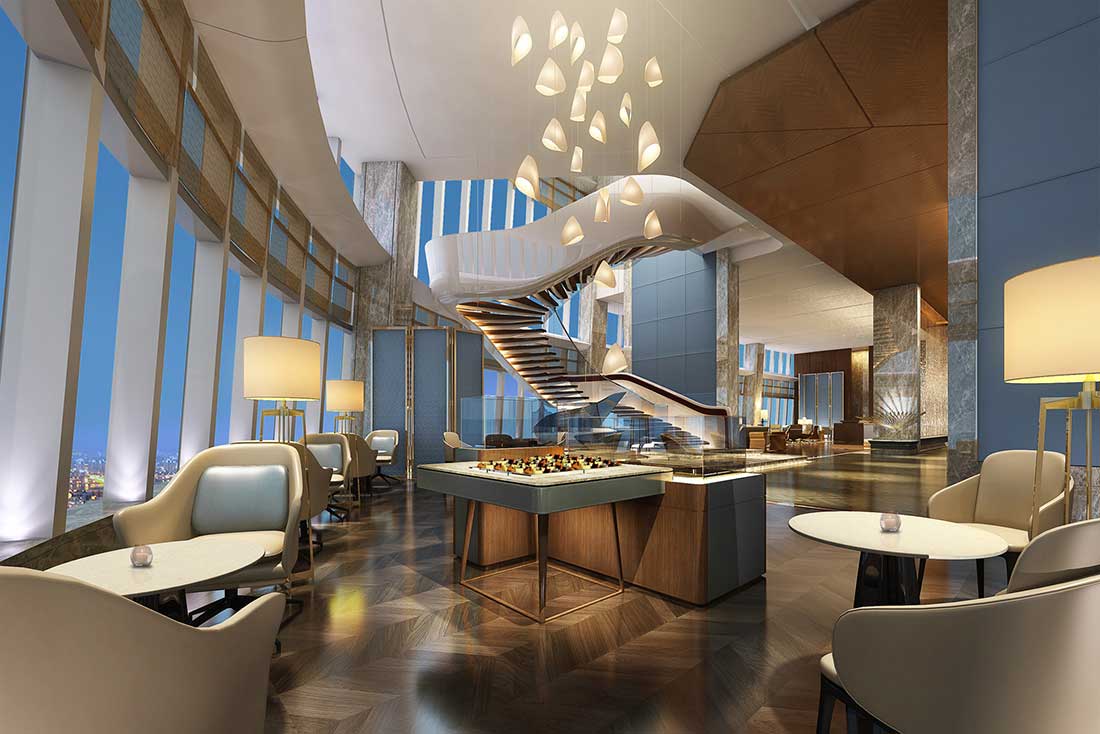
Wilson & Associates wanted to create a “mansion in the sky” when they designed the 235-room ultra-luxury Signiel Seoul hotel—perched atop South Korea’s highest building.
Signiel Seoul, Wilson & Associates, Hotel Design, Luxury Hotel, South Korea
Guests experience the three major elements of the Signiel Seoul’s design when they arrive at the 101st floor lobby—stunning bird’s eye views of the South Korean capital, an homage to traditional Korean culture, and opulence. South Korea’s national flower, the Mugunghwa, was a major inspiration for the project according to lead designer of the hotel Leonard Lee, and informed the large art installation in the reception and stairway area. The reception counter reflects the design of a traditional Korean table—one of the many furniture items created by local craftsmen.
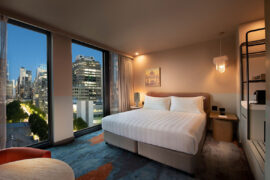
Korean touches continue in the 193 guest room and 42 suites with hand-painted cherry blossoms on the walls and magnolia flowers on the Brintons carpets. Wilson Associates chose premium materials such as blue venuto onyx and Arabescato Vagli marbles and embossed leather. Flashes of purple and light blue punctuate the pervading natural tones. As the tower narrows towards the top, a challenge for the Wilson Associates team was to adapt and adjust the layout of each room, being sure to maximize those cityscape views.
The height of the building and the associated strict regulations caused another headache for the design team, according to Lee. Fire safety narrowed down the list of materials the team were allowed to use and they had to test each material rigorously. “We eventually found suitable alternatives yet the process was lengthy and time-consuming albeit an extremely pertinent measure,” Lee says. Of note is a soft type of metal, sourced in Korea, used in all the lifts and public areas.
Despite its location at the tip of a skyscraper, almost all of the hotel’s public areas have double-volume ceiling heights—maximizing views and providing luxury of space. The hotel’s champagne bar, Bar 81, boasts panoramic views of the Han River. Unique features include a rock installation enclosed in glass and gold and a liquid metal surface to the bar counter. White and gold crystal orbs hang from the ceiling to emanate champagne bubbles. At the hotel’s Korean restaurant, the design is kept simple to maximize the skyscraper view. Overheard light fittings are reminiscent of clouds and the entrance is lined with oversized traditional pots used for kimchi fermentation.
INDESIGN is on instagram
Follow @indesignlive
A searchable and comprehensive guide for specifying leading products and their suppliers
Keep up to date with the latest and greatest from our industry BFF's!
The internet never sleeps! Here's the stuff you might have missed