The Hong Kong neighbourhood of Tai Hang is a sleepy warren of small streets and alleyways, tucked behind Victoria Park and Causeway Bay and home to an increasing number of charming cafes, boutiques, and bars.
This latest hipster enclave in the city is also home to Little Tai Hang, a new hotel, restaurant, and serviced apartment project by Tommy Pao that fits snuggly into its eponymous neighbourhood.
“I try not to simply imitate the outlook of my surroundings, but think about the deeper characteristics that make it special to me,” says Pao.
It was the area’s quirks that struck him: the makeshift nature of the buildings and their small repurposed alterations, the micro city blocks and alleyways that hinted at a past closely-knit community.
On a corner plot, little Tai Hang’s lobby embraces the neighbourhood’s playful irregularities with an uneven layout and a barn aesthetic.
“We used materials that would age gracefully and hark back to Hong Kong’s dynamic cultural heritage, and developed a branding whose story is intimately connected with Tai Hang and our sense of childhood adventure and friendship,” says Pao.
The hotel branding involves four characters – a tiger, a toad, a duck, and a monkey – with the logo featuring the four animals on a bike and the 91 rooms taking these characters as inspiration.
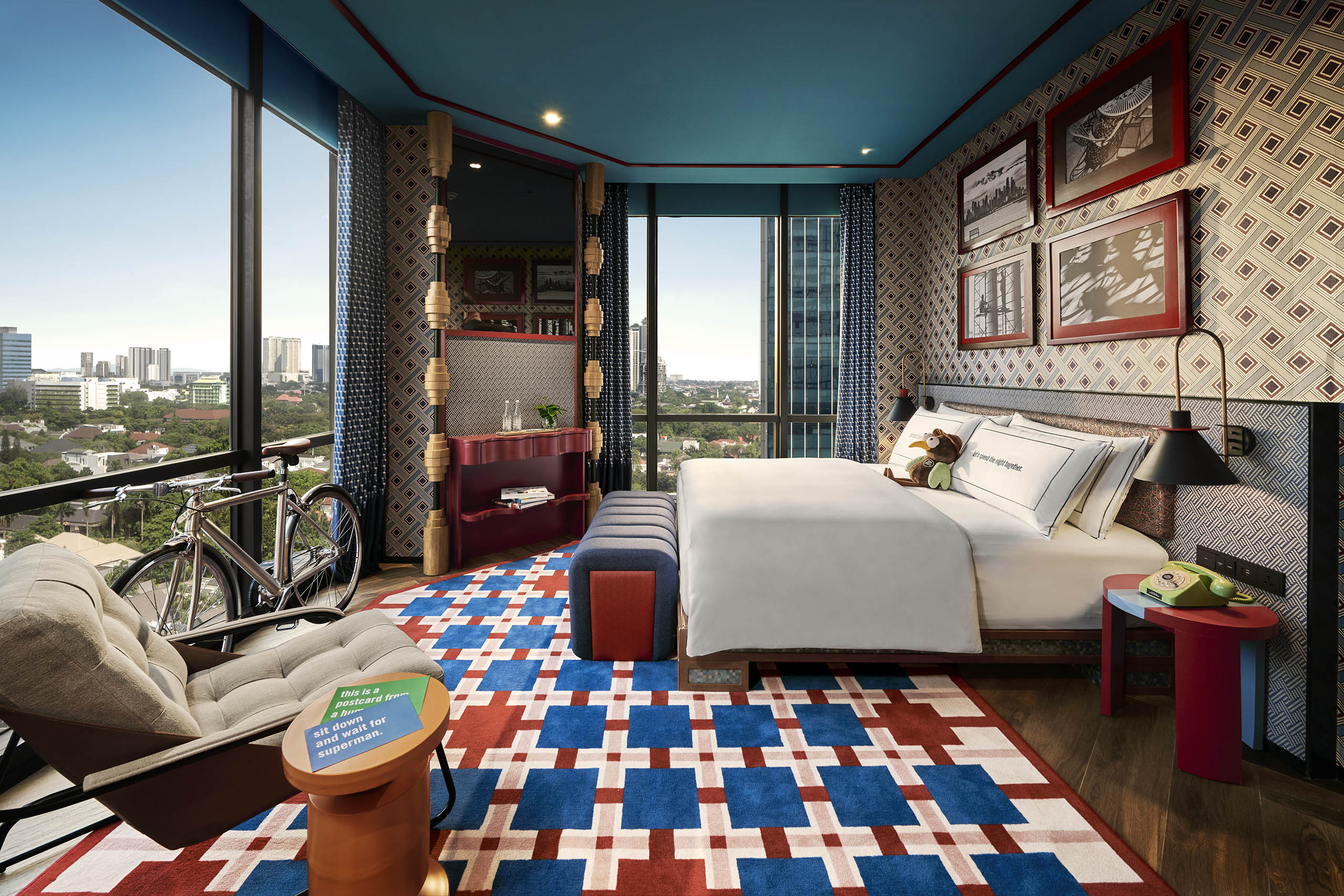
Some 82 of these rooms have classic Hong Kong views of Victoria Park and the city’s famous harbour, while the others look south to Lin Fa Kung Temple and Hong Kong Island’s green mountains.
The floor-to-ceiling windows are fitted with Low-e iron glass that allow for the biggest span of window – giving the tower a more unified appearance from outside and guests uninterrupted Hong Kong views.
The rooms themselves have a neutral palette offset with the odd accentuated stronger colour in the furnishings and bright artwork.
Pao shares that he wanted the space to have a timeless and cosy atmosphere and so opted for a vintage touch over flashy contemporary details.
Aside from the penthouse, Pao’s favourite room is the two-bedroom suite – with mountain views and a level of privacy and intimacy that makes him feel like he’s at home.
Working as both designer and developer of a project was a challenge for Pao, but he developed 3D modelling software to visualise the project and communicate with his team.
This meticulous planning is important as Little Tai Hang is set to get bigger. This corner building is phase one of a three-phase neighbourhood project.