The home of architecture and design in the Asia-Pacific
Get the latest design news direct to your inbox!

Get the latest design news direct to your inbox!
Just how much can you do within 316 square feet? Studio Adjective pushes a small space to the limit with Apartment Alto in Tseung Kwan O.
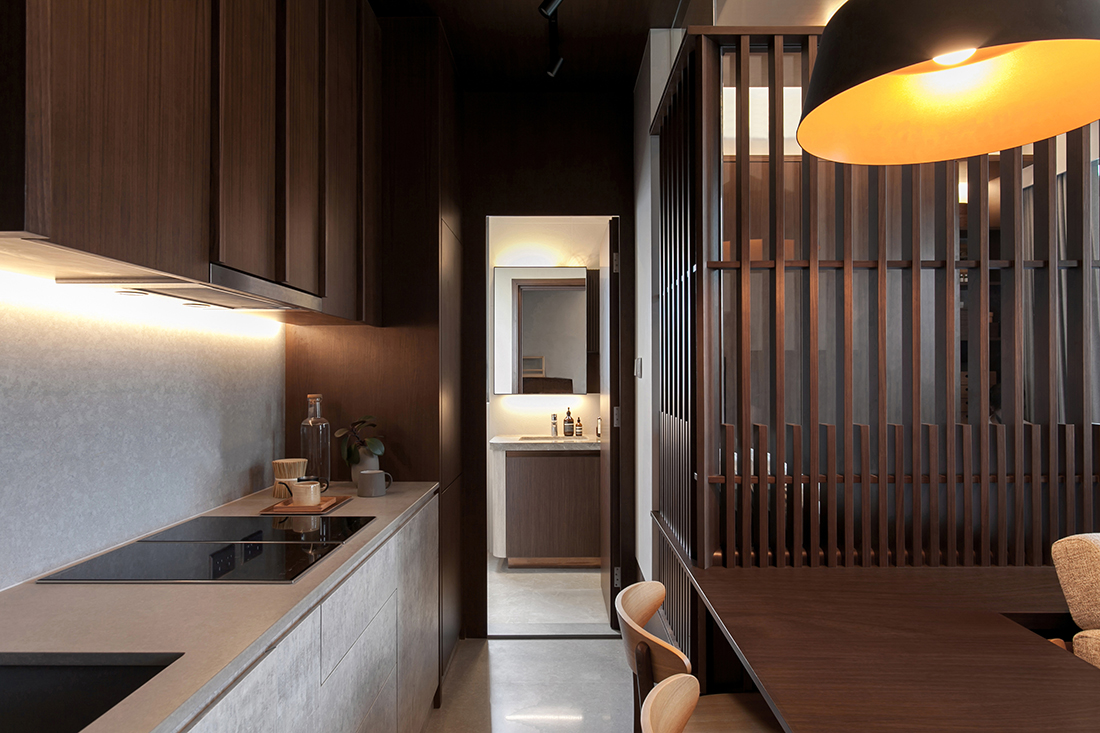
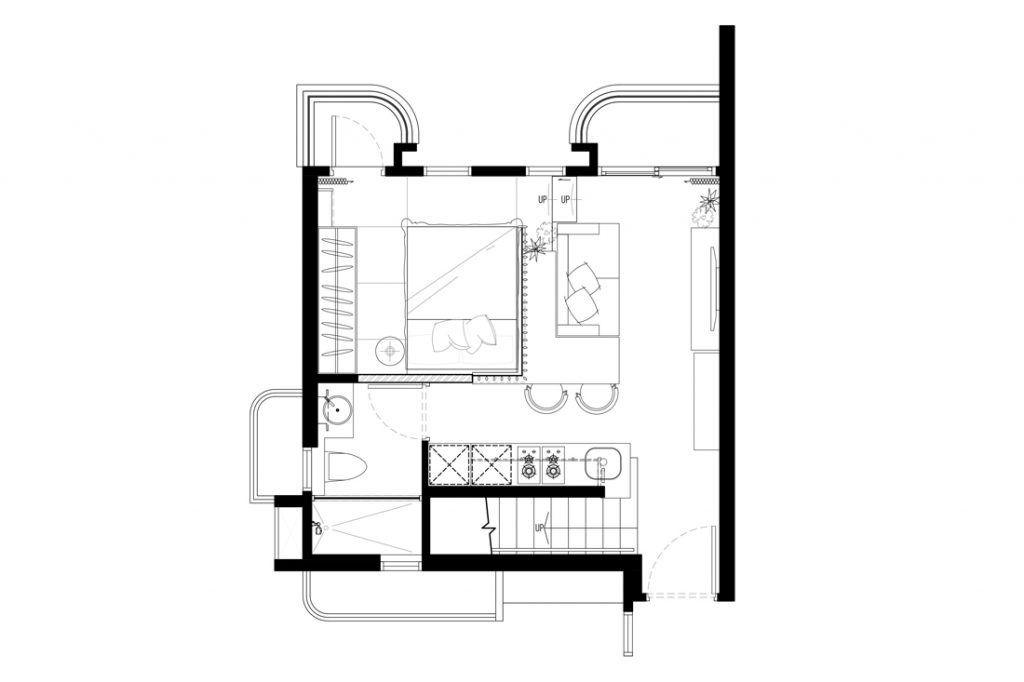
Apartment Alto, situated in the new residential development Alto Residences in Hong Kong’s east, is a typically small Hong Kong home at just 316 square feet (or 29.3 square metres). It was built with one bedroom and an open kitchen, behind which is a staircase leading to a private rooftop terrace. As a space for living, it is – at least by international standards – diminutive. But the creative couple that purchased it needed it to do more.
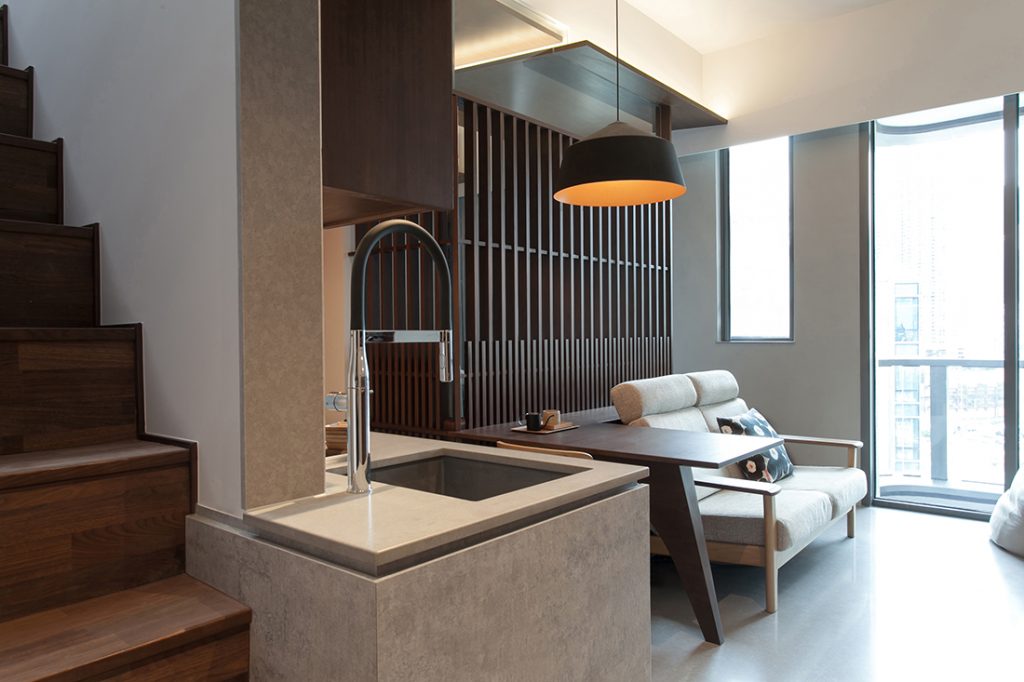
An illustrator and an art director, the couple works at home every day – but on top of that wished for a space that could also accommodate gatherings of friends. The challenge for designers Studio Adjective, therefore, was to work the available space to its maximum capacity – to do the most with the least, carve out a public-private divide, and be smart with surface treatments to maximise the sense of space, even when three is little of it.
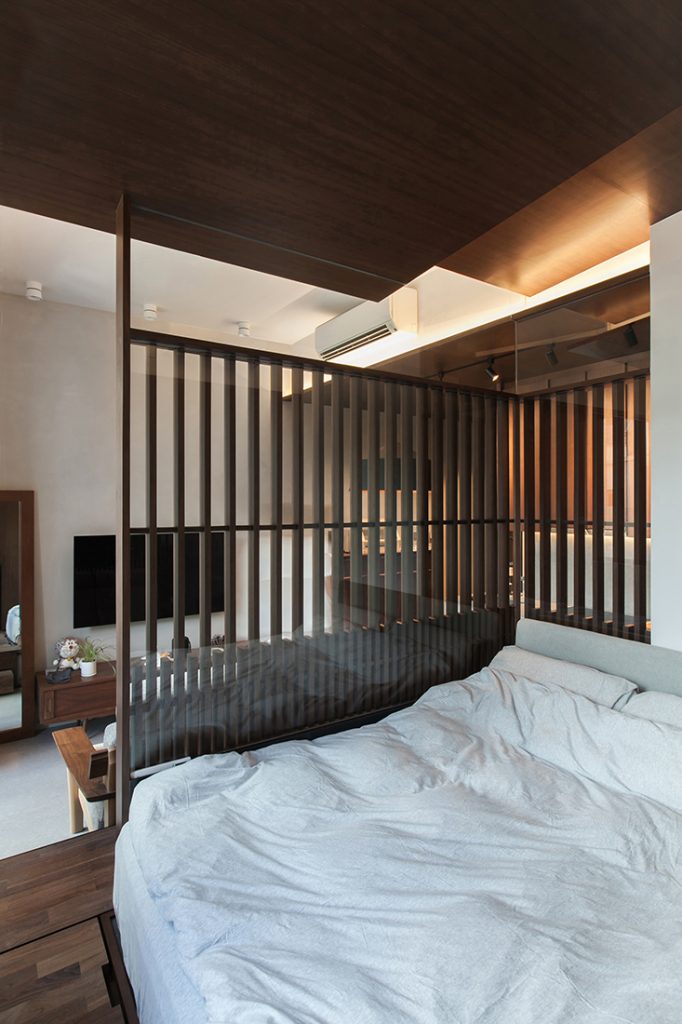
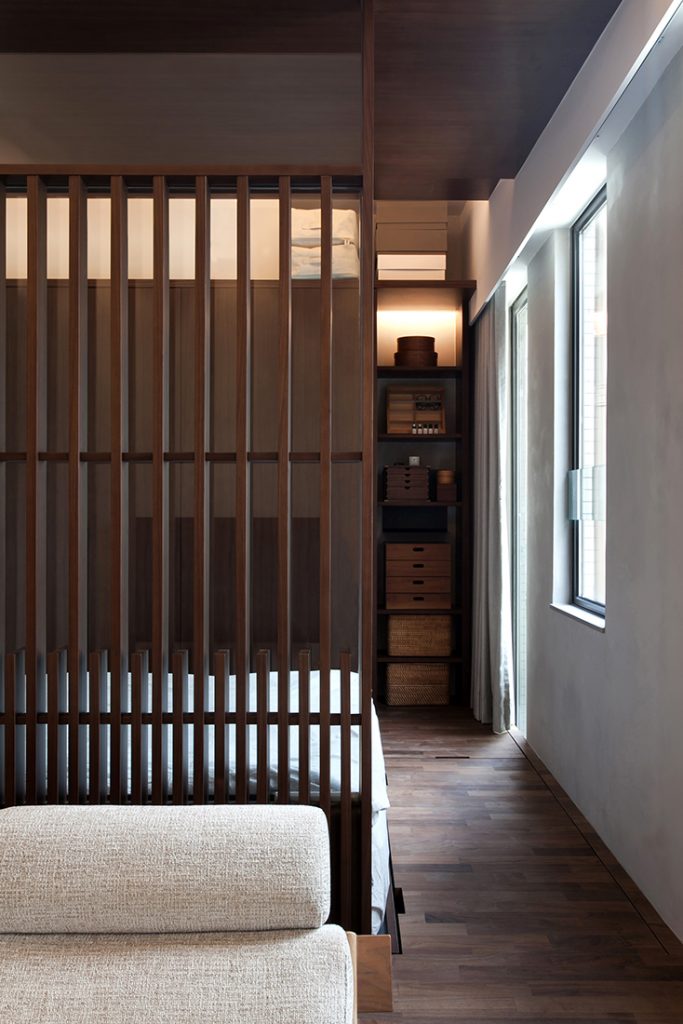
The division to the bedroom was dematerialised with a glass and timber screen that generates the notion of privacy without blocking sight lines or natural light. The bed is raised on a platform that extends out through the screen to become a table and a ledge behind the sofa. The platform neatly conceals storage space underfoot.
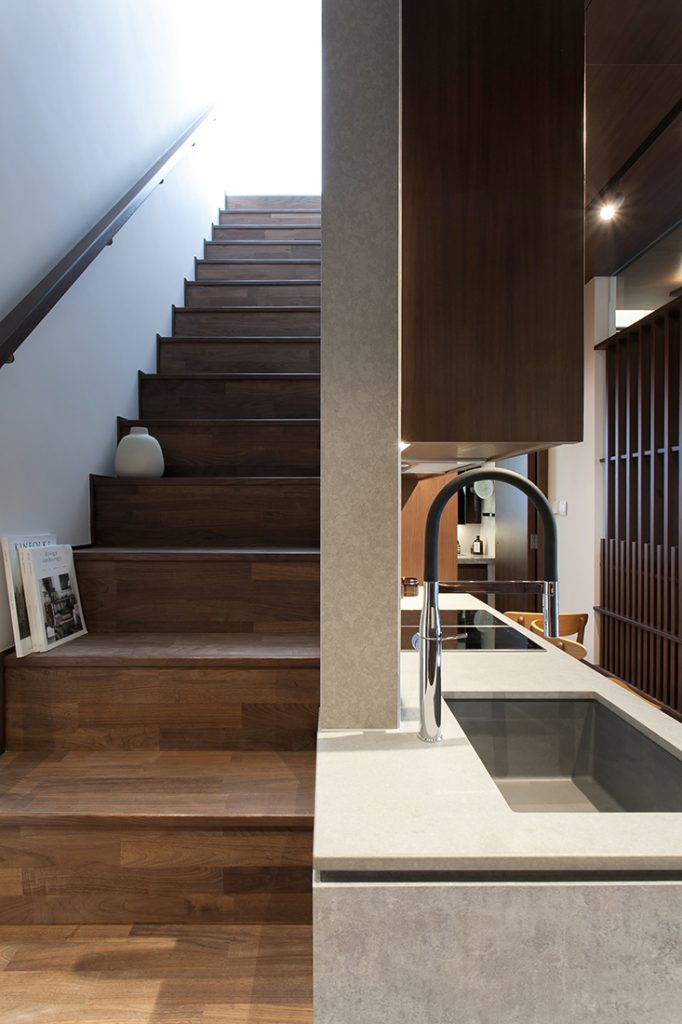
The relationship between the open kitchen and the staircase behind it was revised with the partial cutting away of the wall between them. This simple manoeuvre has given the staircase new presence as a space in which to dwell, where friends can sit to chat without being removed from the nexus of the kitchen. It also gives the staircase a second function as a display area for the owners’ books and ceramics.
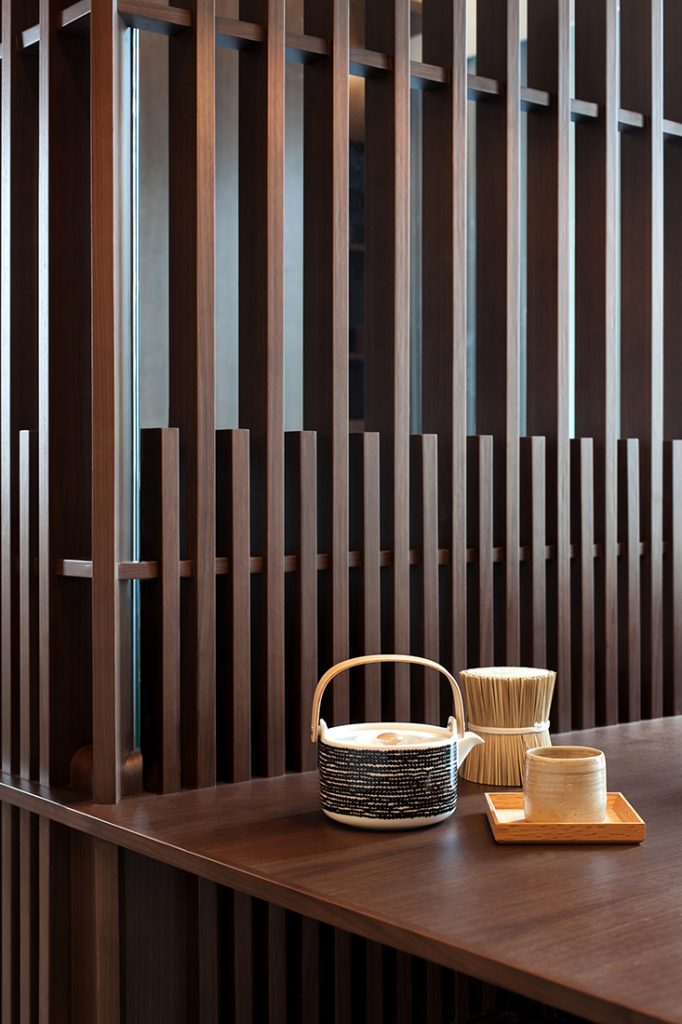
The materiality of the apartment reflects the owners’ taste for traditional Japanese design and dark wood. In the kitchen, walnut veneer is paired with a grey marble countertop and durable laminate in a stone design for the lower cabinets. The palette was also devised to create a atmosphere of calmness that would allow for the couple to focus on their work. This need for calmness and simplicity also drove Studio Adjective away from the busyness associated with transforming furniture, which is often relied upon to enhance the functionality of small homes.
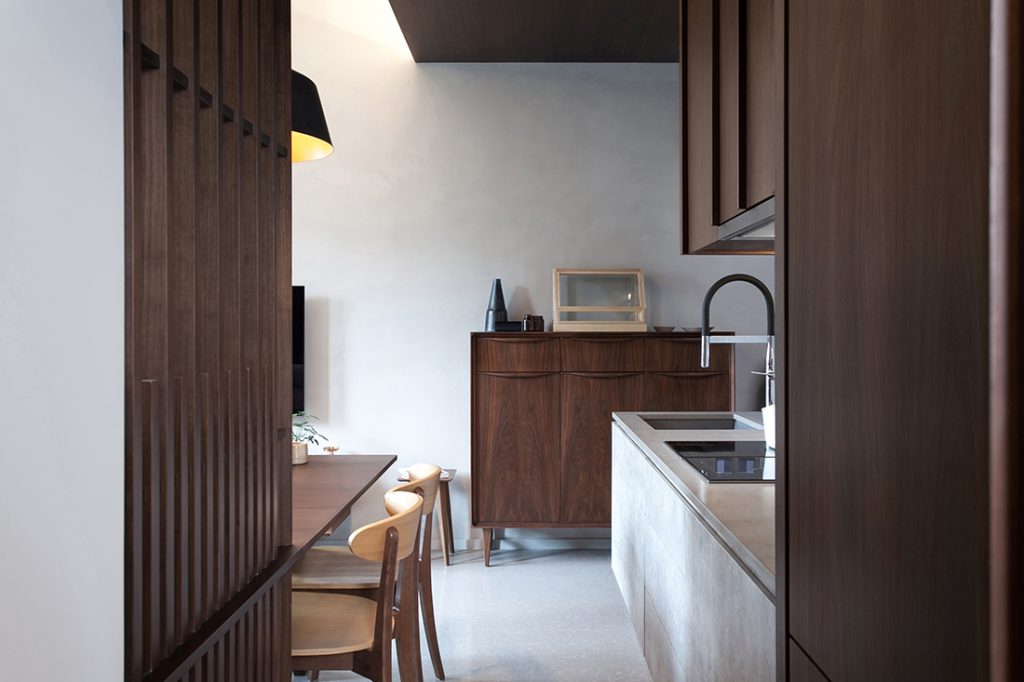
“The strategy for this project was to focus on delivering a sensible space with thoughtful detail – making the apartment a space to experience every day,” says Studio Adjective.
INDESIGN is on instagram
Follow @indesignlive
A searchable and comprehensive guide for specifying leading products and their suppliers
Keep up to date with the latest and greatest from our industry BFF's!
The internet never sleeps! Here's the stuff you might have missed