The home of architecture and design in the Asia-Pacific
Get the latest design news direct to your inbox!

Get the latest design news direct to your inbox!
Designer Luo Xiuda renovated a small apartment in Beijing to overcome damp, darkness, segregated space and ‘chaos’.
July 28th, 2019
The owners of a 43-square-metre one-bedroom apartment in Beijing’s Chaoyang district tasked designer Luo Xiuda with creating a more open, clean, simple, yet cosy, space.
“Through the redesign, I hoped to construct a space which is consistent with the owners’ habits and their appreciation of beauty, including their vision of style and how they live their life,” says Luo.
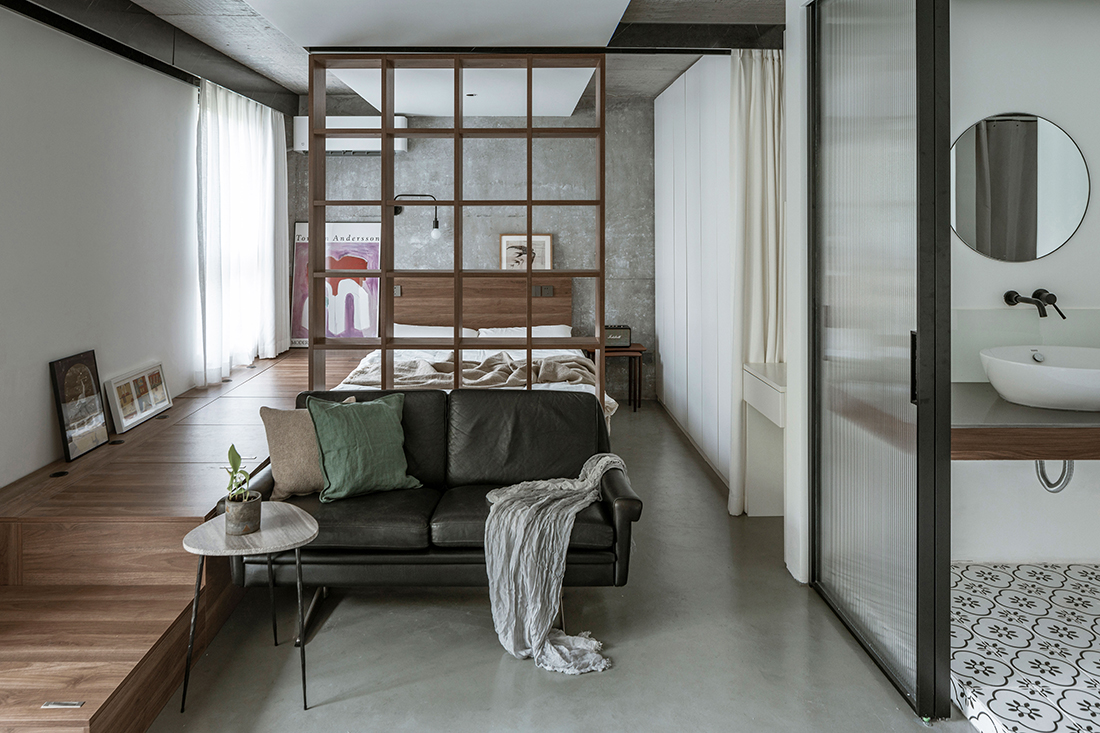
Luo established that the owner likes to travel, enjoys museums and appreciates a simple yet natural aesthetic. By removing walls but using cleverly placed furniture and glass doors, Luo created a light-filled apartment that is utilitarian but cosy, simple but inviting.
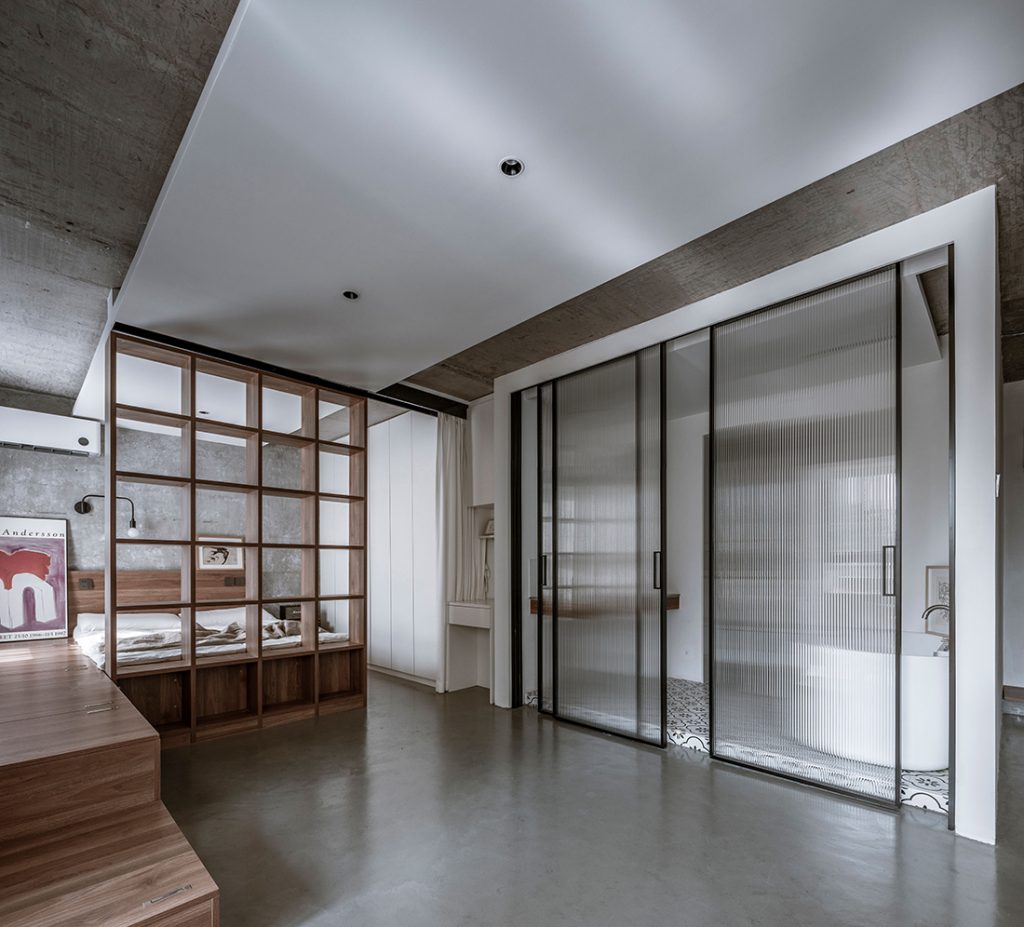
Prior to Luo’s renovation, the apartment’s small space was in chaos, according to the designer. Previous owners had all renovated or altered it in accordance with their own styles and tastes. Luo began by removing all the apartment’s partition walls, immediately bringing in more light and openness.
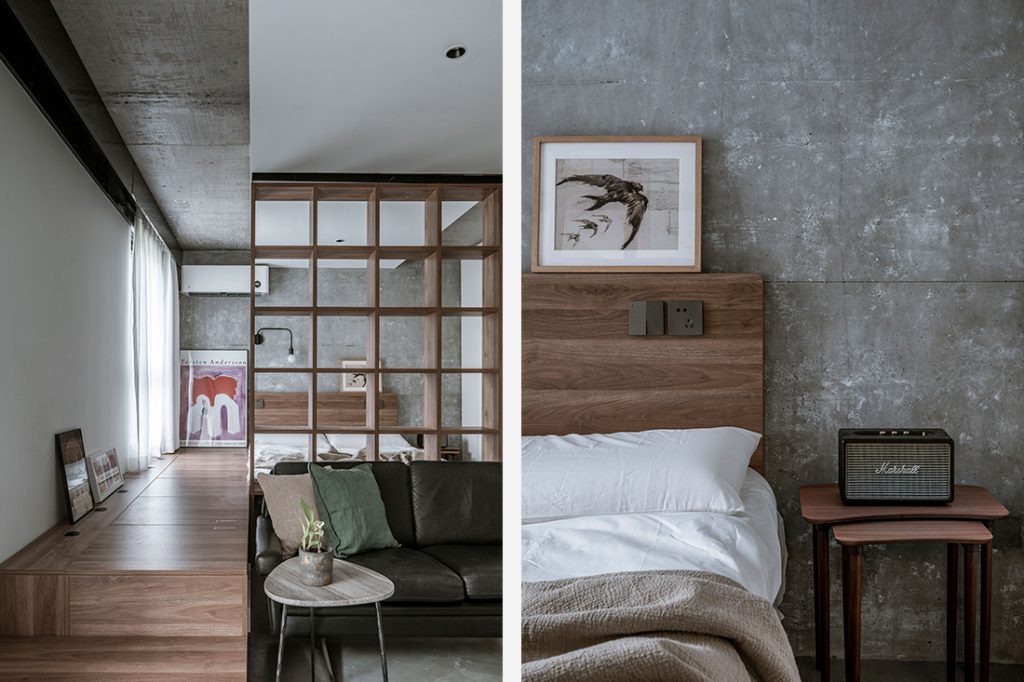
In the main living space, Luo installed a transparent bookshelf to partition a living and sleeping area. Along one side, a multi-functional wooden platform provides place for storage and can be used in a number of ways. “The space is both clear and vague,” explains Luo. The designer also added a custom-made walnut headboard to match the bookcase and platform.
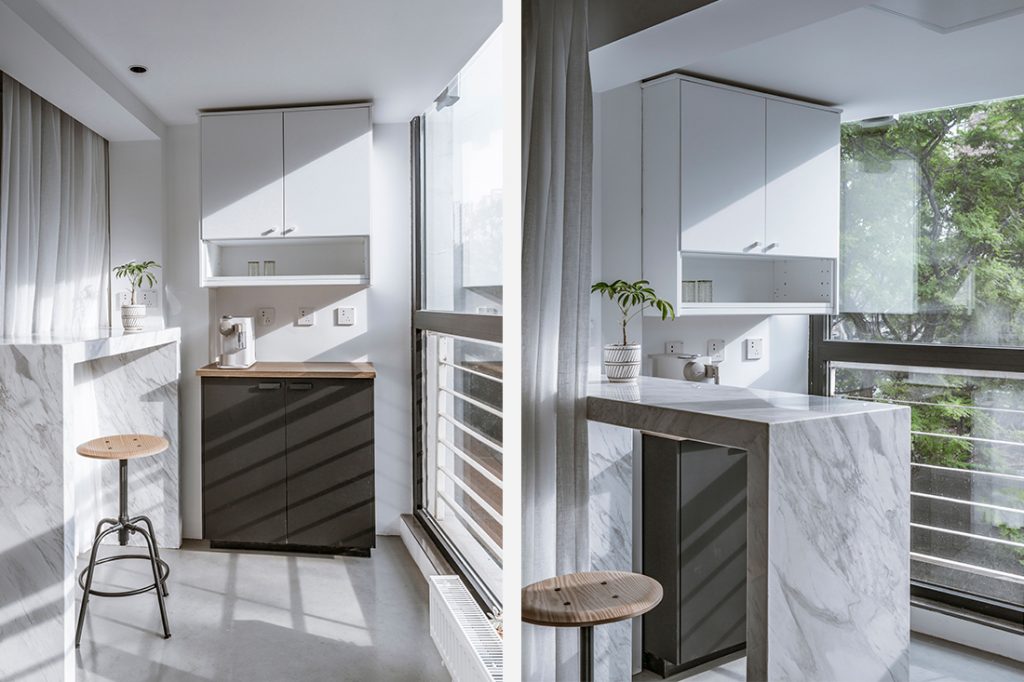
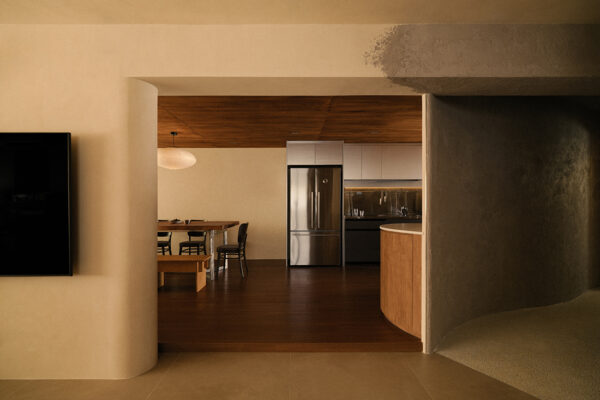
An L-shaped marble counter top separates the living space from the kitchen. Luo left the counter hollow to allow light from the kitchen into the main room. The utilitarian kitchen is light-filled with floor-to-ceiling windows that allow the owners to appreciate the outside greenery.
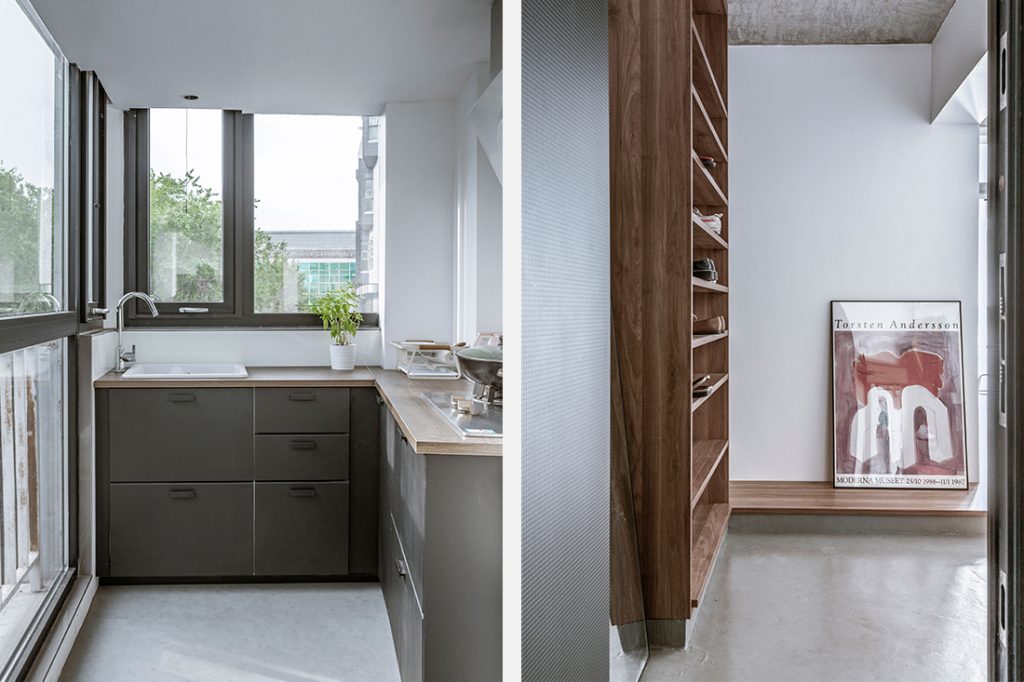
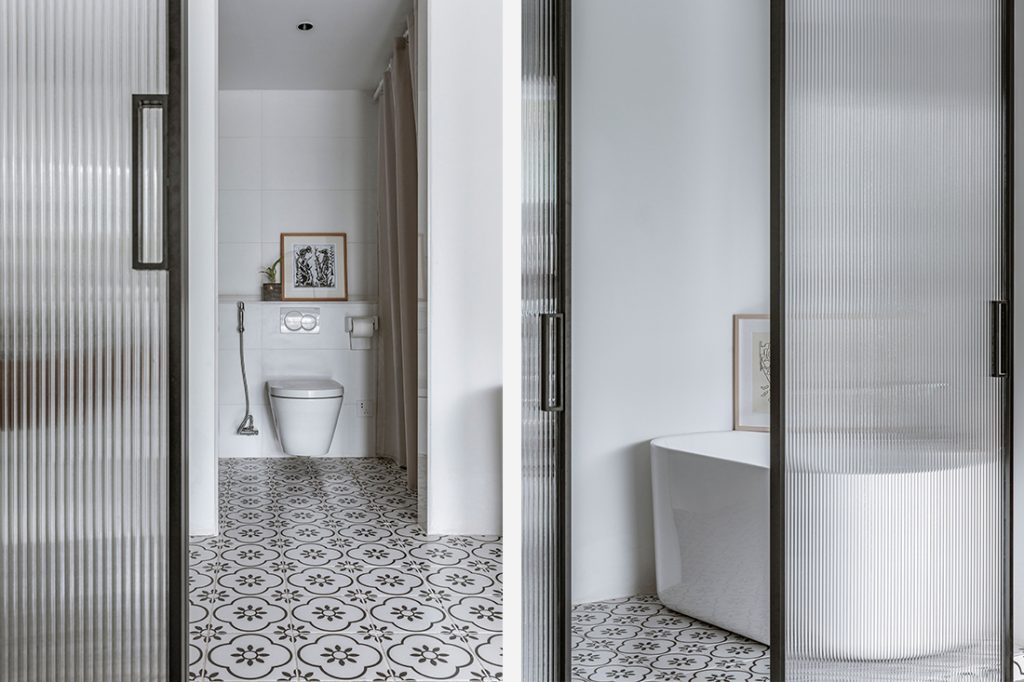
Opposite the kitchen, Luo tackled a bathroom that was dark, narrow and prone to damp. The designer installed three large floor-to-ceiling glass doors so that natural light can penetrate the bathroom.
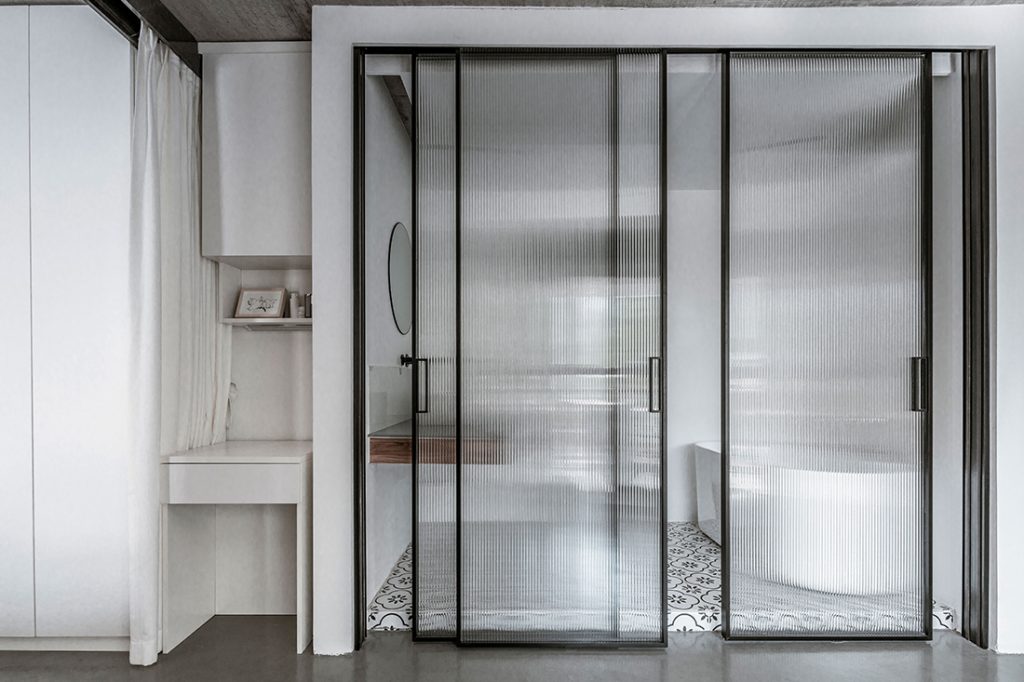
In accordance with the owners’ appreciation of texture, Luo stripped back the walls and ceilings to reveal the original concrete structure. Luo contrasted this with a central bright, white axis along the ceiling of the main room. Underfoot, a self-levelling concrete floor prevents cracks.
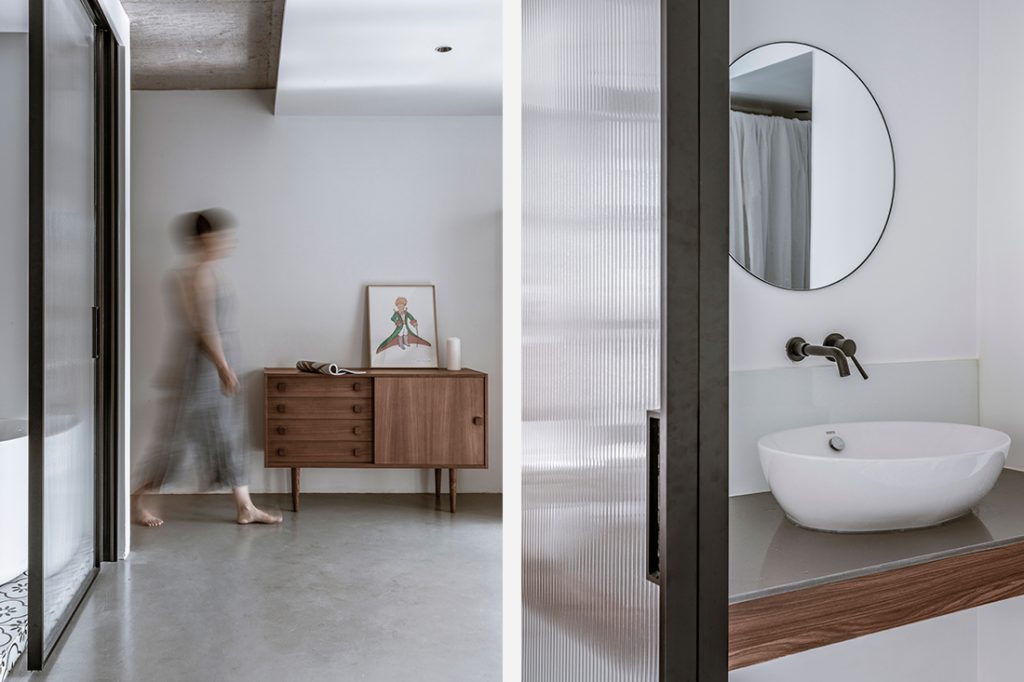
Luo says both him and the owners appreciated the cool colour palette of black, white and grey so this is used throughout – including marble counters in the kitchen and black-and-white patterned tiles in the bathroom. Luo softened the utilitarian industrial aesthetic with the large walnut furnishings throughout.
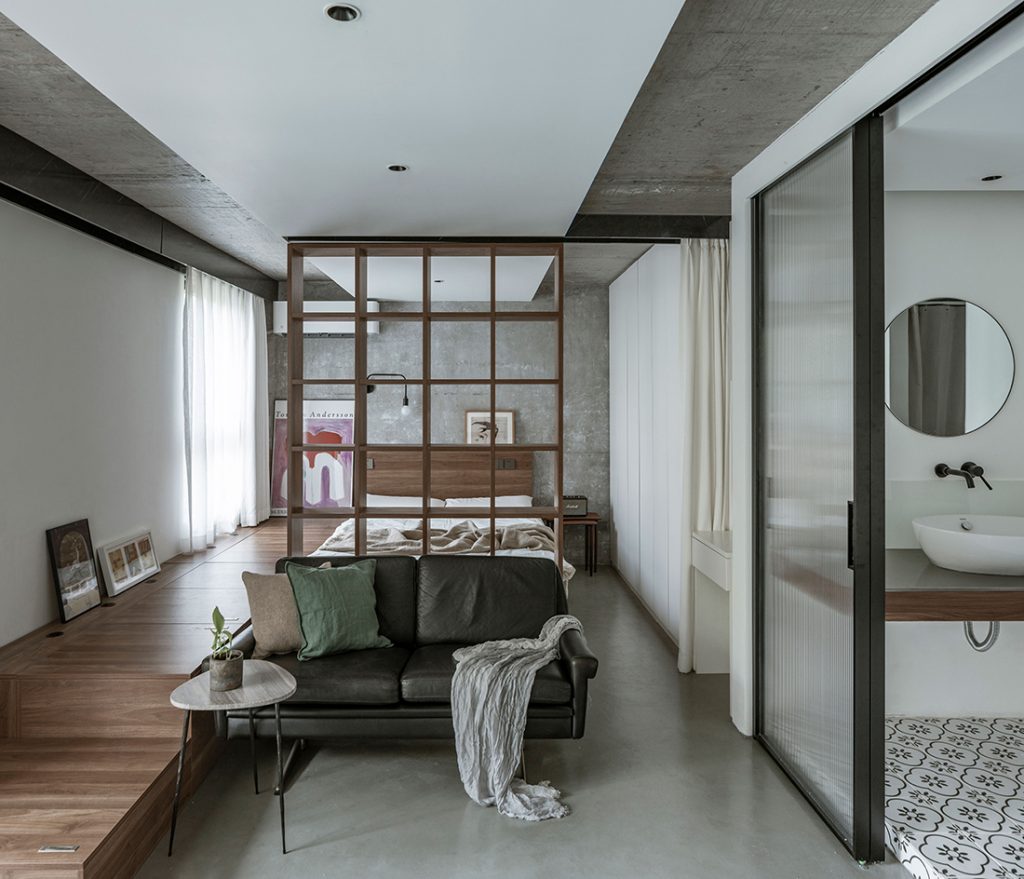
The designer also made good use of technology; the platform includes a concealed heating element.
Designer: Luo Xiuda
Shop Drawings: He Sha
Builder: Huang Wenbin
Materials: Concrete, self-levelling Laticrete flooring, walnut veneer, Changhong glass, Pauchie customised kitchen
INDESIGN is on instagram
Follow @indesignlive
A searchable and comprehensive guide for specifying leading products and their suppliers
Keep up to date with the latest and greatest from our industry BFF's!
The internet never sleeps! Here's the stuff you might have missed