The home of architecture and design in the Asia-Pacific
Get the latest design news direct to your inbox!

Get the latest design news direct to your inbox!
The Elephant Grounds coffee shop in Wan Chai has navigated Hong Kong’s stringent planning laws and unpredictable weather to create a community café that opens up to the street. Rik Glauert writes.

August 4th, 2016
“We had to open up this corner and embrace the neighbourhood,” says JJ Acuna of this first project for his own studio, JJA / Bespoke Architecture. His design for the flagship store of hip Hong Kong coffee shop Elephant Grounds uses a welcoming palette of timber and blurs the indoor and the outdoor to reinvent a prominent corner of the Star Street Precinct.
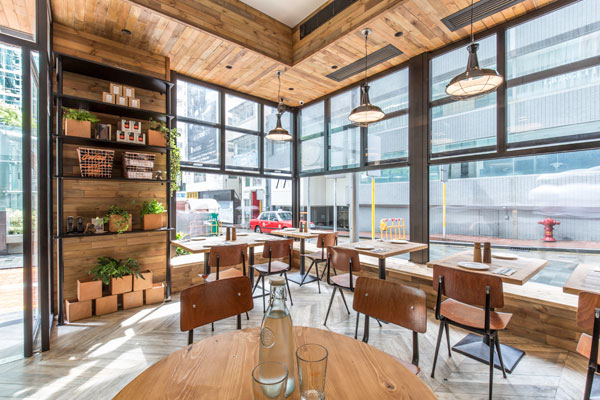
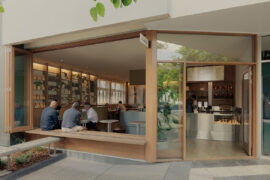
Huge panels of glass on the corner flood the interior with light. At the push of a button, and if weather permits, these panels lift upwards to allow customers to sit on both the inside and the outside of long timber benches.
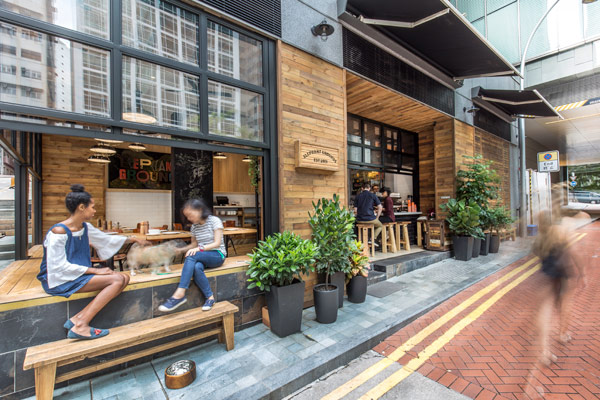
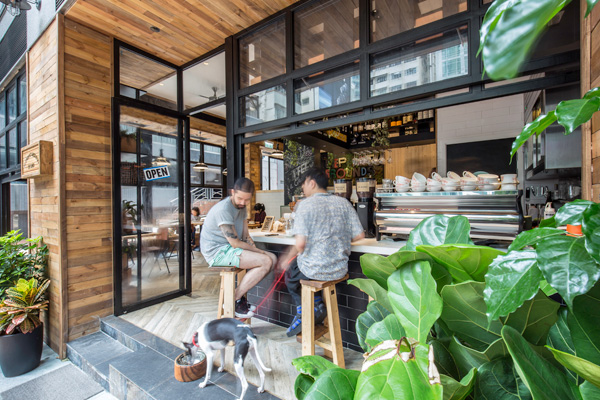
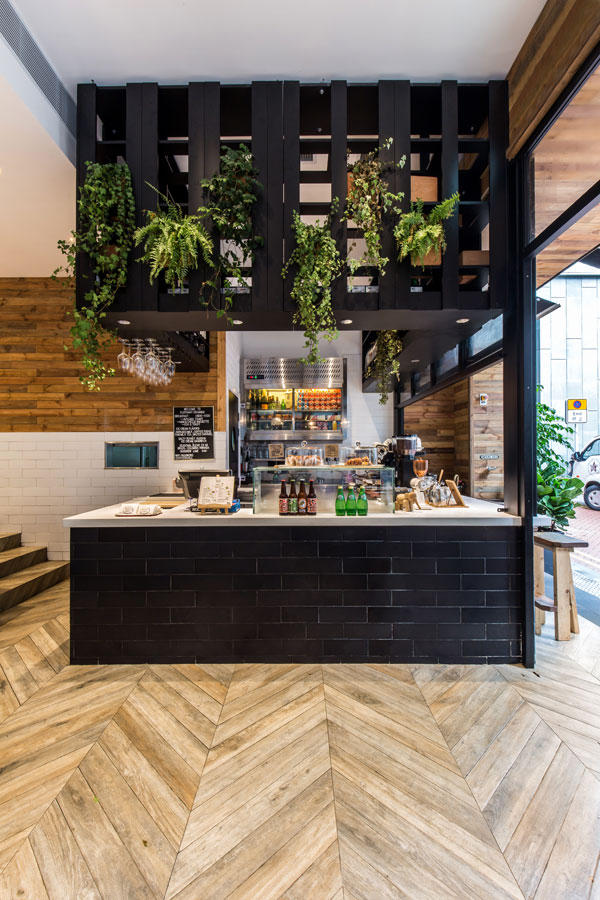
The coffee bar opens directly onto the street in another blurring of the interior and exterior. The restaurant’s facade has been pushed back 1.2 metres – an adjustment that welcomes both sit-down guests and passers-by grabbing a coffee.
“The coffee bar’s interior and exterior relationship is really quite wonderful – it has service and cake displays on the street side,” says Acuna.
Inside, the coffee shop is split between two levels as the space was originally two shops. To give more space to dining tables on the higher level, a bar with high stalls has been installed and looks down onto the ground level.
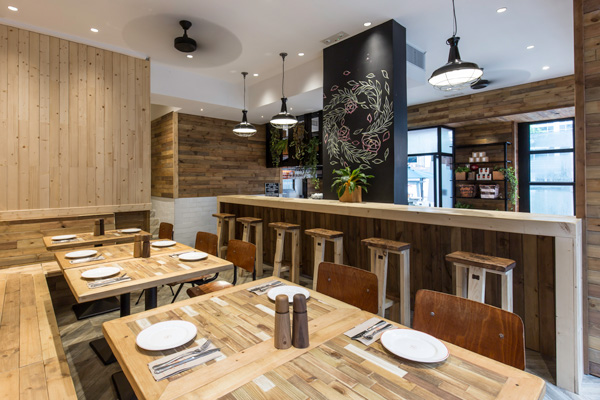
According to Acuna, organising the tables to include dining and casual seating was the biggest challenge of the project. “I drafted about 20 different seating orientations, I wanted it to remain open to the street and have the luxury of space,” he says. The result is worth the effort as there is a sense of airiness within the café that is not often found in the city’s coffee shops.

Acuna is clearly in tune with the people that will be using Elephant Grounds. He refers to them as ‘location-agnostic’ entrepreneurs and creatives who hop between cafés to work.
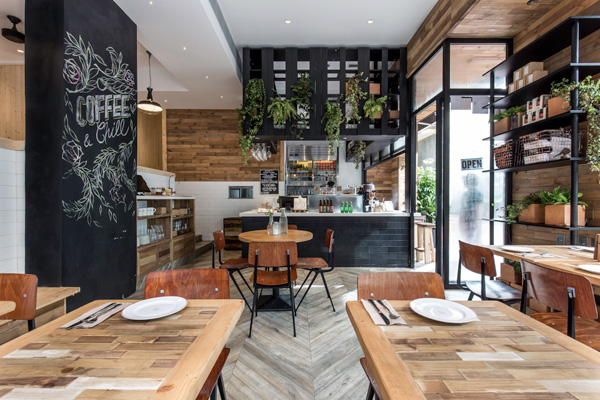
His attention to detail means that tables are large enough to fit laptops, documents, and coffees comfortably; the benches are deeper, allowing customers to sit back and stretch. Power points are liberally, but thoughtfully spaced. “I like the intimacy of the space and the relationship with the users; it [feels] very tangible,” he adds.
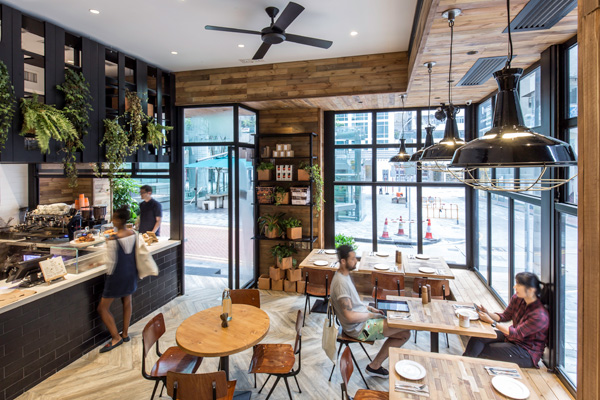
In keeping with the other Elephant Grounds outlets, the palette of the Café is composed of black, white and grey timber. The carpentry was fitted by local artisans Start From Zero. Tables, benches and walls were pine stained in different shades to ensure that the extensive usage of wood would not appear overwhelming.
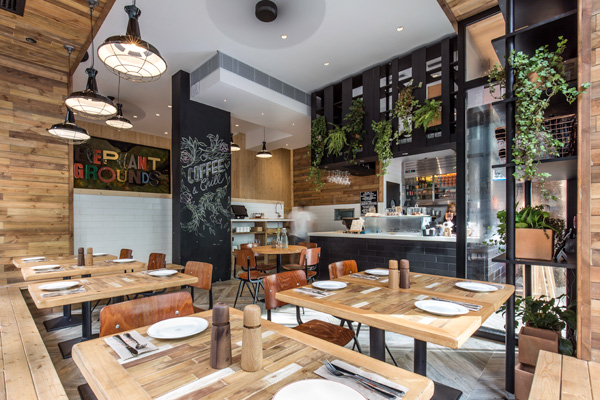
A central pillar serves as a chalkboard that conveys daily specials. The heavy black metal pendant lamps that hang over the tables were manufactured for the project by Schoolhouse Electric of Portland, Oregon.
Swathes of green punctuate the industrial feel of the space. Hanging plants sit in an innovative cage-meets-shelf above the coffee bar.
A moss wall at the back of the shop takes centre stage with the words ‘Elephant Grounds’, expressed in antique lettering sourced from Paris.
JJA / Bespoke Architecture
jjabespoke.com
INDESIGN is on instagram
Follow @indesignlive
A searchable and comprehensive guide for specifying leading products and their suppliers
Keep up to date with the latest and greatest from our industry BFF's!
The internet never sleeps! Here's the stuff you might have missed