The home of architecture and design in the Asia-Pacific
Get the latest design news direct to your inbox!

Get the latest design news direct to your inbox!
1957 & Co. brings its extensive design experience to An Nam and Modern Shanghai in Yuen Long. Tamsin Bradshaw takes a tour.

October 1st, 2015
Hospitality group 1957 & Co.’s restaurants are as much about design as they are about food, and the brand’s two newly opened restaurants at YOHO MALL in Yuen Long are no different.
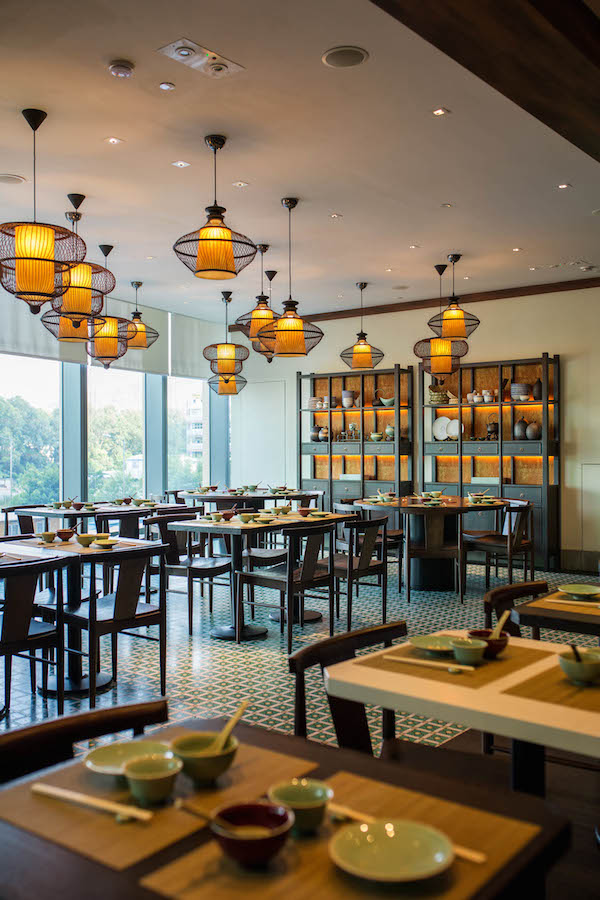
Modern Shanghai at YOHO MALL
This should come as no surprise, given that 1957 & Co. was founded by two designers (and a restaurateur, Paul Kwok). Renowned interior designer Steve Leung, Chairman of Steve Leung Designers Ltd, and Tino Kwan, an internationally recognised lighting consultant who has worked on projects for Four Seasons Hotels and Resorts, St. Regis Hotels, The Ritz-Carlton Hotel Company and many more.
The F&B group’s new restaurants in YOHO MALL are An Nam, a sister restaurant to Vietnamese restaurant An Nam in Causeway Bay’s Lee Gardens, and Modern Shanghai, which dishes out Hu cuisine, which combines Shanghainese techniques with those of Hangzhou, Ningbo, Huaiyang and Huizhou – as well as Western methods.
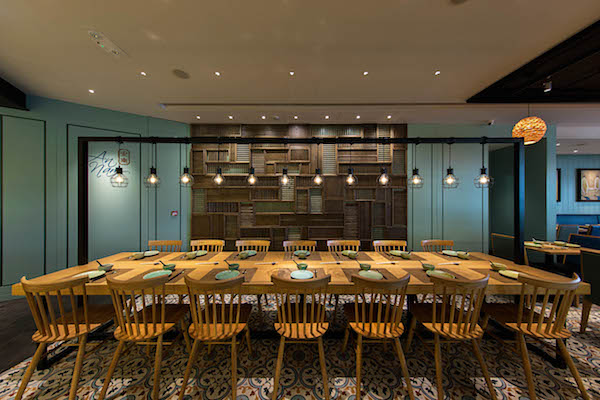
Old and new mix with ease at An Nam in YOHO MALL
Both new restaurants take a trip to the past with their decor. They call on traditional aesthetics from Vietnam and Shanghai respectively, giving them a contemporary twist that makes each space fun, stylish and comfortable.
An Nam is intended as an “everyday dining destination”, and it serves up homey dishes from locations all over Vietnam – Saigon, Hoi An and Hué, for example. The cuisine and the nature of the experience it offers are reflected in the interiors: popping, turquoise walls contrast with striking, dark wood panels that create visual interest. Antique-style painted floor tiles are juxtaposed with modern pendant lights and simple, pared-down raw wood furniture.
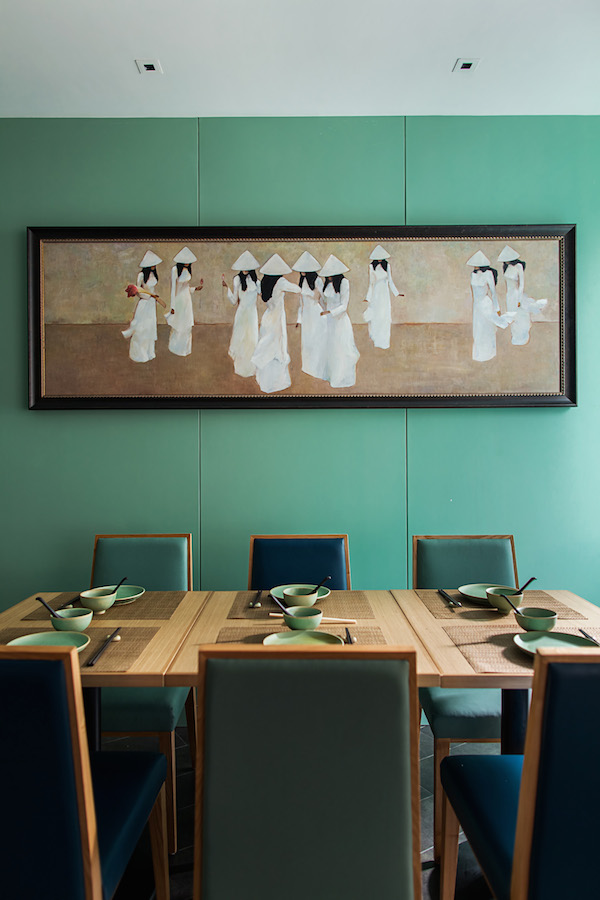
Shades of turquoise combined with raw wood for a fun, friendly feel at An Nam
At Modern Shanghai, meanwhile, inspiration stems from historical Shanghainese residences done in the Shikumen style, mixing Western and Chinese elements. Brick detailing call to mind the high walls of these lilong houses of old, as do the pretty, painted tile floors.
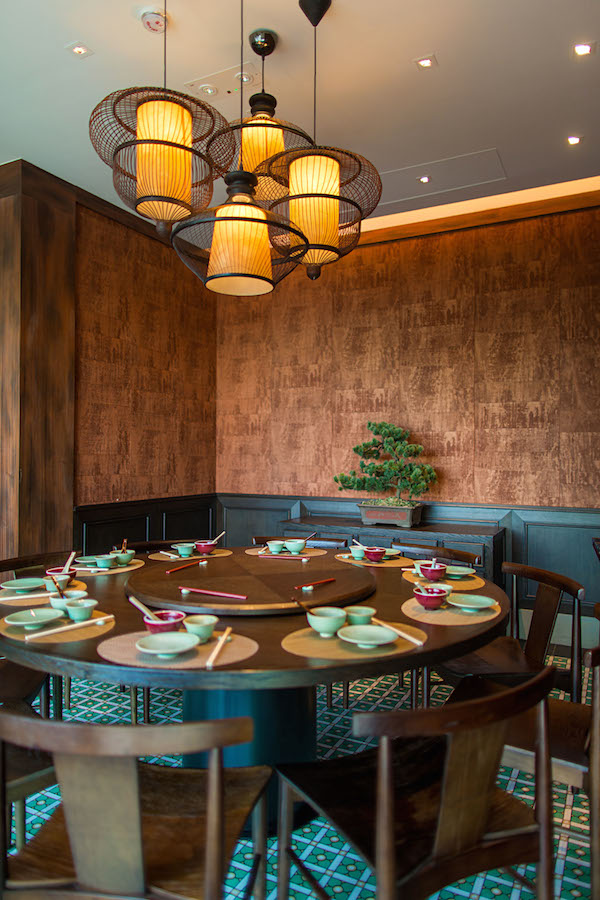
Modern Shanghai seats tables of up to 10 people. Warm, coppery walls offset the dark furniture and green, painted-tile floor
Old, wooden crossbeams overhead, antiques in the cabinets and stained glass “windows” are all designed to give diners the feeling that they’re sitting in a traditional Chinese home in Old Shanghai. There’s a real sense of nostalgia here, calling to mind the elegance of the city at its hedonistic height in the early 20th century – all neatly married with modern touches, such as bare, hanging bulbs.
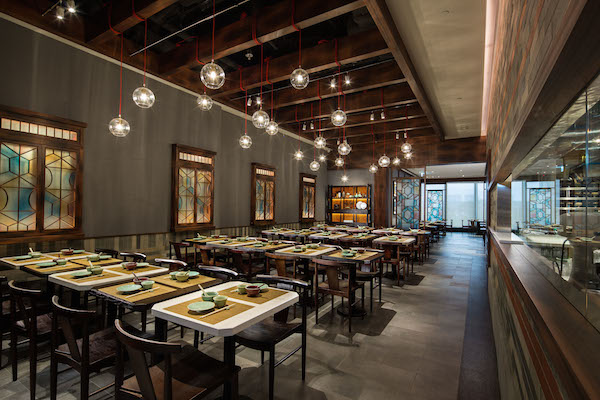
The main dining space at Modern Shanghai. Tino Kwan’s lighting know-how is on show in the use of modern, hanging bulbs
1957 & Co.
1957.com.hk
YOHO MALL
yohomall.com.hk
An Nam
annam.com.hk
Modern Shanghai
modernshanghai.com.hk
INDESIGN is on instagram
Follow @indesignlive
A searchable and comprehensive guide for specifying leading products and their suppliers
Keep up to date with the latest and greatest from our industry BFF's!
The internet never sleeps! Here's the stuff you might have missed