The home of architecture and design in the Asia-Pacific
Get the latest design news direct to your inbox!

Get the latest design news direct to your inbox!
Redeveloped from a former industrial zone and a shipyard dating from the 19th century, the Lujiazui Harbour City is set to become a new landmark in Shanghai. One key commercial component in the masterplan will be the Gala Avenue Westside. Sylvia Chan writes.

October 5th, 2016
All renderings courtesy of Benoy
Upon its completion in 2018, the 250,000-square-metre Lujiazui Harbour City will become an upscale city complex housing financial institutions, commercial landmarks, an art centre, luxury residential areas and five-star hotels.
The Gala Avenue Westside, comprising interconnected retail hubs and an 18-storey office tower, will be a major commercial component within the masterplan. Qin Pang, Director and Head of Benoy’s Shanghai studio, explains, “Located in the centre of the masterplan, the Gala Avenue Westside will act as the heart of the wider development.”
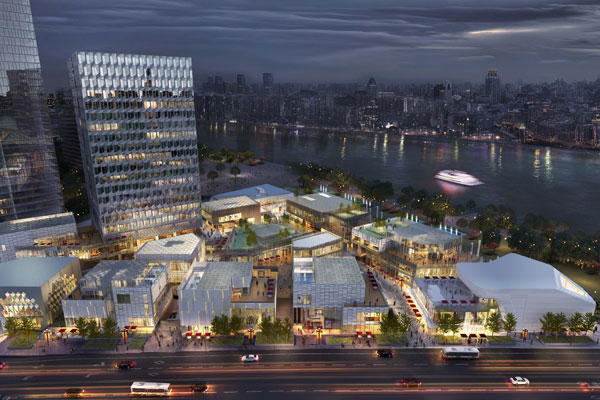
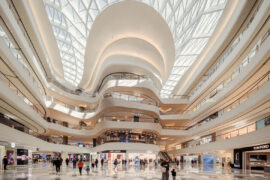
The Gala Avenue Westside will offer high-end shopping and entertainment programmes to visitors. These programmes will not be contained within a single, giant mall but spread across 12 low-rise retail hubs.
Pang explains that visitors prefer a diversity of shopping destinations that do not only deliver products and services but also create a unique experience. “We are moving away from the more traditional big box retail models to deliver a concept relevant to the expectation of the users,” he says.
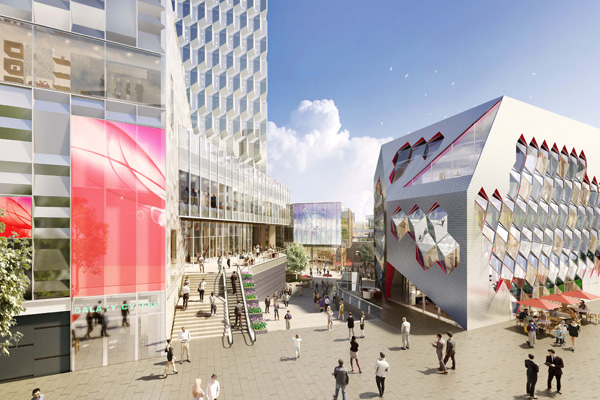
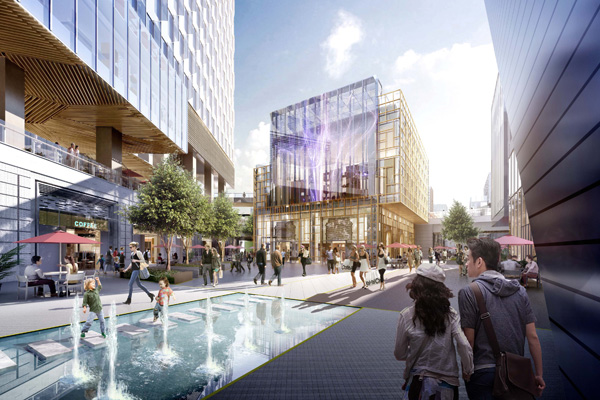
The 12 retail hubs will be connected by internal streets at the ground level and above. Pang says, “Circulation is very important to retail design. The connections at different levels will allow visitors to navigate the different buildings easily while creating their own journeys.”
According to Pang, the organisation of the retail hubs will bring porosity to the development and allow visitors to explore the various spaces within and between the retail hubs.
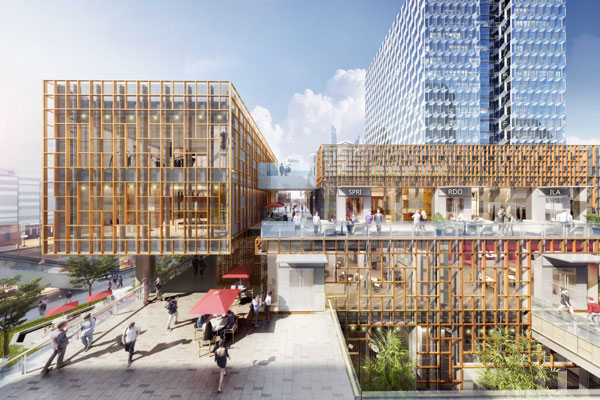
An 18-storey office tower will also be linked to the retail hubs at the first, second, and lower ground levels. The tower will feature a unique façade design that will distinguish it from other tall buildings within the Lujiazui Harbour City.
Pang says, “To heighten the identity of Gala Avenue Westside, we focused on the façade of the office tower. We created a diamond-shaped design to give a dynamic appearance to the building.”
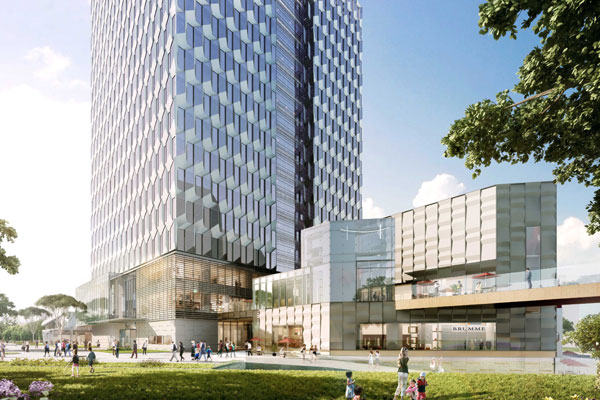
Responding to a 100-metre green belt with proximity to the Gala Avenue Westside, the project will feature an abundance of green spaces. “Landscaped pocket spaces, green walls, and roof gardens throughout the design will soften the edge of the site that faces the green belt,” says Pang.
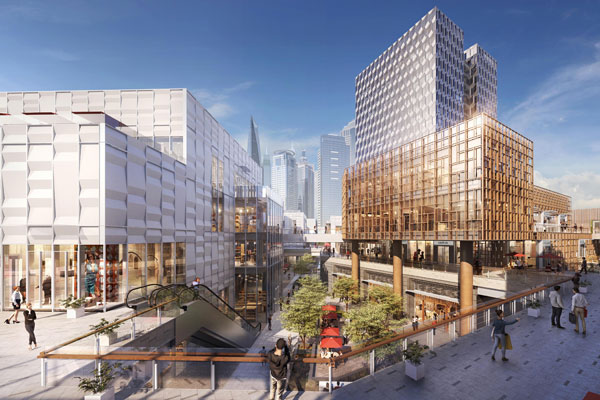
Benoy is also the interior designer of the project. A minimalist design and material palette, with bronze and black as the key colours, will be adopted. Pang says, “As the architectural design has a very strong character, we proposed a much simpler design language for the interior to create balance.”
He adds that the interior will have meticulous detailing despite its simple overall design, featuring elements inspired by the traditional Shikumen-style that characterises architecture in Shanghai.
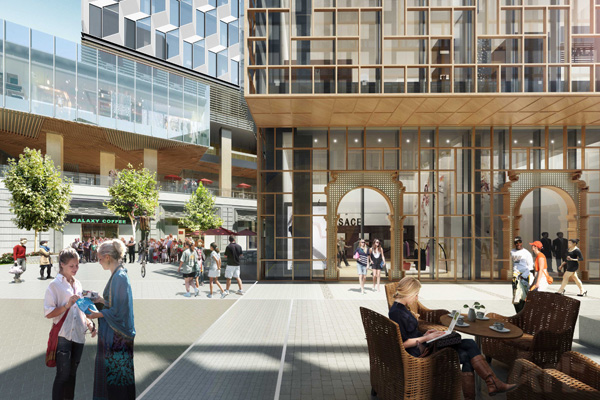
Pang believes that the organisation of the buildings and the design details of the project will amaze visitors. “Visitors will find something that will surprise them time and again. Each visit will be different,” he says.
Benoy
benoy.com
INDESIGN is on instagram
Follow @indesignlive
A searchable and comprehensive guide for specifying leading products and their suppliers
Keep up to date with the latest and greatest from our industry BFF's!
The internet never sleeps! Here's the stuff you might have missed