The home of architecture and design in the Asia-Pacific
Get the latest design news direct to your inbox!

Get the latest design news direct to your inbox!
While not exactly new, the Airland Hotel Shenzhen is a project we keep returning to as a perfect example of a hotel’s ability to reinvent itself through design. Christie Lee writes.
August 17th, 2014
Located on the Dameisha coast, Airland Hotel Shenzhen has always prided itself on being a multi-propose hotel, with a restaurant that serves first-rate cuisine, expansive leisure and conference facilities and above all, rooms which enjoy sweeping vista of the Dameisha beach. In other words, tout etait parfait, except perhaps for the lacklustre decor.
That changed however, when award-winning design firm BLVD was tapped to renovate the hotel interior in 2012. With offices in Beijing and Shenzhen, the work of the award-winning firm can be described as subtly poetic, with an emphasis on traditional materials and warm, minimalist palettes. It’s an aesthetic that was channeled into the new design for Airland Hotel Shenzhen.
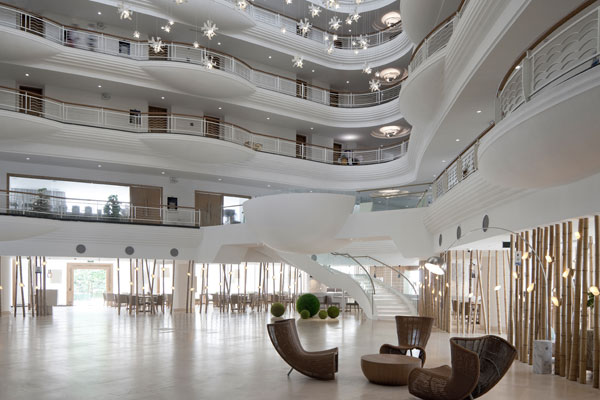
Gone are the tacky gilded surfaces in the lobby. In place is a lofty space awash in pristine white. Natural lights pour in through the floor-to-ceiling windows, forming shadows that appear to be dancing on the floors and walls. When the sun sets, the lobby is lit up by a procession of star lights that are evocative of various sea creatures bobbing their heads happily in an open sea.
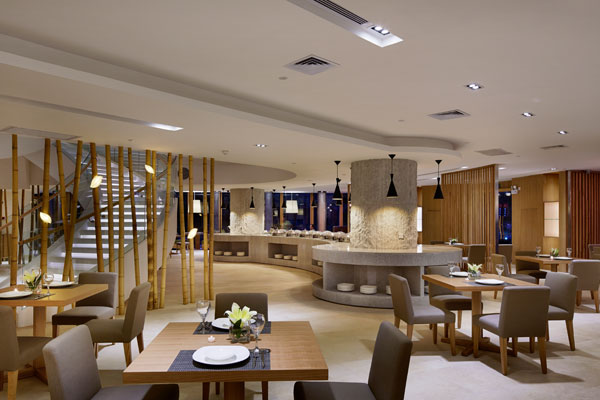
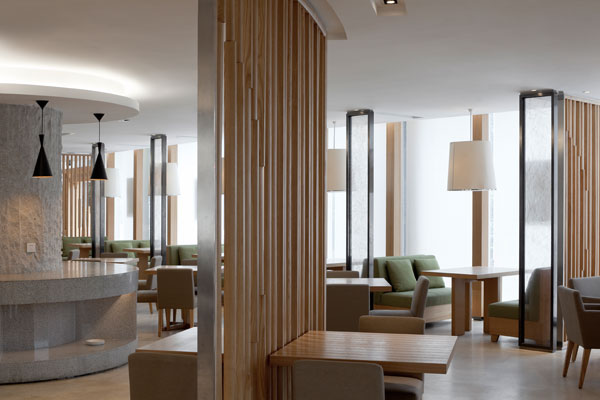
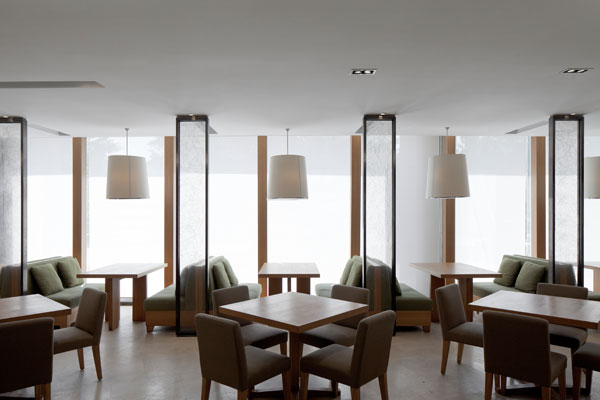
Behind a group of sculptural chairs, a bamboo screen further articles the designers’ love of nature. In addition to being a decorative art feature, it also acts as a buffer between the atrium and the hotel restaurant. The sunlit theme continues in the restaurant, where matt stone surfaces and natural linen combine for a welcoming aesthetic. Frosted glass screens contribute to a sense of privacy.
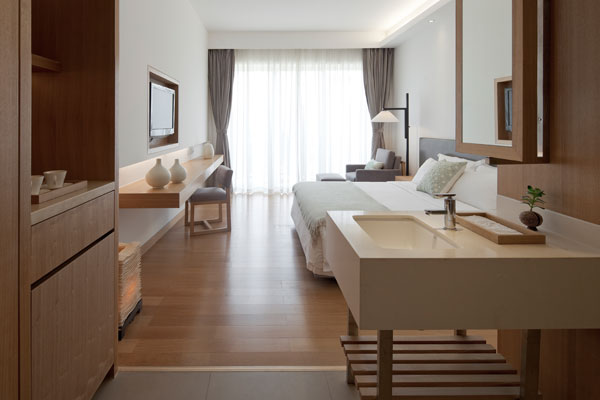
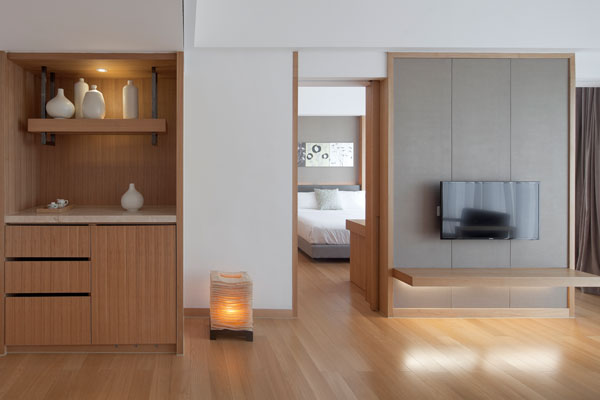
Upstairs, the grainy wood panels imbue the hotel rooms with a certain dynamism. Meanwhile, a clean and orderly aesthetic is provided by way of the neutral palette and minimalist tableware.
BLVD
blvd.com.cn/en-us
INDESIGN is on instagram
Follow @indesignlive
A searchable and comprehensive guide for specifying leading products and their suppliers
Keep up to date with the latest and greatest from our industry BFF's!
The internet never sleeps! Here's the stuff you might have missed