The home of architecture and design in the Asia-Pacific
Get the latest design news direct to your inbox!

Get the latest design news direct to your inbox!
Ed Ng, one half of the duo behind this Hong Kong-headquartered design studio, talk about using culture to tell stories through design, and what ‘luxury’ means to him.

Ed Ng and Terence Ngan describe themselves as ‘storytellers of space.’ For the founders of AB Concept, narratives inform their work: in each project, they consider place and culture to create striking, multi-layered spaces and products.
They are mostly known for their work in hospitality, with recent projects including a redesign of three-Michelin-starred restaurant Bo Innovation, Rosewood Sanya and several F&B outlets in Four Seasons Hotel Kuala Lumpur.
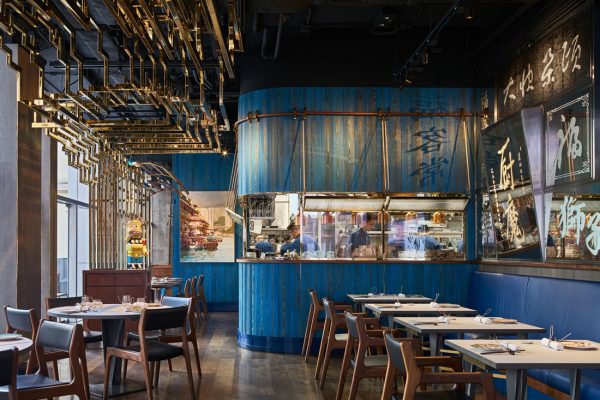
Bo Innovation
However they are also branching into retail for a luxury brand (watch this space) and products, with a carpet collection, Nephele, for Tai Ping Carpets, and a collection of lights – Flux – for Lasvit.
Here, Ng, Co-Founder and Principal, talks about their approach to hospitality design and what’s in the works.
How did you bring a sense of place to Bar Trigona, YUN House and the Lounge at the Four Seasons Hotel Kuala Lumpur?
Malaysia is a very multifaceted country, so it was very easy to find interesting narratives to draw from. Also, it was good that I’m familiar with Kuala Lumpur, but not too familiar; I could look at it with fresh eyes while knowing some of its history.
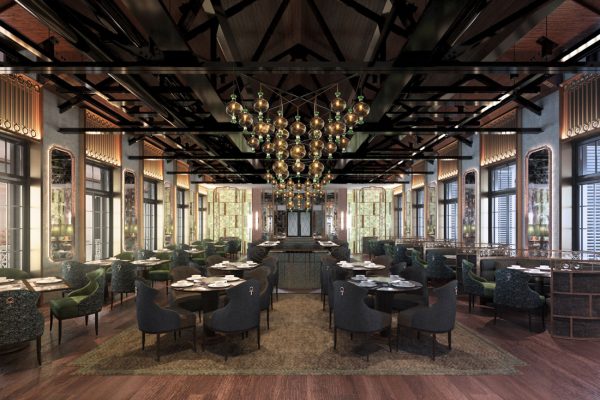
With YUN House, the Chinese restaurant, we started with tea. I love tea. It’s always about serving it from a beautiful tea can, and in Malaysia, it’s about tea containers made of pewter.
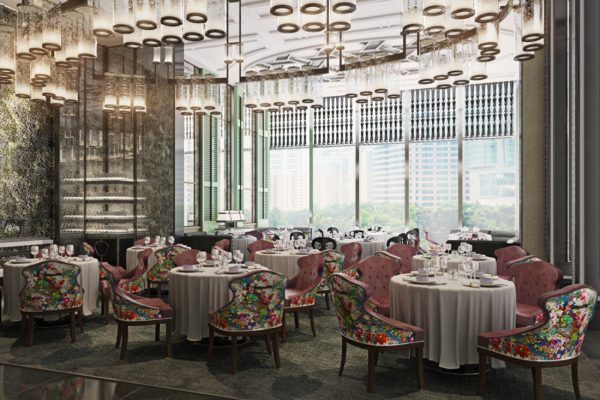
Yun House
In the old days, the Chinese immigrants moved to South Asia. A lot of them put down roots in this region, and it’s inspiring to see how they brought in Chinese culture, food and other influences. The restaurant is about celebrating that Chinese culture, as well as how they use Malaysian pewter. We also got inspired by Malaysia’s lush greenery and its tropical flowers, choosing floral fabrics made for couture houses.
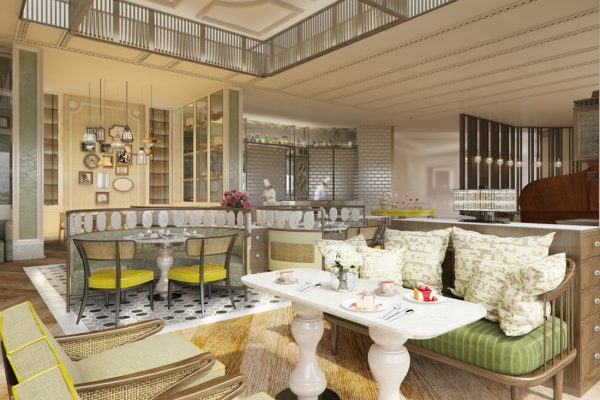
The Lounge
The Lounge is very colonial and charming. We thought about how Western culture has put down roots in Malaysia as well. We wanted this one to be very lighthearted, full of pastels, and all about the colonial tradition of high tea.
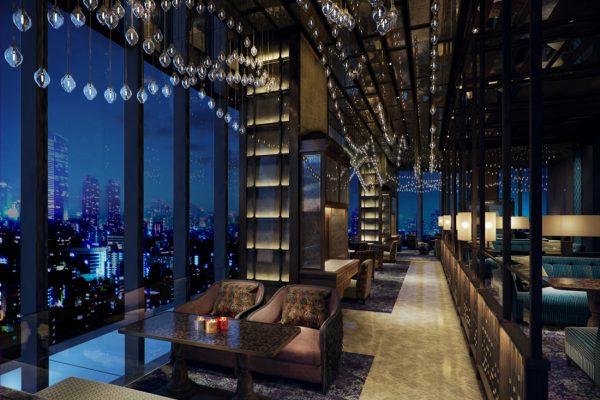
Trigona Bar
Then there’s Bar Trigona… Malaysia now is about the future. Almost all Malaysians speak three languages. KL a melting pot of so many cultures; Indians, Chinese, Malay. Everything is woven together. That gave me the inspiration to create a space that reflects the multi-faceted nature of Malaysia.
For Rosewood Sanya, you worked on the whole hotel. What was the brief here and how did you achieve what you were tasked to do?
For Sanya’s most Mainland tourists, a trip here is about high energy, it’s about family, it’s about playing. You’ve got MGM, and a range of different high-energy brands. So when Rosewood decided to go into that market, they saw a niche.
Now China actually has a population that is sophisticated and well-travelled, and maybe these people just want to get away, but they want to stay within China. That’s why, when Sonia [Cheng, Rosewood’s CEO] briefed me, she only said three words: “Relax, relax, relax.”
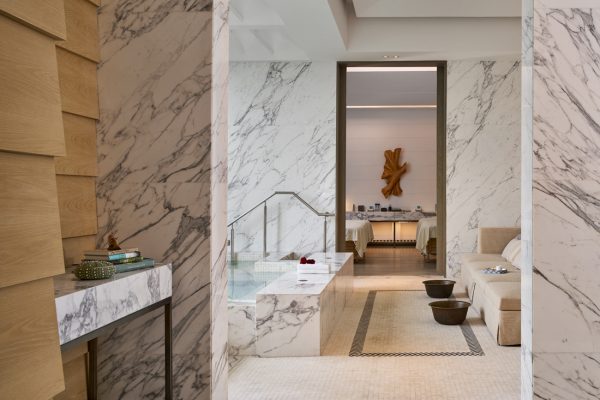
The Rosewood Sanya Spa
Our intention was to create a seaside mansion that feels extremely residential without being intimidating. In Sanya, everything is so grand, so large-scale, but Rosewood is the opposite. We wanted people to arrive in a private space, and to instantly feel cosy and pampered. It’s about discreet luxury, rather than something in-your-face.
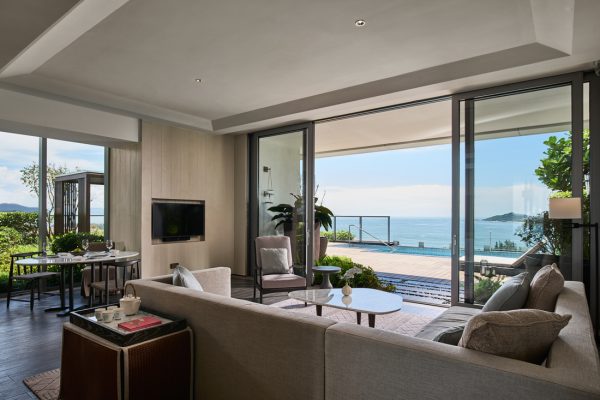
The Rosewood Sanya Suite
What does ‘luxury’ mean to you, then, in a hospitality context?
Luxury is no longer about marble or glitzy design. It’s basically detached from a price tag. It’s all about the experience now: it’s about experiences you can’t reproduce.
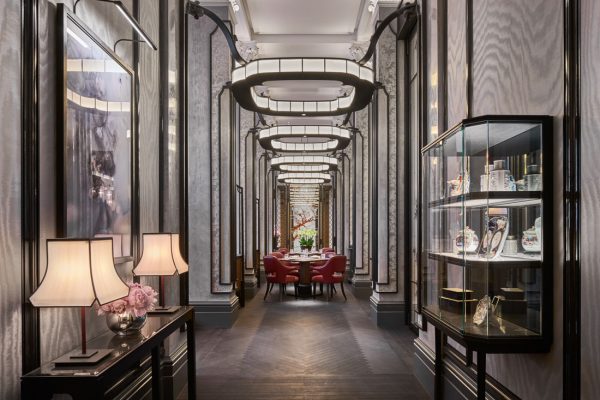
Mei Ume
That’s one of the reasons Terence and I are lucky to be able to work on spaces in heritage buildings – that’s the part you can’t reproduce. That’s why Paper Moon Giardino and Mei Ume are so unique, and coming up, the Central Police Station.
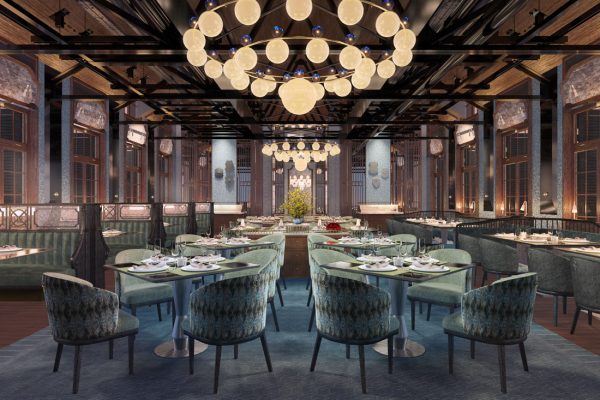
The Central Police Station
Speaking of Paper Moon Giardino, this just opened in Milan during Milan Design Week. Tell us more…
The original Paper Moon has been my go-to restaurant in Milan for the last 20 years. Why does everyone love Paper Moon? For the food, and for the atmosphere. Everyone is like family at that restaurant. The owners wanted to keep that same family feel with the new restaurant, but they wanted to make it more upscale.
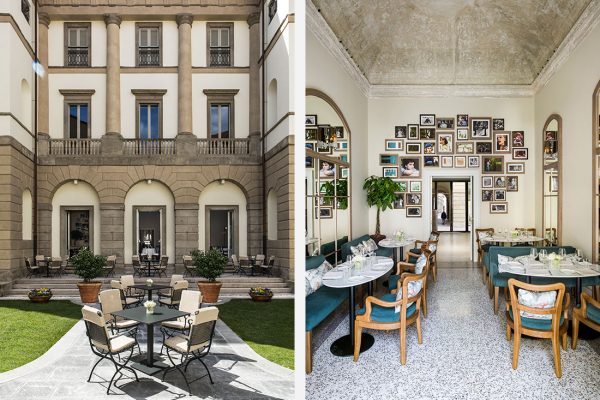
Paper Moon Giardino
So we kept everything very simple. Rome is in your face: it’s glamorous and opulent. Milan is different; everything has to be very understated. In Milan, you might go through a simple, humble door and you’ll find yourself in the most glamorous house with a beautiful garden. That’s the idea here.
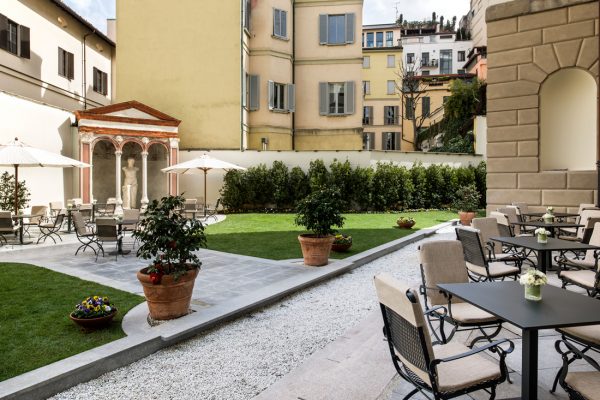
Paper Moon Giardino
Please tell us about the F&B project you’re working on at Central Police Station.
We were David’s [Yeo, Founder and Owner of Aqua Group] design partner from the beginning; we worked with him on the narrative that we presented to the Jockey Club when different restaurant groups pitched for the space.
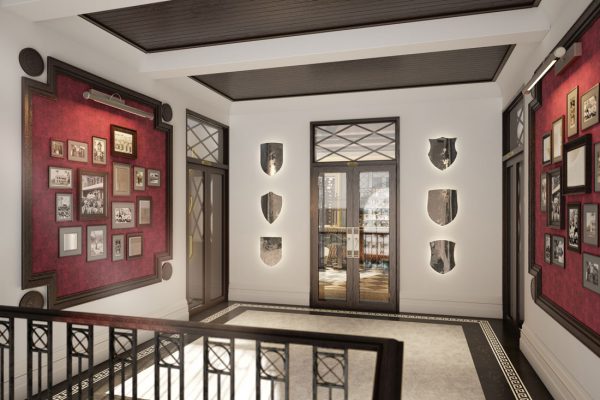
The Central Police Station
David said, ‘Let’s stay away from doing another Michelin-starred restaurant. Let’s do something that’s really East meets West.’ It’s called The Dispensary, and one side, called The Statement, is Western, one side, called The Library, is Chinese. We’re really excited.
The Central Police Station
You’re also working on a new hotel brand with Rosewood. What’s the story there?
It’s called KHOS. It’s a new business/lifestyle hotel brand. Sonia [Cheng] says, ‘Rosewood is my father; I am KHOS.’
We’re working on the flagship hotel in Tianjin. The tower is in Tianjin, and it’s done by SOM. We’ll do the hotel [interiors]. We were on board seven years ago when it was first supposed to be a Rosewood. Now that they have this new brand, they decided to make the Tianjin hotel a role model for the new KHOS.
INDESIGN is on instagram
Follow @indesignlive
A searchable and comprehensive guide for specifying leading products and their suppliers
Keep up to date with the latest and greatest from our industry BFF's!
The internet never sleeps! Here's the stuff you might have missed