The home of architecture and design in the Asia-Pacific
Get the latest design news direct to your inbox!

Get the latest design news direct to your inbox!
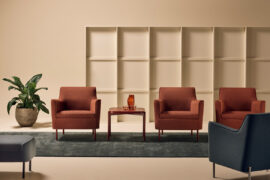
Wendelbo stands as an example of a family-operated business that has profitably adapted to the modern world without losing sight of its values.

April 24th, 2025
While Wendelbo is currently under the stewardship of its third generation, the company’s evolution feels less like a handover and more like a deliberate continuation. After a thirty-year tenure, the previous generation has just stepped back from hands-on responsibilities, retaining a seat on the board and a design advisory role.
“It is an interesting time,” says CEO Christian Ernemann, who has helmed the business for the past four years — years discernible by disruption, recalibration and close collaboration. “We have had four very intensive years within this industry – with COVID and crisis – it has been a very close partnership.”
Though the multilayered brand has grown in scale and reach, it retains the tonal cadence of a family business — methodical, quietly ambitious and attentive to legacy. Ernemann reflects, “when times get like this, you need to get into every detail of the company and get to understand what is going on,” noting the value of adversity in deepening structural understanding. “I think if you’re only growing and nothing is trouble, you don’t get into the corners and machines of the company the way we have had to.”

Wendelbo’s commitment to quality is not performative — it is simply how things are done. “It is what we are proud of, that we have [an exceedingly high level] of quality and craftsmanship,” he says. Theirs is a belief system rooted in the conviction that longevity and quality remain relevant currencies, especially when entering the contract market. “You could say the aim to expand into [home and contracts markets] was to grow the company and, maybe, be less dependent on a retail market that, within furniture, can be volatile.” It was, he notes, “a strategic decision,” but not without complication. “There is a lot that you need to adapt to and learn.”
In parallel to adapting product, the brand sought out revered designers who could support this evolution. “Spot the right people to help us, and challenge us, to develop in this area.” The shift chronicles Wendelbo’s affinity for the cultural too: “We now have different target groups following Wendelbo. Earlier, it was mainly directed towards retailers, clients and residential designers. Now, we have opened up to the commercial world. Working with [lauded brands] such as Cult is, of course, for us a massive step and proof we are able to meet a range of [needs].”
The salient growth has been underpinned by a series of collaborations and, in Ernemann’s words, “it has definitely opened up new markets.” From France to Germany, collaborating with local designers sparked genuine and incorrigible interest. “It is interesting to see what happens in those markets when you start working with the local designers – there is a lot of excitement from all the stakeholders, consumers, dealers and designers.”
Suggested: Bankston and Sans-Arc Studio put collaboration to the test

Ernemann continues: “It is big discussion internally to get the balance because we want to create timeless pieces without them being excessively classic.” The aim? “You need to hit a nerve.” To do so requires not just vision, but cohesion: “It is a lot about finding the right designers and having that collaborations, materials and surfaces.”
Ernemann seems most energised when speaking about these exchanges — moments when alignment between product and cultural voice is found. “Developing the brand and collection approaching it with their culture and design gives Wendelbo a fresh perspective.” There’s a clear intent to avoid insularity: “In Denmark we have our legacy, designers and traditions but our idea is not to be limited in our scope – we find it inspiring to work with international creatives.”
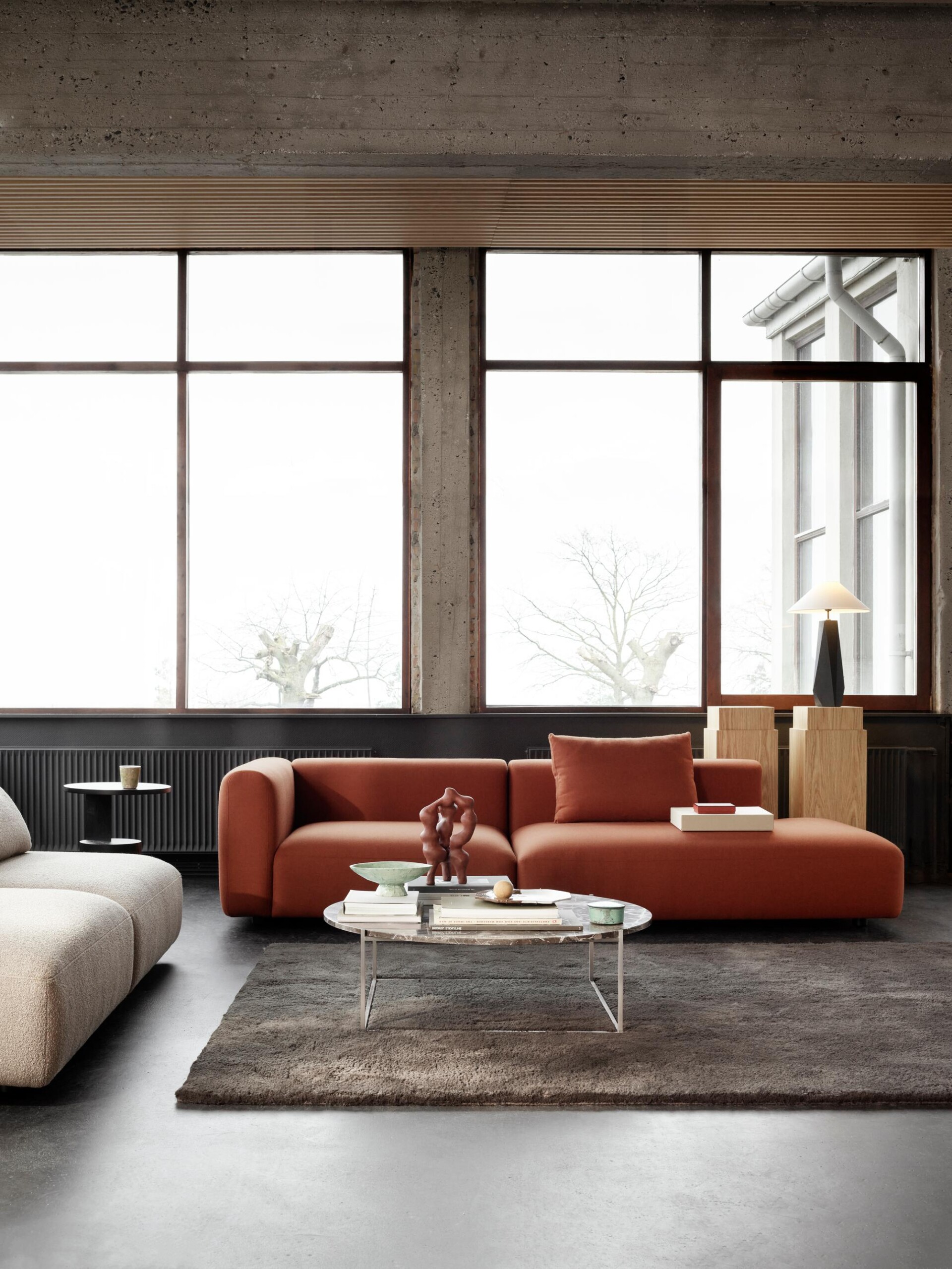
Functionality now guides material decisions. Upholstery “needs to be different in order to work functionally within contract markets. We needed to look at the existing assortment and adapt it to make sure the products we were delivering were suitable.” While quality isn’t up for debate, pragmatics must follow. “In terms of the fabric, upholstery – you cannot have cushions that need to be maintained constantly,” he adds.


It prompted the introduction of new materiality — additions that had to balance design values with functional requisites. “Right now, we are introducing polished steel and chrome into the assortment, and – which may appear quite strange for a company – light oak,” he says, a wry note in his voice. Textile sourcing, too, is scrutinised with precision: “We have a fantastic team choosing our textiles, from our range we are sourcing many in Italy and constantly trying to spot the right palette.”
Yet product development is not a linear undertaking. Timelines oscillate. On some occasions, when designer familiarity and shared vocabulary are already in place, the process is nearly intuitive. “We don’t have any sub-suppliers; therefore, if it is a designer we know and understand proportions – and their drawings can reflect that – we can almost complete the process in one-to-three goes on a sample.” There’s quiet pride in the in-house team. “Our in-house product development and engineers are so good,” Ernemann says without hesitation. But the pace can change. “This summer we are launching a lounge chair that has been undertaken for more than two years.”
Still, the ambition is not speed but considered presence. “We want to remain in the categories we are within currently,” he explains. “We don’t have any ambitions going into other [facets of interiors].” There is still ground to cover within their chosen terrain. “When we look at our assortment, we still consider there is so much we haven’t done. And we want to have strong products within the three core markets we work within – residential, office and hospitality.” Ernemann concludes: “It is what we love and where our DNA.” Wendelbo may now speak to broader markets, but its inflection remains the same.
Wendelbo
wendelbo.dk

INDESIGN is on instagram
Follow @indesignlive
A searchable and comprehensive guide for specifying leading products and their suppliers
Keep up to date with the latest and greatest from our industry BFF's!
The internet never sleeps! Here's the stuff you might have missed