The home of architecture and design in the Asia-Pacific
Get the latest design news direct to your inbox!

Get the latest design news direct to your inbox!
Technological innovation, spectacle and cultural inspirations form the key drivers in the first indoor movie theme park in Wuhan, China.
January 6th, 2015
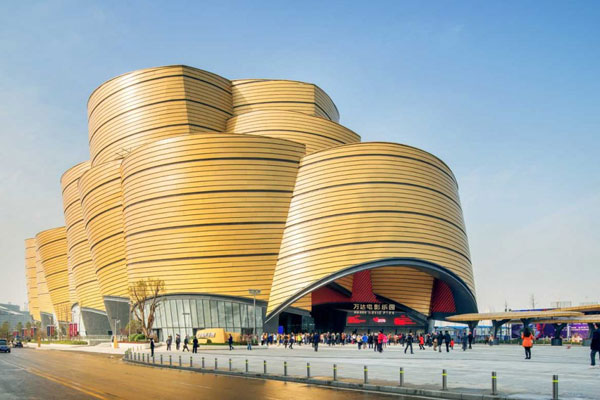
Stufish Entertainment Architects have completed the $690 million Wanda Movie Park project in Wuhan, which has also been described as the world’s first indoor movie theme park.
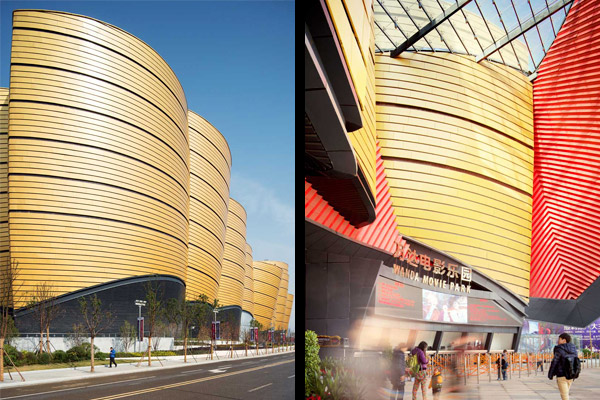
Spanning more than 100,000 square metres, the building houses six film-related ‘ride’ attractions, including 4D and 5D cinema screens, flight theatre, immersive and interactive live performances and a space theatre.
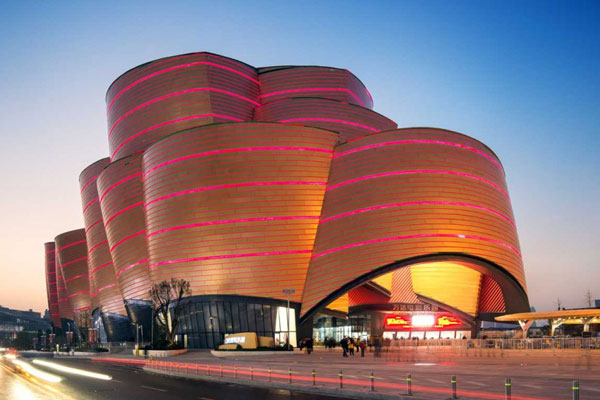
Stufish Entertainment Architects’ design is undeniably extravagant in form and has been built to complement the advanced technology within the park. However, it also thoughtfully considers the city’s rich local heritage. Wanda Movie Park is nicknamed The Golden Bells as its design draws inspiration from a 2,000-year-old local relic known as the Wuhan Bianzhong bells, which dates back to the Han Dynasty.
There are a total of 24 bells, with each covered in bespoke geometric aluminium panels. Additionally, all 11,000 of the golden panels are covered in a fluorocarbon paint that enables the cladding to self clean as it rains. And with strips of LED incorporated in between the paneling, the building glows at night.
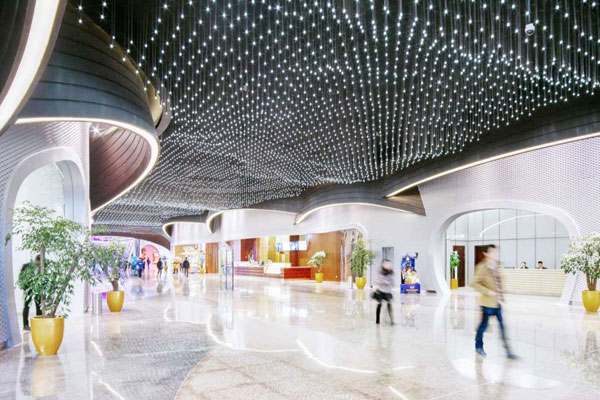
The scheme’s landscaping, from its terraced planting to its outdoor seating and water features, also reference the agricultural practices of Hubei province, in which Wuhan is located.
Glazed, double height shopfronts offer generous views of the lake, and the building’s only entryway, which is positioned in a hollow bell, is located just beyond a large column-free canopy.
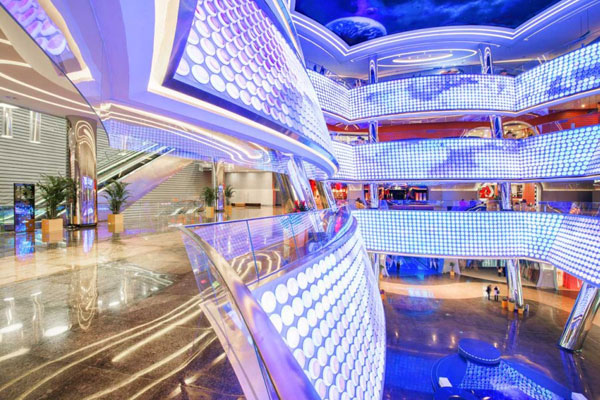
The geometry of Wanda Movie Park’s exterior façade extends to the internal finish, while inside, animated LED discs spanning three floors form an interactive digital screen and enhances the movie park’s vibrant and energetic atmosphere.
Stufish Entertainment Architects
stufish.com
INDESIGN is on instagram
Follow @indesignlive
A searchable and comprehensive guide for specifying leading products and their suppliers
Keep up to date with the latest and greatest from our industry BFF's!
The internet never sleeps! Here's the stuff you might have missed