The home of architecture and design in the Asia-Pacific
Get the latest design news direct to your inbox!

Get the latest design news direct to your inbox!
The first Chinese national Pavilion located outside China at Expo Milano 2015 was conceived as a field of experiences with cultural programmes for the public to enjoy.

May 21st, 2015
Photos: Sergio Grazia
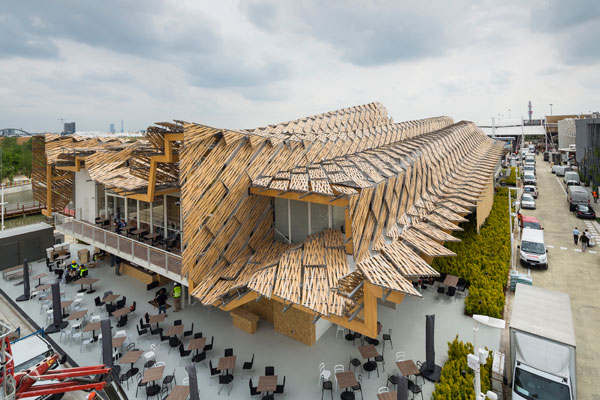
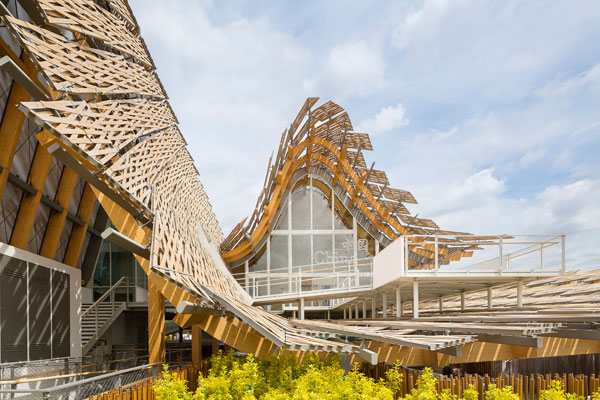
The Chinese Pavilion, which opened 1 May 2015, visualises through a key undulating roof feature, derived by “merging the profile of a city skyline on the building’s north, with the profile of a landscape on the south.” This is an artistic expression of the pavilion’s theme, Land of Hope, as design teams, Studio Link-Arc and Tsinghua University believe that hope can be found when city and nature co-exist.
In 2013, the China Council for the Promotion of International Trade (CCPIT) invited the research driven Tsinghua University to partake in a competition to design China’s Expo Pavilion. As an associate professor at the University, Yichen Lu and his New York based office, Studio Link-Arc, was invited to lead the architectural design.
The teams selected a palette of organic materials, such as wheat straw, bamboo and wood to create a welcoming and light-hearted space, where visitors can comfortably explore content revolving Chinese culture. Materials used are also renewable, adhering to the Expo’s theme of sustainable agriculture.
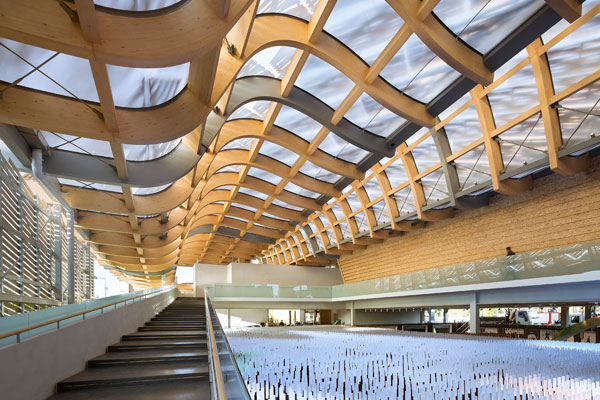
A wheat field forms the base of the Pavilion as the ‘Land of Hope,’ epitomising China’s agrarian history. Embracing advanced engineering and traditional techniques, the roof’s lengthy 36 metres span was created using modern technology, while the Pavilion’s timber skeleton reference a “raised beam system” found in traditional Chinese architecture. Made of 266 cubic metres of glulam timber, the structure weighs over 120,000 kilograms.
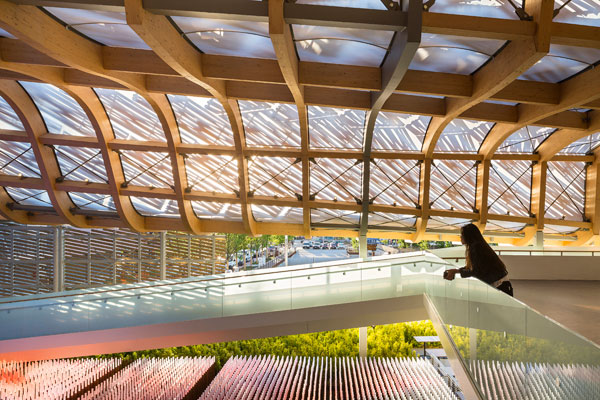
The roof, shaded with shingled panels is reminiscent of traditional Chinese pottery roof construction. Reinterpreted as bamboo leaves that further enhance the space, the panels were constructed using 1052 bamboo roof panels, fabricated using 85 kilometres of bamboo strips – a fast growing material synonymous with Chinese culture. Designed as layered screens, they add texture, depth and create natural lighting patterns indoors.
Visitors enter the 4000 square metres pavilion that descends into a planted field – the immersive alternative landscape provides a serene break from the buzzing fairgrounds.
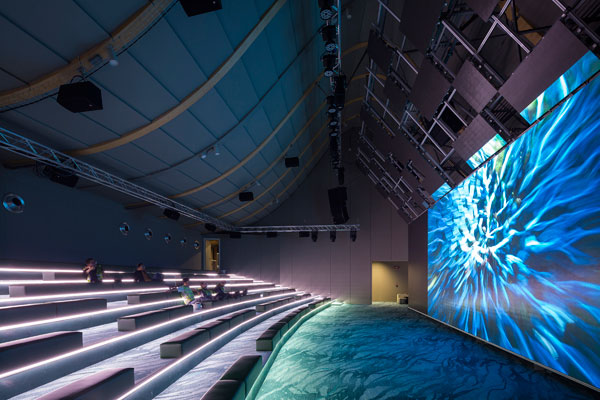
An LED installation sits in the heart of the space, complemented by a following sequence of exhibition spaces filled with cultural offerings from various Chinese provinces, including a short film on family reunions, an important occasion during the annual Chinese Spring Festival. The sequence also leads visitors to a panoramic viewing platform outside the building to enjoy expansive vistas of the Expo.
Expo Milano 2015 opens on May 1 and runs through October 31.
Studio Link-Arc
link-arc.com
Tsinghua University
tsinghua.edu.cn
INDESIGN is on instagram
Follow @indesignlive
A searchable and comprehensive guide for specifying leading products and their suppliers
Keep up to date with the latest and greatest from our industry BFF's!
The internet never sleeps! Here's the stuff you might have missed