Top: Peter Steinhauer – Surface Unseen at CONTEMPORARY BY ANGELA LI, 2015. Photo: CONTEMPORARY BY ANGELA LI
Most foreigners would regard Hong Kong as an impossibly fast-paced and chaotic concrete jungle. This is not the case for American artist photographer, Peter Steinhauer, who resided in the city for over nine years. During his time in the city, Steinhauer ventured narrow alleyways and discovered open spaces to photograph. His monochromatic visuals reveal a tranquil and still quality of organised chaos and man-made architecture, juxtaposed with a natural landscape.
In a short interview, Steinhauer tells us about his perspective of Hong Kong’s urban architecture, and what led him to photograph the city.
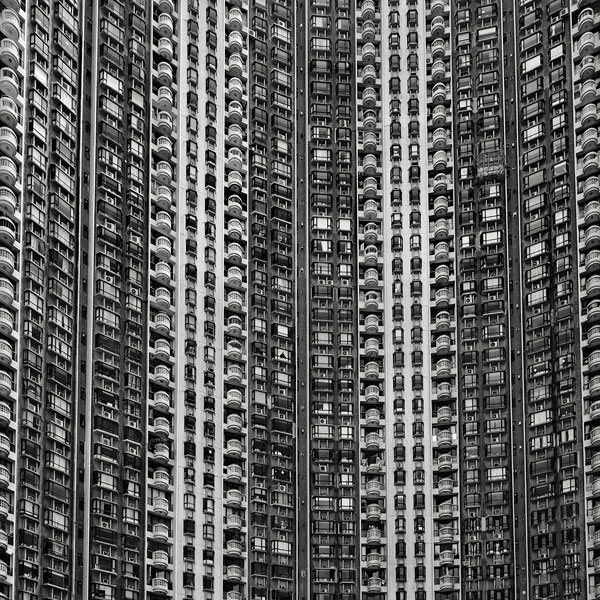
One Thousand Flats, Hong Kong, 2013. Photo: Peter Steinhauer
What drew you to photograph Hong Kong?
I am drawn to the organised chaos and energy of Hong Kong on the urban side of things. There is density in the city where living space upon living space creates form within the architecture structure. There is age and a sense of character in the buildings, much like a person’s face. It shows experience in life and that it has been through a lot. I am drawn to this, and I see it in all parts of Hong Kong.
I am also equally drawn to the silent and tranquil side that does not receive as much attention. I grew up in the mountains of Colorado in the United States and as a result, nature is in my blood. It is something that makes Hong Kong so unique: the contrasting dense urban living and absolute peace, quiet and serene nature, which is easily accessible. I have tried to show all of that in Surface Unseen.
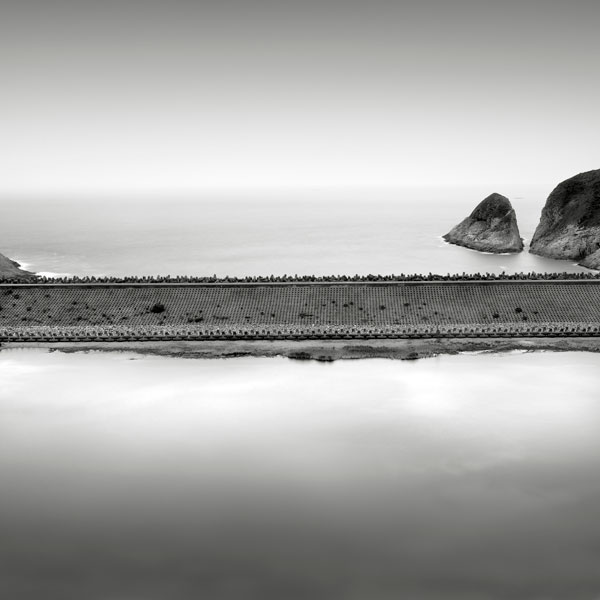
High Island Reservoir Dam, Hong Kong, 2008. Photo: Peter Steinhauer
In your experience photographing architecture, what are the differences you have observed in Hong Kong’s urban landscape?
The obvious is the newer architecture, and how more land is being used and made to accommodate more construction. Buildings from each generation have different characteristics and you can see these clearly by looking at the skyline.
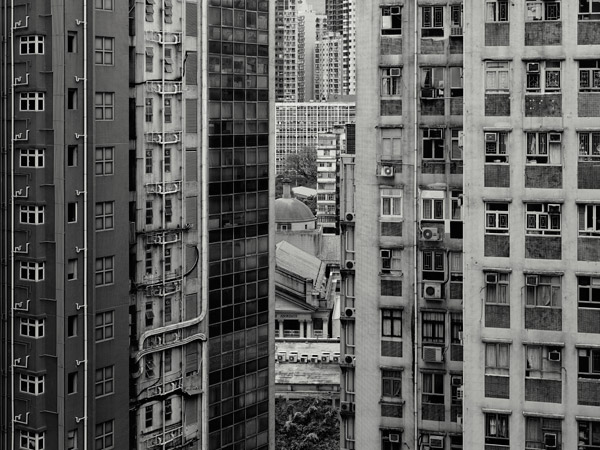
Adoremus, Hong Kong, 2015. Photo: Peter Steinhauer
It is more evident to me when you are in places like Sha Tin or Tseun Wan rather than the Central because of the older structures within the newer and modern architecture. Personally, I am not drawn to the contrast of this, but rather a sharp focus on a particular structure itself.
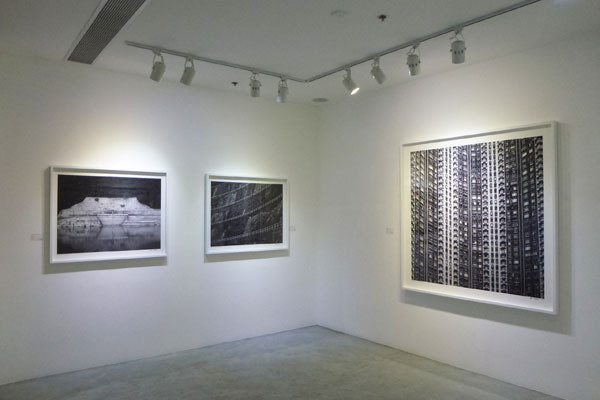
Peter Steinhauer – Surface Unseen at CONTEMPORARY BY ANGELA LI, 2015. Photo: CONTEMPORARY BY ANGELA LI
What medium did you use to create these photographs?
I work with a medium format digital called Phase One, which is very high in resolution. My main camera is a technical camera, which was made mainly for architecture.
For most of my work, I use long exposures to create movement. I try to add movement to my work when I feel it is necessary. My main influences in photography are 19th century photographers. They had this [movement] in their work inherently because of the exposures times and the technical processes. I always found this beautiful as the images, although still, seem to move.
This has been a part of my work since I started photographing.
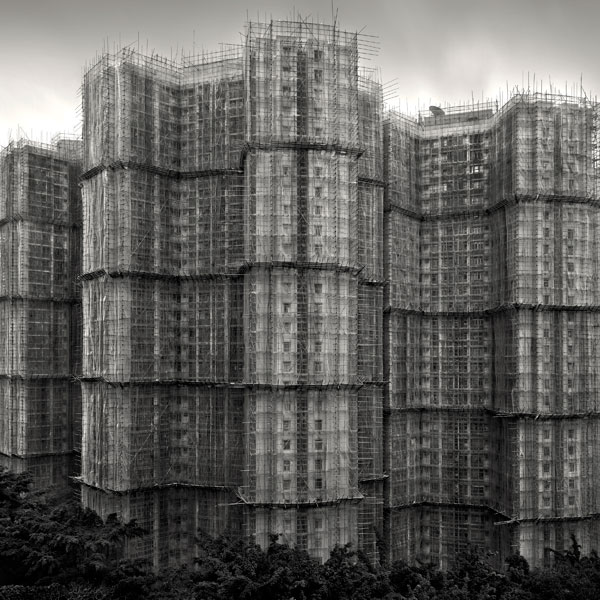
Chai Wan Cocoon, Hong Kong, 2009. Photo: Peter Steinhauer
How do you think urban landscape in Hong Kong has changed since you started photographing the city years ago?
The main thing, no doubt, is the use of land and adding more and more landfill to make way for new architecture and roads.
Surface Unseen runs from now until 27 June 2015 at CONTEMPORARY BY ANGELA LI.
Peter Steinhauer
petersteinhauer.com