What does ‘play’ mean to you? What does it mean to the 7-year-old girl who lives with her family in a sub-divided apartment in Tsuen Wan? What does it mean to the 75-year-old man who has lived in Sai Ying Pun for all of his adult life? This something Design Trust’s Futures Studio (DTFS) has been exploring for the past year with the work it has been doing on four micro-parks across Hong Kong. The results are on display until 29 January 2019 in an exhibition called Play is for the People.
Design Trust is an initiative of Hong Kong Ambassadors of Design, an NGO geared at promoting design dialogue within the local community as well as internationally. Design Trust’s aim is to support creative initiatives in Hong Kong and the wider Greater Bay Area. DTFS is its flagship program, supporting emerging designers, and involving them in the conversation around society and public space.
.
“We’re all under certain pressures in Hong Kong in terms of the way we live. If micro-apartments are the future, then what do we do with our public space?”
Marisa Yiu, Design Trust
.
Play is for the People looks at four public spaces: micro-parks that are located across Hong Kong. There’s the Portland Street Rest Garden in Yau Tsim Mong; Hamilton Street Rest Garden in Yau Tsim Mong, the Sitting-Out Area under Hill Road Flyover in Sai Ying Pun and Yi Pei Square Playground in Tsuen Wan.
The four sites:


Four different teams were assigned to work on each project, which will be translated from ideas to reality from April onwards. Each team is made up of a mentor (Gary Chang, Founder, EDGE Design Institute; artist, photographer and designer Stanley Wong, anothermountainman; Mimi Hoang, Principal, nARCHITECTS; Sam Jacob, Principal, Sam Jacob Studio) and various mentees, all talented emerging designers from different disciplines. Additionally, Richard Hassell (Co-founder of WOHA) and Elizabeth Diller (Founding Partner, Diller Scofidio + Renfro) have also been providing international guidance and support to the teams.
“It’s been a fascinating process. Not an easy one, but I think what’s been empowering is the openness and trust in the process,” says Marisa Yiu, Co-founder and Executive Director of Design Trust.
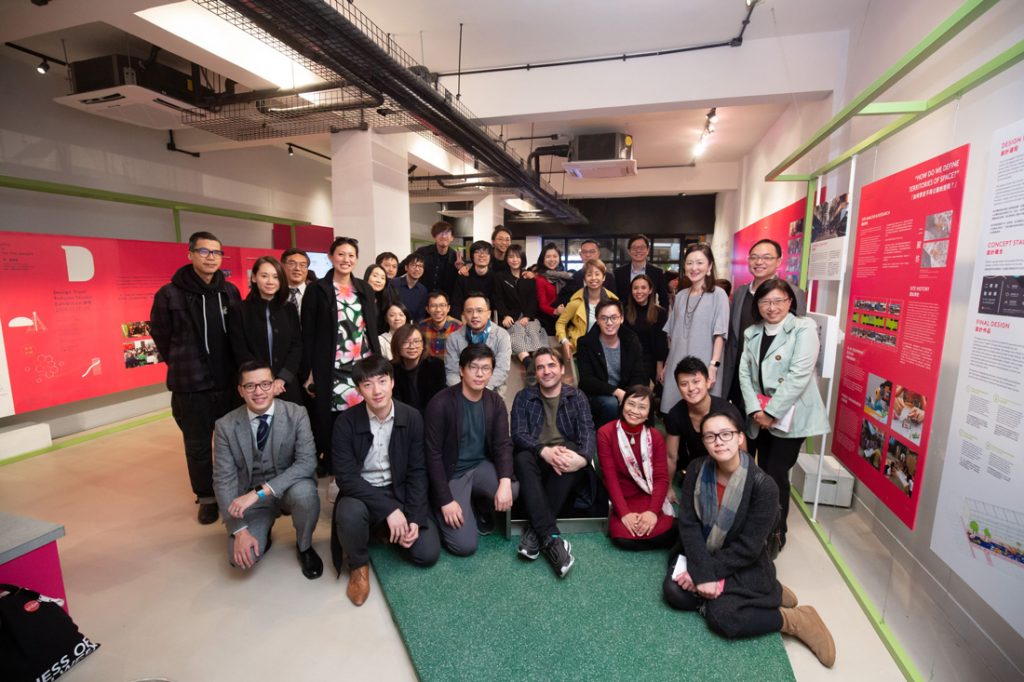
As part of the process, the teams met with community stakeholders to look at their needs, they visited the existing parks to see how they are used, they took part in multiple workshops, and they met with district councillors, as well as government departments.
Views of the workshop process:


In the case of the Hill Road park, which sits directly under the flyover from Pok Fu Lam to Central, the team even had to get the Highways Department involved. “The Highways Department needs two metres on all sides of the columns supporting the highway from Pok Fu Lam,” says Aron Tsang, Design Director of NAPP Studio and one of the mentees on this team under Gary Chang.
“After we engaged a contractor and they started digging out all these really old plans of the site, we realised that underneath the whole of the park are utilities, so we can’t do any piling,” says Tsang.
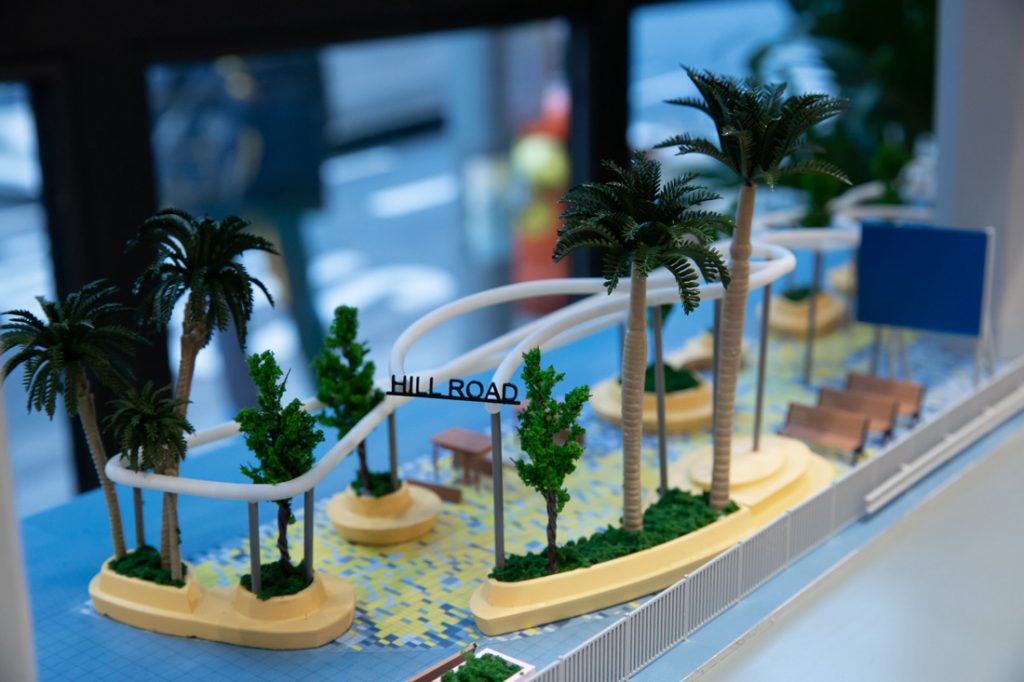
The park’s role in the local elderly community made it even more important for Chang, Tsang and the rest of the team to minimise disturbance and to minimise the footprint of any change they proposed. Ten designs later, the final concept features an undulating LED light installation that can be pre-fabricated, and they hope they can hang climbing nets on it at a later date.
The potential for community demographics to change is something each team had to consider. In the case of the Portland Street Rest Garden, the team rethought half the park with the local elderly in mind, leaving the rest of the park open to change, should the area become more child-friendly.
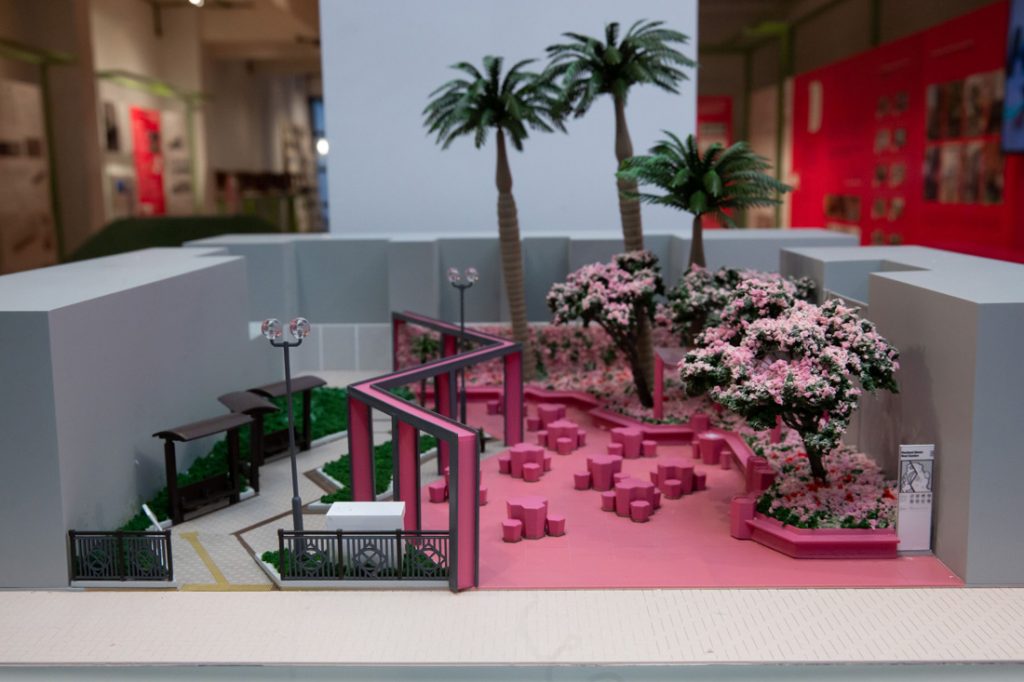
They also created an ingenious seating system that enables users to move seats around while keeping the modular system heavy enough that it won’t get stolen.
“These are the ideas we’re testing: can we make a park that allows you to move things around, to cluster with your buddies, play chess, read the newspaper, or if you want something quiet?” says Yiu.
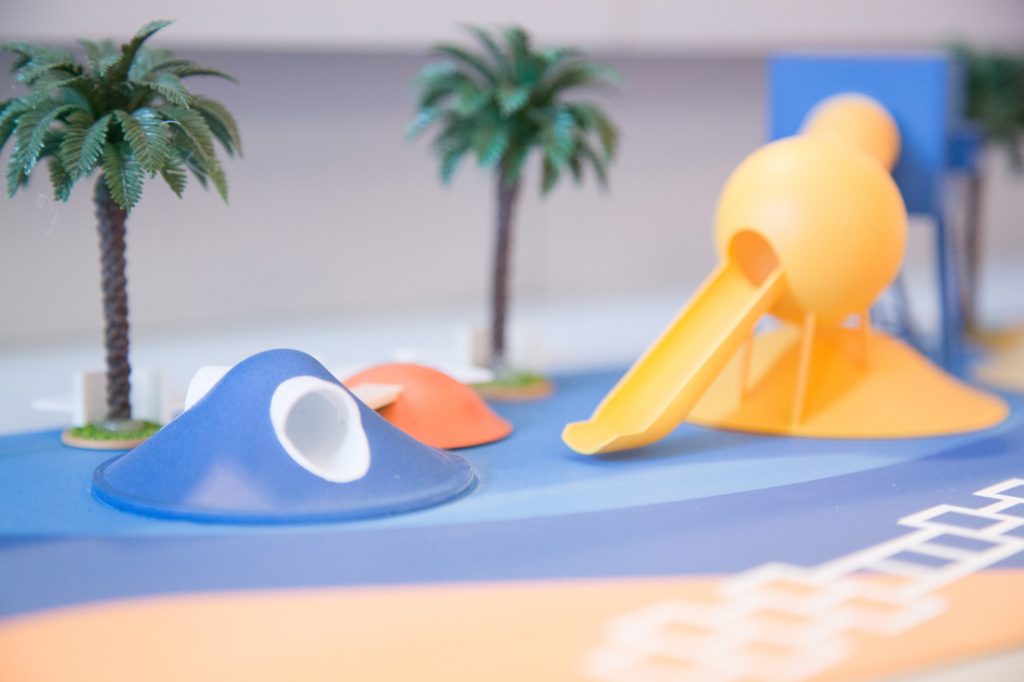
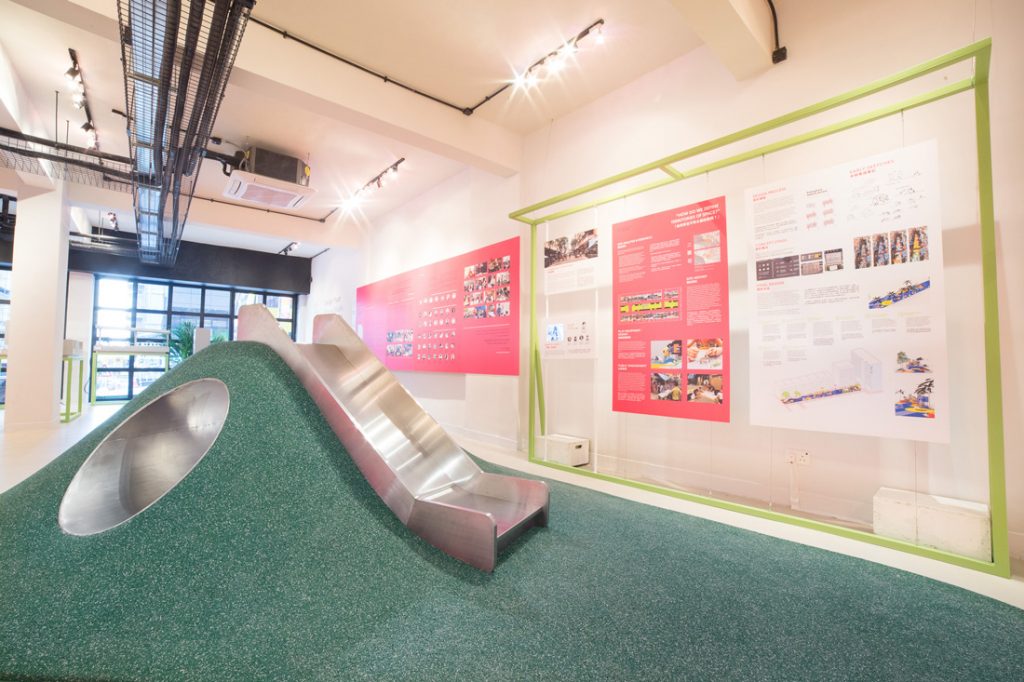
The exhibition itself is an opportunity for the teams to test their ideas, too: at the show is a life-sized prototype of the slide-and-tunnel the Yi Pei Square Playground team hopes to build for this narrow strip of land that sits in between several blocks of sub-divided flats. The intention is to turn this area into an outdoor living room for the buildings’ inhabitants.
“We’re all under certain pressures in Hong Kong in terms of the way we live. If micro-apartments are the future, then what do we do with our public space?” says Yiu.
“For me, it’s been amazing to have this opportunity to have an open dialogue with policy makers,” she adds. “We’re not collaborating per se, but we’re challenging each other. And it’s really empowering to see what these designers have come up with.”
More views of the exhibition:


Play is for the People is on show until 29 January 2019 at Shop B, G/F Samtoh Building, 384A Queen’s Road West, Sai Ying Pun. Admission is free. For information, call +852 2739 6889.