The home of architecture and design in the Asia-Pacific
Get the latest design news direct to your inbox!

Get the latest design news direct to your inbox!
How will AI change architecture and urban life? Send your ideas by 31 May to Carlo Ratti, the curator of Eyes of the City, one of the 2019 Shenzhen Bi-City Biennale of UrbanismArchitecture’s main events!

The eighth edition of Shenzhen Bi-City Biennale of UrbanismArchitecture (UABB) will return to Hong Kong and Shenzhen on 15 December 2019. Taking the theme of ‘Urban Interactions’, the three-month event will explore the evolving relationship between urban space and technological innovation with two parallel exhibitions titled Eyes of the City and Ascending City.
Chosen to lead the curatorial team of Eyes of the City is MIT professor and architect Carlo Ratti and South China-Torino Lab (helmed by Sun Yimin from South China University and Michele Bonino from Politecnico di Torino).
Eyes of the City takes its premise from Jane Jacobs’ phrase in her book The Death and Life of American Cities (1961) ‘eyes on the street’. The phrase alludes to architectural space’s ability in the city to ‘see’ and respond to a person’s presence thanks to technology.
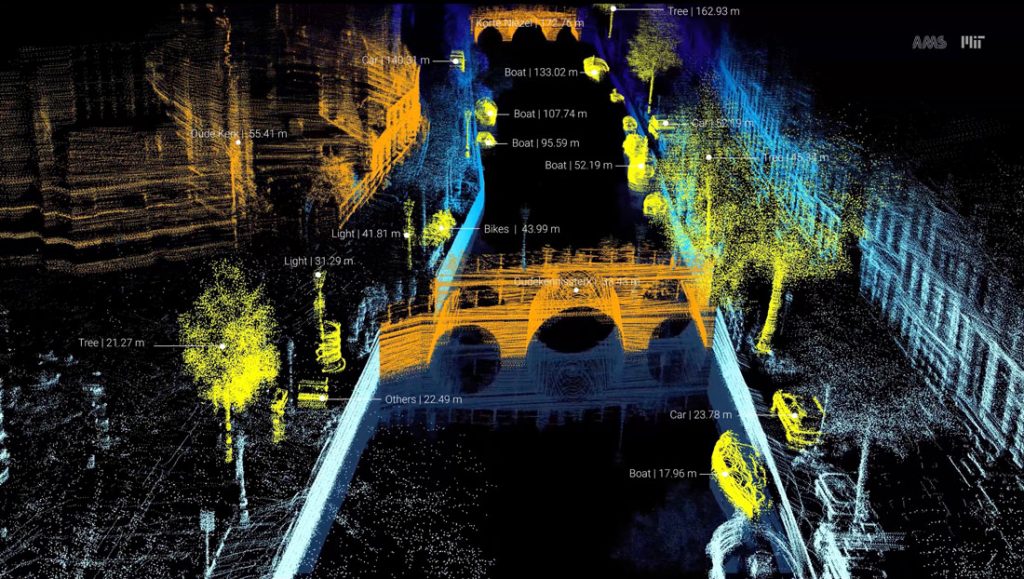
Roboat, a project by MIT and AMS prototyping a use of self-driving boats in the canals of
Amsterdam © MIT and AMS
“Shenzhen is one of the world’s exemplary cities moulded by digital innovation. Looking at Shenzhen’s case and how it resonates internationally, at UABB 2019 we will explore what kind of city we want to build for tomorrow,” comments Ratti. “How can we leverage the possibilities of new technology and artificial intelligence in a more participatory, inclusive way?”
The curatorial team invites architects, planners, designers, philosophers, thinkers, scientists, educational institutions, research laboratories, think-tanks and students to submit proposals – both speculative and practical – for the exhibition that will be held in Shenzhen’s recently-inaugurated high-speed railway in Futian.
Eyes of the City‘s confirmed contributors so far include Yung-Ho Chang, Vicente Guallart, Ying Long, Geoff Manaugh, Antoine Picon, Richard Sennett, Meejin Yoon, Liam Young and Philip F. Yuan.
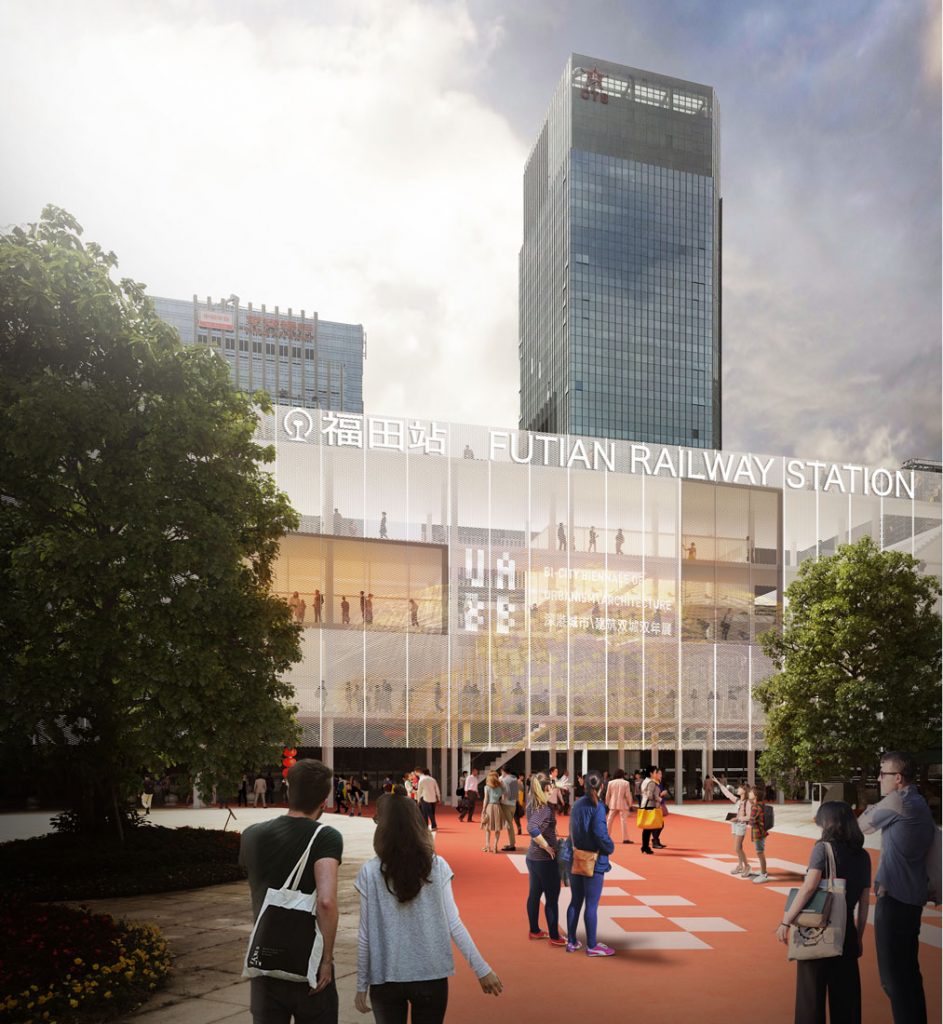
Proposed Design for UABB Main Venue Image © Carlo Ratti Associati Politecnico di Torino and SCUT
Applicants can submit either design projects, research projects or critical essays on what kind of digitally augmented city that we want to build tomorrow in response to a series of specific questions in the curatorial statement about the interrelated relationships between people, technology and the city.
Submissions for the design project category should propose engaging installations that demonstrate an experimental approach to UABB’s theme. Participants are encouraged to forms a multi-disciplinary team.
The research project category expects innovative research proposals that explore the potential of design practice as a mediating tool between digital and physical spaces in the future city using UABB locale as a testing ground for new methods of research that can be applied globally.
The proposals submitted to the critical essay category should aim to open up new perspectives on relationships between design practice, user experience and urban space and contribute to outlining new theoretical ways of conceiving the city.
The deadline for submission is 31 May 2019. Click here to find out more.
INDESIGN is on instagram
Follow @indesignlive
A searchable and comprehensive guide for specifying leading products and their suppliers
Keep up to date with the latest and greatest from our industry BFF's!
The internet never sleeps! Here's the stuff you might have missed