The home of architecture and design in the Asia-Pacific
Get the latest design news direct to your inbox!

Get the latest design news direct to your inbox!
Let’s raise the next generation to be smarter than us. Sophia Watson writes.

November 2nd, 2016
Whether or not they actually grow up to be architects or not, the primary skills that drive design and architecture can have huge benefits on our children. The way kids grow up to think, behave, solve problems and create can be improved immeasurably by teaching them from a young age, to think like architects.
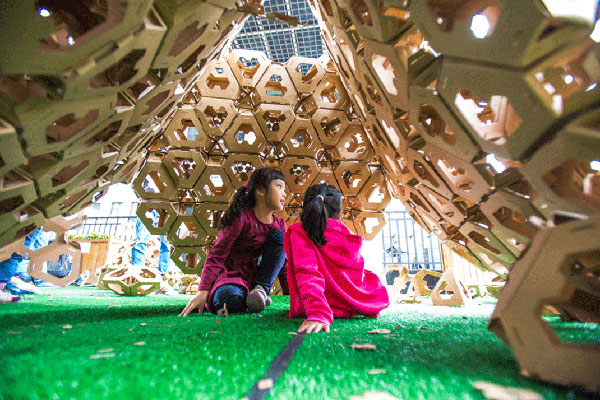
For some young people in Beijing, Golden Week Holiday 2016 was an opportunity to comprehend the mathematical subject in hands-on manner. For five days at the beginning of October, children and parents flocked to the west entrance area to the 798 At Zone building to experience the custom-built popup spaces.
This year, Rotterdam-based design studio, Collective Paper Aesthetics, were part of the 798 International Children Art Festival program, offering a variety of art disciplines for Beijing’s children to experience through doing – including of course, architecture.
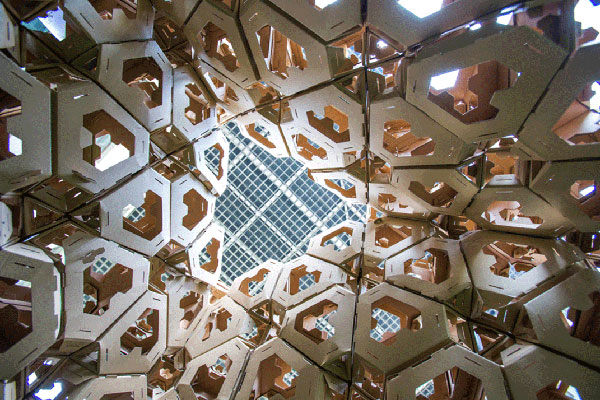
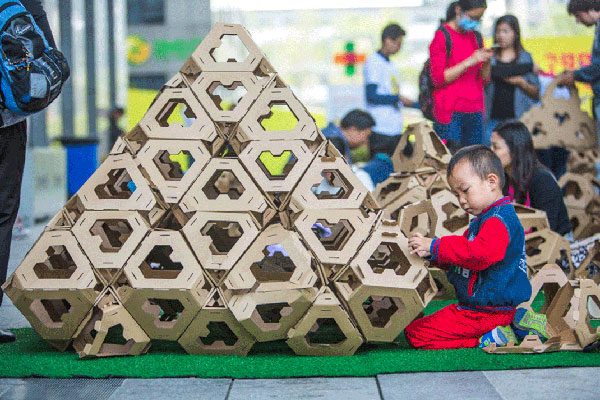
Collective Paper Aesthetics designer Noa Haim crafted an interactive installation with 1,000 heart-board pyramid play-units. Every play-unit is 100% recyclable and possible to use and mould in a multitude of ways . When it becomes impossible to reuse adapt – the material itself can ultimately be recycled.
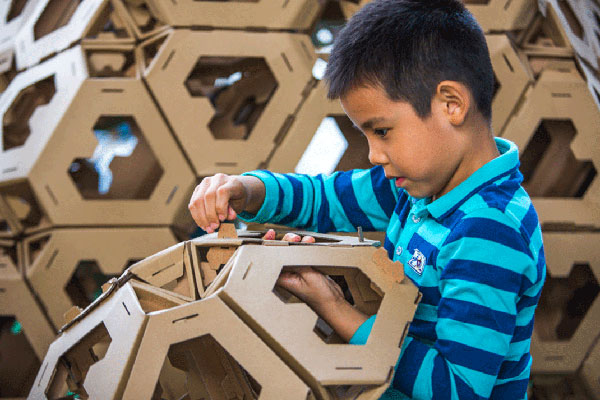
On the fifth and last day of the festival, the building’s courtyard featured a “Mega Heart” structure; a four-sided pyramid, three-sided pyramid, Igloo and many spheres, stars and fragments of heart worked together based on the children’s own design. Giving the kids two hours lead-time, the 10-child “project team” worked collaboratively to piece together the structure – and the results are fascinating.
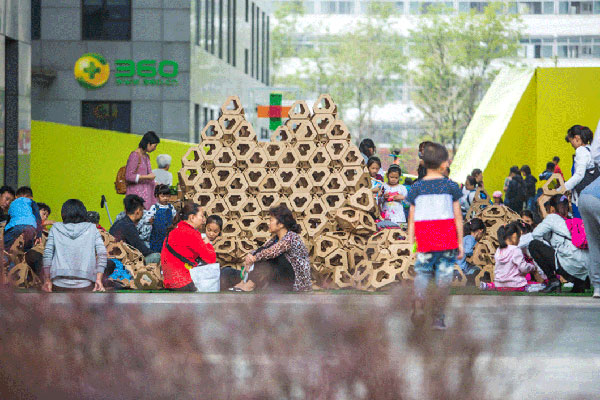
Teaching kids to be architects doesn’t necessarily mean they become architects. But it does mean that we will have created a new generation of creative and mathematical thinkers who can build something (both figuratively and literally) that our generation could not have imagined.
Photography by David Guo
INDESIGN is on instagram
Follow @indesignlive
A searchable and comprehensive guide for specifying leading products and their suppliers
Keep up to date with the latest and greatest from our industry BFF's!
The internet never sleeps! Here's the stuff you might have missed