The home of architecture and design in the Asia-Pacific
Get the latest design news direct to your inbox!

Get the latest design news direct to your inbox!
The world’s best design concepts have just been honoured at the Red Dot Design Museum Singapore, with the record number of entries this year indicative of a rising focus on product innovations around the globe.
November 6th, 2013
This year’s Red Dot Award: Design Concept 2013 received 4,394 entries from 57 countries, a 20 per cent increase over last year’s submissions.
“The sheer number of entries demonstrates the amount of attention brought towards design concepts, [and shows] that societies are [giving] more attention [to] product innovations,” says Professor Lu Xiaobo, Red Dot Jury 2013.
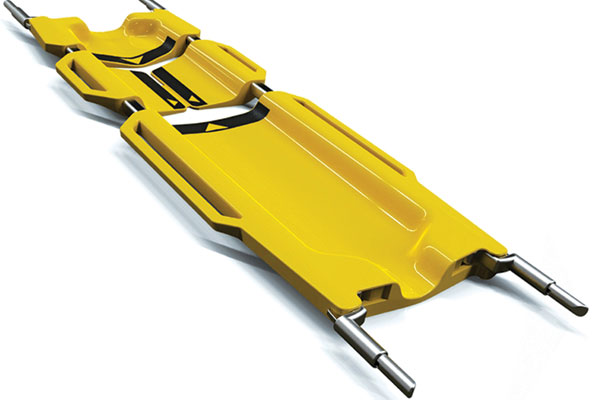
Red Dot: Best of the Best recipient: Lenify – a collapsible emergency stretcher by Lin Ta-Chin Danny, Taiwan
Ken Koo, President of Red Dot, Asia further points to the fact that along with a significant increase in competition submissions, this year’s award also received 40 per cent more entries from companies and design studios, including participation by some of the world’s most influential product companies. “The participation from these group of participants is particularly important for the award as they define the level of the competition,” says Koo. “This year’s increased entries from companies and design studios makes it much more competitive, and as a result, it leads to the third significant difference, which is the most impressive crop of winning design concepts ever.”
A total of 202 concepts were given out at the 2013 Red Dot ceremony, held on 25 October at the Red Dot Design Museum Singapore, with 49 honoured Red Dot: Best of the Best for their exceptional design excellence. A further 39 concepts were credited with an Honourable Mention.
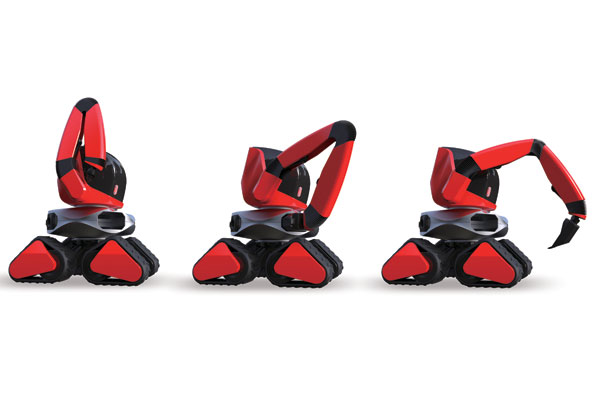
Red Dot: Best of the Best recipient: KAMA – a multifunctional excavator by Luxun Academy of Fine Arts, China
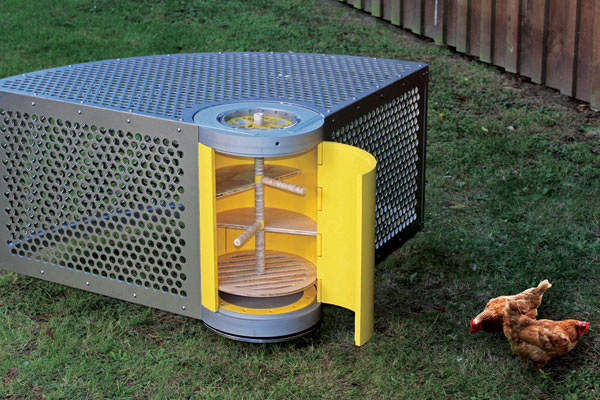
From the 49 Red Dot: Best of the Best recipients, the jury had nominated 3 for the Red Dot: Luminary – the highest distinction recognising the best concept of the competition. The three nominees were: KAMA – a multifunctional excavator that can automatically change its tool head to undertake different types of work efficiently, by Luxun Academy of Fine Arts, China; Lenify – a collapsible emergency stretcher that was designed to eliminate the chance of secondary injuries from the lifting of patients up and onto the stretcher, by Taiwanese designer Lin Ta-Chin Danny; and Nest – Rehoming Spent Laying Hens – a contemporary kit-set hen house and supporting care system designed to encourage those living in populated areas within New Zealand to keep ex-commercial (or ‘spent’) layer hens as domestic pets, by Massey University, New Zealand.
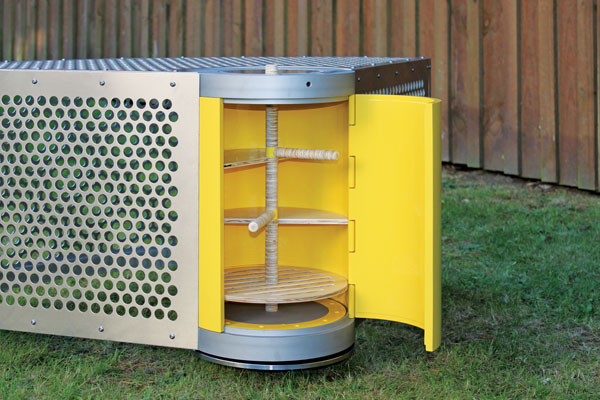
Red Dot: Luminary: Nest – Rehoming Spent Laying Hens by Massey University, New Zealand
Towards the end of the awards ceremony, it was announced that Nest – Rehoming Spent Laying Hens was to take home the top honour.
“[This project] is a great example of redesigning a life cycle. Most people tend to think that once a life cycle is set, it can’t be changed or redesigned,” says Raj Nandan, Group CEO of Indesign Media Asia Pacific and a jury member at this year’s awards.
The evening concluded with the unveiling of this year’s yearbook, a condensation of the competition, as well as the exhibition of the winning concepts, both at the Red Dot Design Museum Singapore and online at the Red Dot Award: Design Concept website.
INDESIGN is on instagram
Follow @indesignlive
A searchable and comprehensive guide for specifying leading products and their suppliers
Keep up to date with the latest and greatest from our industry BFF's!
The internet never sleeps! Here's the stuff you might have missed