The home of architecture and design in the Asia-Pacific
Get the latest design news direct to your inbox!

Get the latest design news direct to your inbox!
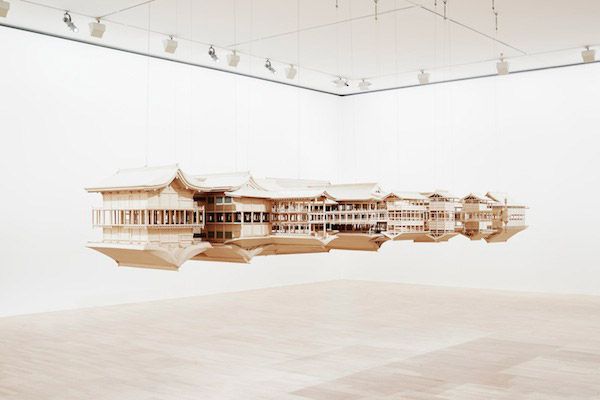
Takahiro Iwasaki’s Reflection Model, now on show at the NGV in Melbourne, gives form and substance to both spirituality and a young boy’s imagination. Alice Blackwood reports.
February 13th, 2015
There’s a stillness about Takahiro Iwasaki’s ‘Reflection Model (Itsukushima)’ that belies the nature of its construction. Despite its static appearance, the 8m x 8m model is architecturally designed and constructed to move.
Built upon a slot and tenon construction system, the Reflection Model echoes contemporary Japanese earthquake-resistant techniques, finding strength and stability in its flexibility.
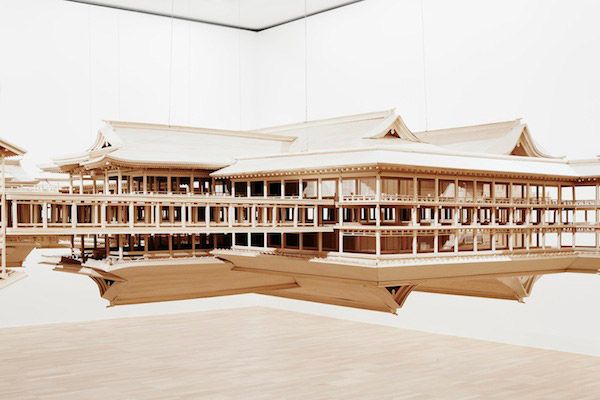
“This slot and tenon type of construction sees one section nestle into the other, so if they move, they both move separately, before nestling back into their original position,” says NGV Curator, Asian Art, Wayne Crothers. “It’s based around an ancient Tao-ist philosophy – strength is seen as swaying in the wind, of being adaptable to situations.”
This particular Reflection Model captures the beauty of Japan’s sacred Itsukushima shrine, which resides above tidal flats on Japan’s inland sea. “Shrines and temples are where people go to pray, and they offer their visitors the promise of an afterlife, a journey to a paradisiacal land,” explains Crothers. As the tide comes in underneath the peers of Itsukushima, the shrine’s structure is reflected upon the water’s surface, giving worshippers a sense of levitation or floating.
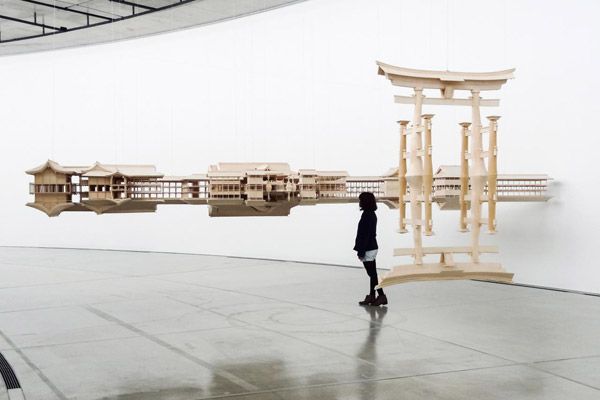
Since childhood, Iwasaki has had a fascination with architecture and reflection. As a young boy he would admire the way buildings would magically appear after rain, their facades reflected in the puddles at his feet.
Iwasaki was fascinated with the way in which this reflection would give a building the illusion of floating in space. “As he started to look into this, he realised it was an age-old architectural technique, to give a building a feeling of levitation,” says Crothers.
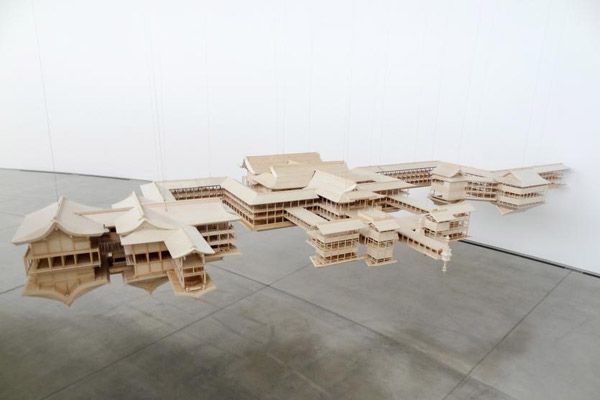
Crothers describes Iwasaki as a “maniac for detail” – a trait that any designer can easily relate to. “He works on [his reflection models] by himself with one close assistant and a group of volunteers,” says Crothers. “And it’s not made from a kit. Iwasaki constructs [the model from nothing]. Starting with pieces of Cypress, he cuts them to right length and shaves them to right thickness.”
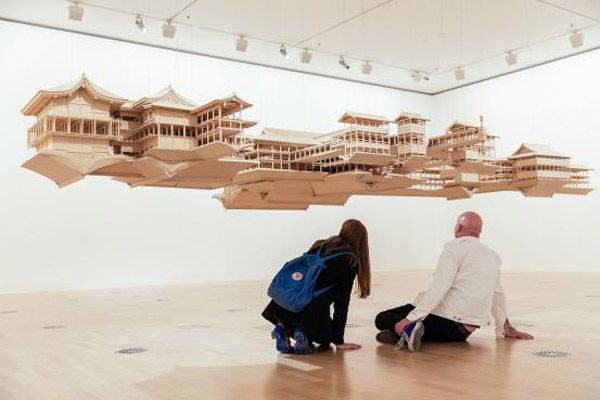
Models adhere to original architectural drawings or plan drawings and the outcomes are exact replicas that capture the breathtaking beauty of Japanese spirituality and Iwasaki’s imaginative vision.
“Almost like a giant space ship floating down in front of us, [this Reflection Model] offers us another option beyond our own world, a pathway to paradise,” says Crothers.
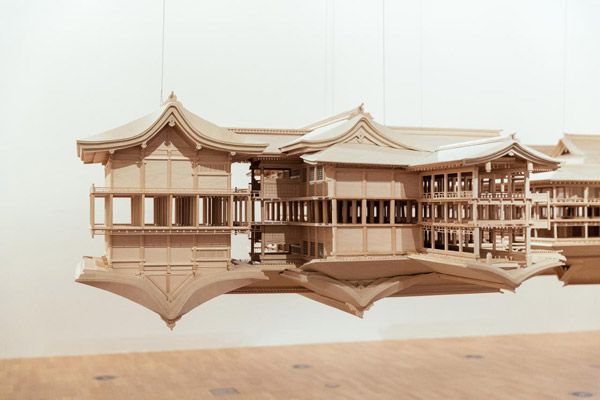
Iwasaki’s Reflection Model is on show at the NGV International until 6 April 2015.
NGV
ngv.vic.gov.au
INDESIGN is on instagram
Follow @indesignlive
A searchable and comprehensive guide for specifying leading products and their suppliers
Keep up to date with the latest and greatest from our industry BFF's!
The internet never sleeps! Here's the stuff you might have missed